
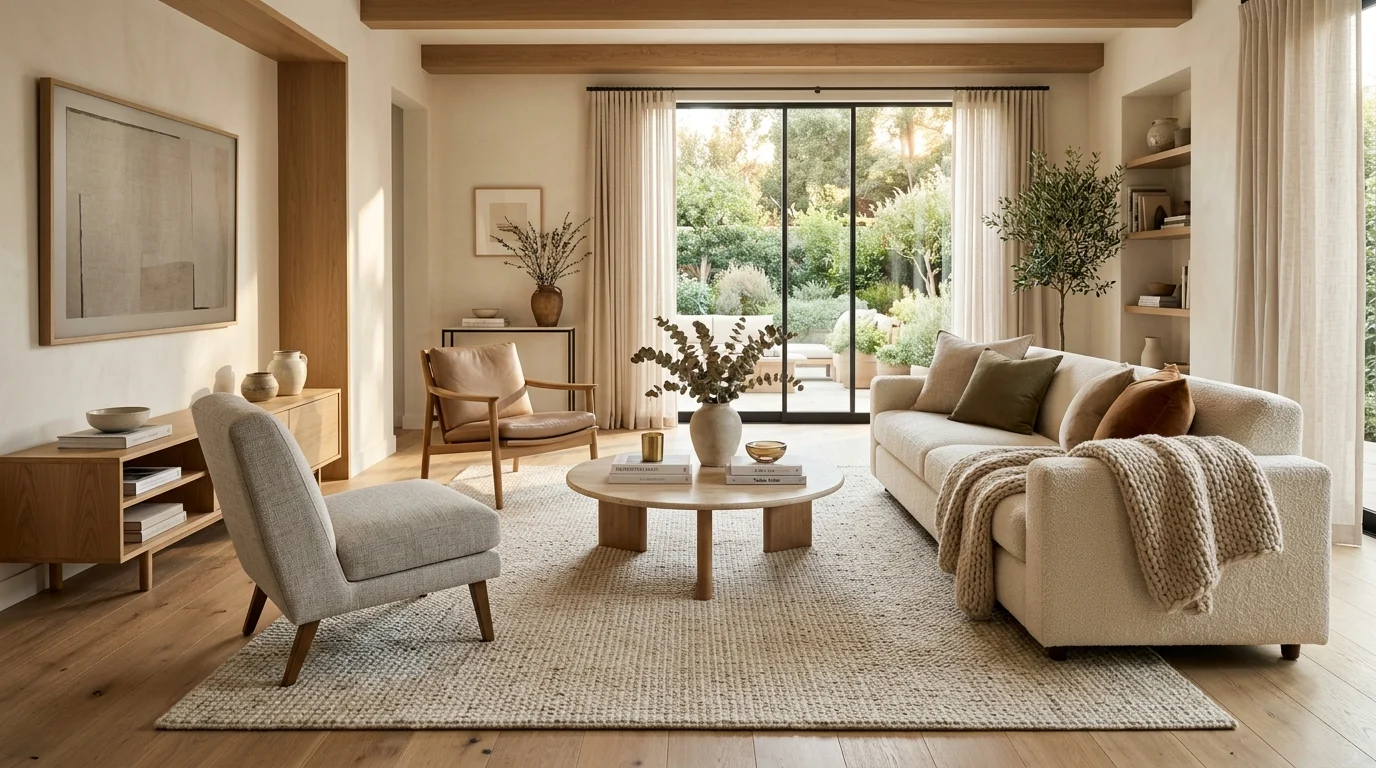
Choosing the right rug size can completely transform the way a room looks and feels. A properly sized rug helps anchor furniture, define spaces, add warmth, and make the entire room feel more polished and intentional. On the other hand, a rug that is too small can make even a beautifully decorated room feel disconnected, awkward, and visually cluttered. Surprisingly, rug sizing is one of the most common interior design mistakes homeowners make because smaller rugs are often more affordable and easier to buy without measuring first.
Many people focus mainly on rug color or pattern, but size is actually the most important factor when creating a balanced and cohesive room layout. Rugs help visually connect furniture pieces and create flow throughout the space. Whether you’re decorating a living room, bedroom, dining room, or hallway, the right rug size can instantly make the room feel larger, cozier, and more professionally designed.
Another reason rug sizing matters is functionality. Rugs should support how a room is used every day. Chairs should slide comfortably in dining rooms, beds should feel soft underfoot, and walkways should remain practical and visually balanced. A rug that’s too small often interrupts this flow and makes the space feel incomplete.
The good news is that choosing the right rug size becomes much easier once you understand a few basic interior design principles. In this guide, we’ll walk through the best rug sizing tips for every room so you can confidently choose rugs that make your home feel stylish, cozy, and perfectly proportioned.
1. Living Room Rug Size Rules

The living room is one of the most important spaces for getting rug size right because the rug acts as the visual foundation for the entire seating area. A rug that is too small can make furniture feel disconnected and create a choppy layout, while a properly sized rug helps tie everything together and makes the room feel balanced and inviting.
In most living rooms, 8’x10’ and 9’x12’ rugs are the most common sizes because they provide enough coverage for sofas, coffee tables, and accent chairs. Ideally, the rug should extend at least several inches beyond both sides of the sofa to create a sense of proportion. One of the best interior design rules is making sure at least the front legs of all major furniture pieces sit on the rug. In larger living rooms, having all furniture legs fully on the rug creates an even more luxurious and cohesive appearance.
Consistency is also extremely important. If one piece of furniture has its front legs on the rug, nearby seating should follow the same approach to avoid making the layout feel visually awkward or uneven. Rug orientation matters too. In longer rooms, rugs should usually follow the shape of the space rather than just the sofa itself.
A large rug can actually make a small living room feel bigger because it visually expands the seating area. While larger rugs may cost more initially, they often create a far more polished and designer-quality look.
2. Bedroom Rug Size Rules

Bedroom rugs are important because they add softness, warmth, and comfort while making the room feel more layered and luxurious. Stepping onto a soft rug first thing in the morning instantly makes the bedroom feel cozier and more relaxing. However, choosing the wrong rug size can make the entire bedroom feel visually unbalanced or cramped.
The rug should always feel proportionate to the size of the bed and the room itself. For queen beds, 8’x10’ rugs are typically the most recommended size, while king beds usually work best with 9’x12’ rugs. Ideally, the rug should extend beyond both sides and the foot of the bed so there’s enough soft surface visible around the bed frame.
One common mistake is using rugs that are too narrow for the bed. If the rug barely extends past the mattress, the room can feel visually squeezed and unfinished. The rug should create breathing room around the bed rather than looking hidden underneath it.
Placement also matters. Most designers place the rug partially under the bed, with the front two-thirds of the bed sitting on top of the rug while leaving the headboard area exposed. This allows the rug to frame the bed naturally without wasting rug coverage underneath furniture that won’t be seen.
Bedroom rugs work best when they add warmth and texture without overwhelming the space. Soft neutral rugs, layered textures, and low-pile materials often create the most calming and elegant bedroom atmosphere.
3. Dining Room Rug Size Rules

Dining room rugs can make a dining area feel more complete, elegant, and grounded, but they require careful sizing to remain functional. Unlike living room rugs, dining room rugs must accommodate moving chairs comfortably. One of the most frustrating mistakes is choosing a rug that’s too small, causing dining chairs to slide halfway on and halfway off the rug whenever someone sits down.
A good rule is leaving at least 24 to 36 inches of rug space beyond all sides of the dining table. This gives chairs enough room to move naturally without catching on the rug edge. In most homes, 8’x10’ and 9’x12’ rugs work well for standard dining tables, depending on the table size and room layout.
Shape matters too. Rectangular tables usually pair best with rectangular rugs, while round dining tables often look most balanced with round rugs. Matching the rug shape to the table shape creates a more harmonious and intentional appearance.
Flatweave or low-pile rugs are often the best choice for dining rooms because they allow chairs to slide more easily and are generally easier to clean. Thick shag rugs may feel cozy, but they can trap food, crumbs, and dirt very quickly.
Dining room rugs should also leave visible floor space between the rug and the walls. Allowing breathing room around the edges helps the dining area feel more open, elegant, and proportionate instead of cramped or overly crowded.
4. Hallway and Runner Rug Rules
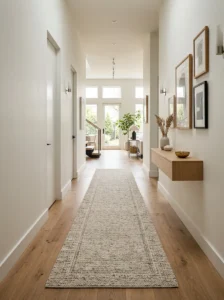
Runner rugs are one of the easiest ways to add warmth, texture, and visual interest to hallways, entryways, kitchens, and narrow spaces. Even though runners are smaller than area rugs, choosing the correct size still makes a huge difference in how polished and balanced the space feels.
One of the biggest mistakes people make is choosing runners that are either too short or too wide for the hallway. A runner should never touch the walls directly. Leaving at least a few inches of visible flooring on both sides creates balance and helps the hallway feel cleaner and more intentional. This border of exposed flooring frames the rug beautifully and prevents the space from feeling cramped.
The runner should also not stretch from wall to wall in length. Leaving open floor space at both ends helps create better visual flow throughout the hallway. In very long hallways, using two runners instead of one oversized runner can sometimes feel more balanced and practical.
Pile height is another important factor, especially near doors. Thick rugs may interfere with doors opening properly, which can quickly become frustrating in everyday use. Low-pile runners are usually the safest and most practical option for busy walkways.
Hallway runners also provide an opportunity to introduce texture, subtle color, or pattern into the home without overwhelming the overall design. A well-sized runner instantly makes narrow spaces feel warmer, softer, and more thoughtfully designed.
5. Common Rug Size Mistakes to Avoid
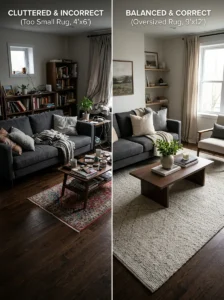
One of the most common rug mistakes homeowners make is choosing a rug that’s too small for the space. Smaller rugs may seem more budget-friendly at first, but they often make rooms feel disconnected and visually awkward. Instead of grounding the furniture, undersized rugs can make layouts look accidental and unfinished.
Another common mistake is ignoring furniture placement. Rugs should work with the furniture arrangement rather than floating randomly in the middle of the room. In living rooms especially, rugs should connect seating pieces visually to create a unified conversation area.
Incorrect rug orientation can also make a room feel unbalanced. Rugs should usually follow the shape and direction of the room rather than just matching the shape of one furniture piece. For example, placing a rug horizontally in a long narrow room can visually shorten the space and interrupt natural flow.
People also sometimes forget about practicality. Thick rugs in dining rooms, high-pile runners near doors, or delicate materials in high-traffic areas can quickly create maintenance problems. Choosing the right material and pile height is just as important as choosing the correct size.
Lastly, many homeowners underestimate how much a large rug can improve a room visually. A properly sized rug often makes the entire room feel more luxurious, intentional, and professionally designed while helping the home feel warmer and more inviting overall.