
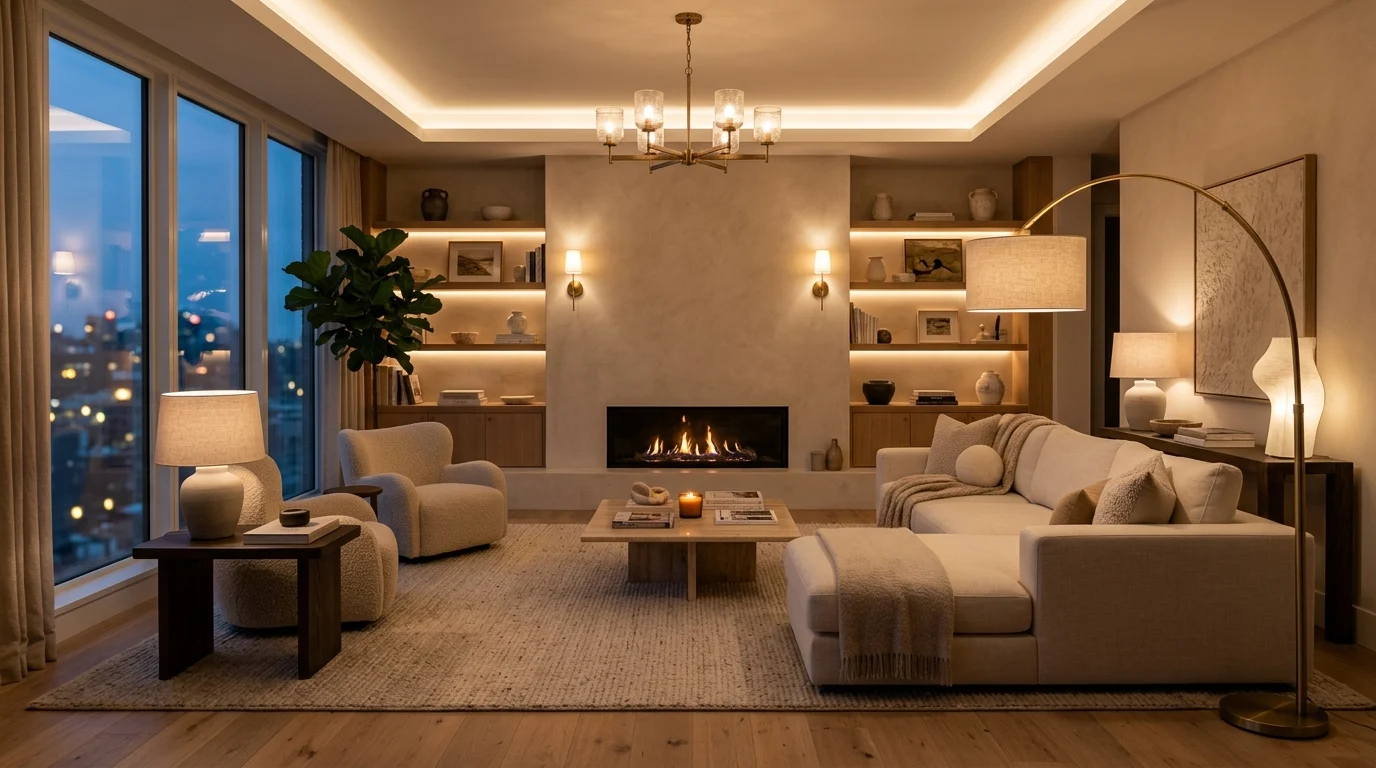
Lighting is one of the most important elements in interior design, yet it’s often overlooked when decorating a living room. Many people rely on a single overhead ceiling light and wonder why their space still feels flat, cold, or uninviting. The truth is that beautiful living rooms rarely depend on just one source of light. Instead, professional designers use layered lighting to create warmth, depth, flexibility, and atmosphere throughout the space.
Layered lighting simply means combining multiple types of lighting that each serve a different purpose. Instead of lighting the entire room evenly, designers strategically use ambient lighting, task lighting, accent lighting, and decorative lighting together to create a balanced and visually interesting environment. This approach not only makes the room feel cozier and more luxurious but also allows the lighting to adapt to different moods and activities throughout the day.
A well-lit living room should feel comfortable whether you’re entertaining guests, watching a movie, reading a book, or relaxing in the evening. Different lighting layers help support these activities while also highlighting the room’s best design features. Soft lighting can make a room feel intimate and calming, while brighter task lighting improves functionality where needed.
The good news is that you don’t need an expensive renovation or a professional designer to layer lighting successfully. With a few simple principles and thoughtful lighting choices, you can completely transform the atmosphere of your living room and make it feel warmer, richer, and more professionally designed.
1. Start With Ambient Lighting
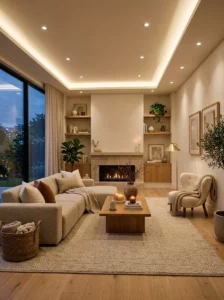
Ambient lighting is the foundation of layered lighting because it provides the general illumination that allows the entire living room to function comfortably. This is usually the first lighting layer you notice when entering a room, and it sets the overall brightness and mood of the space. Without good ambient lighting, the room can feel dark, uneven, or visually uncomfortable.
In many homes, ambient lighting comes from ceiling fixtures such as recessed lights, chandeliers, flush mounts, or pendant lights. However, relying too heavily on harsh overhead lighting can sometimes make the room feel flat or sterile. The goal of ambient lighting should be creating a soft and balanced glow that evenly fills the room without overpowering it.
Warm white light bulbs are usually the best choice for living rooms because they create a cozier and more relaxing atmosphere than cool white lighting. Dimmer switches are also extremely valuable because they allow you to adjust brightness levels depending on the time of day or activity. Bright lighting may work well during the daytime, while softer lighting feels more inviting in the evening.
Ambient lighting should support the room rather than dominate it. Instead of creating strong shadows or overly bright hotspots, it should establish a comfortable base layer that makes the room feel welcoming. Once this foundational lighting is in place, additional layers such as task and accent lighting can then be added to create more depth and personality.
2. Add Task Lighting for Functionality
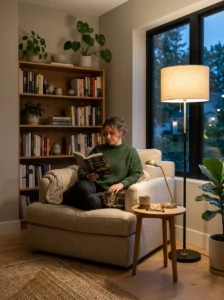
Task lighting is designed to provide focused illumination for specific activities like reading, working, or hobbies. While ambient lighting fills the entire room, task lighting helps improve visibility in the exact areas where you need extra light. In a living room, this layer is especially important because the space often serves multiple purposes throughout the day.
One of the most common forms of task lighting in living rooms is the floor lamp placed beside a sofa or reading chair. This creates a comfortable spot for reading without needing to brighten the entire room. Table lamps on side tables or consoles also work well because they add both functionality and visual warmth to the space.
When choosing task lighting, flexibility is very important. Adjustable lamps or directional lighting allow you to focus light exactly where it’s needed while reducing glare and shadows. Soft warm lighting usually feels more relaxing in living rooms compared to harsh bright bulbs.
Task lighting should also complement the room’s overall aesthetic rather than feeling purely functional. Lamps with textured shades, sculptural bases, or elegant finishes can become decorative features while still serving a practical purpose. Mixing different lamp heights and styles also helps create a more layered and designer-inspired appearance.
Adding task lighting instantly makes a living room feel more comfortable and usable. It creates intimate zones within the space while helping the overall lighting scheme feel richer, softer, and more thoughtfully designed.
3. Use Accent Lighting to Create Atmosphere
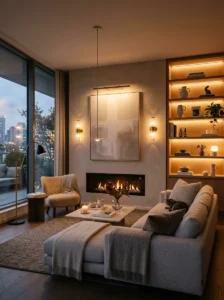
Accent lighting is what gives a living room depth, mood, and visual drama. While ambient lighting provides general brightness and task lighting supports functionality, accent lighting draws attention to specific features and helps create a more luxurious and inviting atmosphere. Without accent lighting, a room can often feel flat and one-dimensional.
Accent lighting is commonly used to highlight artwork, bookshelves, architectural details, plants, textured walls, or decorative objects. Wall sconces, LED strip lights, picture lights, and small spotlights are all popular choices for adding this layer of lighting to a space. Even candles and fireplaces can function as accent lighting because they create warmth and visual softness.
One of the biggest benefits of accent lighting is that it adds emotional atmosphere to a room. Soft glows around shelves, behind televisions, or beneath cabinets create a cozy and intimate feeling that overhead lighting alone cannot achieve. This is especially important in the evenings when homeowners want the living room to feel calm and relaxing.
Accent lighting also helps create contrast within the room. Instead of everything being lit equally, certain areas become visual focal points while others remain softer and more subdued. This layered effect makes interiors feel more sophisticated and professionally designed.
In modern living rooms, accent lighting is often subtle rather than dramatic. The goal is creating warmth, depth, and visual interest while maintaining a balanced and comfortable atmosphere throughout the space.
4. Include Decorative Lighting as a Design Feature
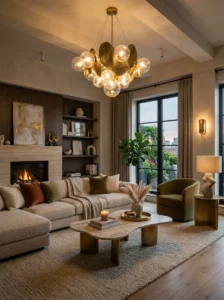
Decorative lighting serves both a practical and aesthetic purpose because the fixtures themselves become part of the room’s design. In many professionally designed living rooms, lighting is treated almost like jewelry for the home. Beautiful fixtures add personality, texture, shape, and style even when the lights are turned off.
Statement chandeliers, sculptural pendant lights, artistic table lamps, and elegant wall sconces are all examples of decorative lighting. These pieces help reinforce the room’s interior style while also contributing to the overall lighting layers. Whether your home aesthetic is modern, Japandi, traditional, minimalist, or organic modern, decorative lighting can help strengthen the visual identity of the space.
Scale is especially important when selecting decorative lighting. A fixture that’s too small may feel insignificant, while oversized fixtures can overwhelm the room. The best decorative lighting feels proportionate to the furniture and room size while naturally drawing attention without dominating the entire space.
Materials and finishes also influence the mood of the room. Brass, bronze, linen shades, frosted glass, rattan, wood, and ceramic finishes all create different visual effects and levels of warmth. In 2026, softer organic shapes and textured materials are especially popular because they help interiors feel warmer and less sterile.
Decorative lighting brings character and elegance into a living room while helping the space feel curated and visually complete. It transforms lighting from something purely functional into a key design feature within the home.
5. Balance Light Levels Throughout the Room
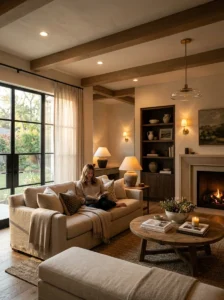
One of the biggest secrets to successful layered lighting is balance. A living room should never feel overly bright in one corner and completely dark in another unless that contrast is intentionally designed. Balancing light levels throughout the room helps create harmony, comfort, and visual flow while preventing harsh shadows or overly intense brightness.
Many people make the mistake of placing all lighting sources at the same height or relying too heavily on ceiling lights. Professional designers instead spread light across different levels of the room using floor lamps, table lamps, wall sconces, pendants, and accent lights together. This layered approach creates depth and helps the room feel more dynamic and inviting.
Dimmers are one of the easiest ways to improve lighting balance because they allow different lighting layers to work together more flexibly. During the daytime, brighter ambient lighting may be useful, while evenings often benefit from softer task and accent lighting instead. The ability to control brightness makes the room feel more adaptable and comfortable.
Natural light should also be considered part of the lighting design. During the day, sunlight works together with artificial lighting to create warmth and openness. Mirrors, light curtains, and reflective surfaces can help distribute natural light more effectively throughout the room.
When lighting is properly balanced, the living room feels calmer, cozier, and more luxurious. Instead of looking flat or overly harsh, the space gains depth, atmosphere, and the inviting glow commonly seen in professionally designed interiors.