
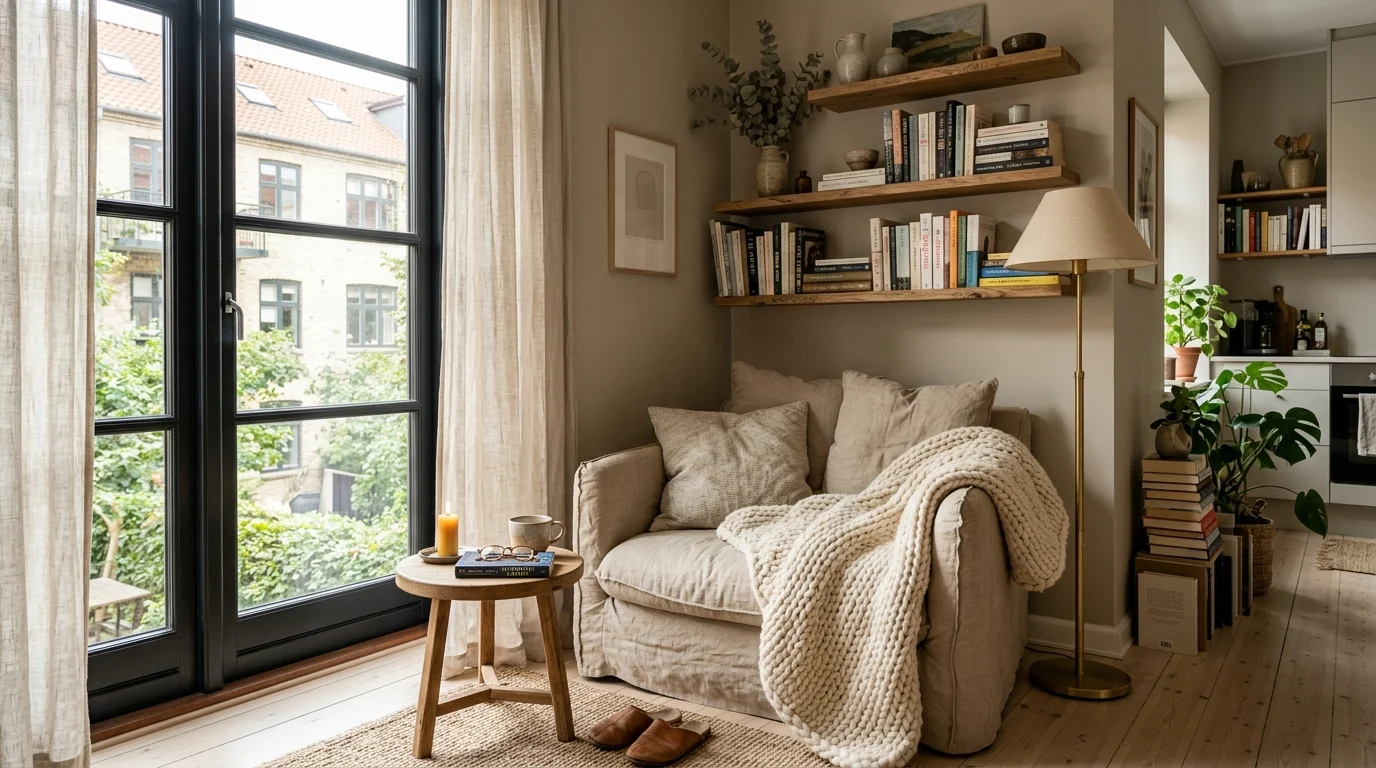
Not every home has space for a full library or extra sitting room. But honestly, you don’t need a huge house to create a cozy reading nook that feels relaxing and personal.
Sometimes the best reading spots come from forgotten corners. An empty space near a window, part of a bedroom, an awkward hallway corner, or even a quiet landing can become the perfect little retreat with a few thoughtful touches.
The goal isn’t perfection. It’s comfort. A reading nook should feel warm, inviting, and slightly tucked away from the rest of daily life.
Here’s how to turn almost any corner of your home into a cozy place to slow down and read.
Start With the Quietest Corner You Have
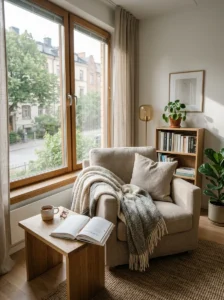
A good reading nook doesn’t need much space, but it does need the right atmosphere. Quiet corners naturally work best because they already feel slightly separated from busy areas of the home. Look for unused spots near windows, empty bedroom corners, hallway landings, or even awkward spaces under stairs. I’ve seen tiny apartments create beautiful reading nooks with just one chair and a lamp beside a window. The calmer the area feels, the easier it becomes to actually relax there. Sometimes the smallest forgotten corner ends up becoming the coziest place in the entire house.
Choose Comfortable Seating First
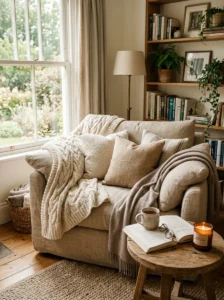
The seating matters more than almost anything else in a reading nook. A beautiful chair that feels uncomfortable after twenty minutes usually stops getting used. Soft armchairs, small loveseats, floor cushions, daybeds, or window benches all work depending on the amount of space available. The goal is comfort without overcrowding the room. I personally think slightly oversized chairs feel best because they instantly create that curled-up cozy feeling people want in a reading space. And don’t forget support pillows or a throw blanket. Those little layers make the entire corner feel softer and much more inviting.
Add Soft Lighting for a Cozy Atmosphere
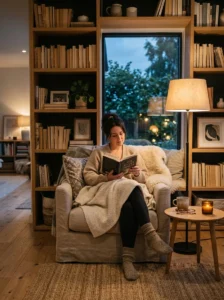
Lighting completely changes how a reading nook feels, especially during evenings or rainy afternoons. Natural daylight is ideal during the day, so placing the nook near a window helps a lot. But layered lighting matters just as much once the sun goes down. Floor lamps, wall sconces, pendant lights, or small table lamps create a warmer atmosphere than harsh ceiling lights. I love softer warm bulbs because they make the corner feel calmer almost instantly. Reading nooks should feel relaxing, not overly bright or clinical. Even one simple lamp can completely transform the mood of the space.
Use Textures to Make the Space Feel Warm
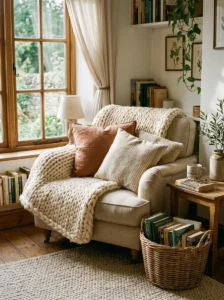
The coziest reading nooks almost always rely on texture rather than complicated decorating. Soft throws, layered pillows, woven baskets, linen curtains, plush rugs, and textured fabrics help the space feel warm and lived-in very quickly. Without texture, even beautiful corners can feel flat or unfinished. I’ve noticed chunky knit blankets instantly make a nook feel more inviting, even in minimalist homes. Rugs also help separate the nook visually from the rest of the room. Small cozy details matter more than expensive furniture here. The goal is creating a space that feels comforting the second you sit down.
Keep Books Within Easy Reach
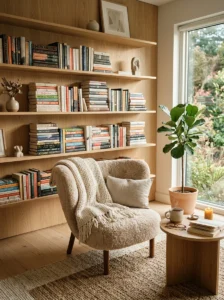
A reading nook works best when books feel naturally connected to the space instead of stored far away in another room. Floating shelves, small bookcases, baskets, built-ins, or even stacked books beside the chair all help create that relaxed library feeling people love. You don’t need huge shelving either. Even a small collection nearby makes the corner feel more intentional. I honestly think visible books automatically make spaces feel cozier and more personal. They add warmth without trying too hard. And practically speaking, keeping books nearby makes it easier to actually spend time reading there regularly.
Make Small Spaces Work Harder
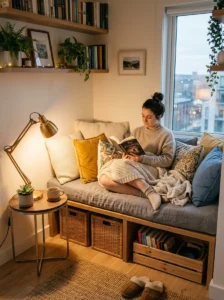
Tiny homes and apartments often need every area to serve more than one purpose, and reading nooks are no different. A bedroom corner can double as a reading spot. Window benches can hide storage underneath. Daybeds work for both lounging and guests. Even hallway landings can become useful with a slim chair and small side table. Multipurpose spaces usually feel more realistic in everyday homes anyway. I’ve seen people create beautiful reading corners beside kitchen windows or inside home offices simply by adding softer lighting and comfortable seating. You honestly need less space than most people assume.
Add Personal Decor That Feels Relaxing
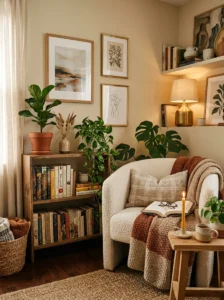
The best reading nooks usually feel personal instead of overly styled. Framed artwork, candles, plants, ceramics, favorite books, or meaningful objects help the space feel calmer and more lived-in. It doesn’t need to match perfectly. Sometimes slightly collected-looking corners feel the most welcoming. I personally love adding one or two vintage pieces because they make reading spaces feel warmer and less staged. Plants also soften corners beautifully, especially near windows with natural light. A reading nook should reflect your personality a little. That’s what makes it feel comforting enough to return to every day.
Use Curtains or Screens for Extra Privacy
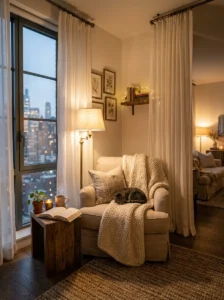
Even small visual separation can make a reading nook feel calmer and more intimate. Sheer curtains, folding screens, bookshelves, or canopy-style fabric can subtly divide the space without making the room feel closed off completely. This works especially well in open-concept homes or studio apartments where quiet corners are harder to create naturally. I’ve noticed people relax faster when the nook feels slightly hidden from the rest of the house. It creates that tucked-away feeling everyone wants from a cozy reading spot. And honestly, soft curtains instantly add warmth and texture at the same time too.
Include a Small Surface for Everyday Comfort
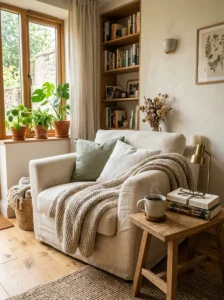
A reading nook becomes much more functional when there’s a small place nearby for practical items. Side tables, stools, floating shelves, or tiny nesting tables give you somewhere to place coffee, tea, glasses, candles, or your current book stack. Without a surface, things start balancing awkwardly on the floor or chair arms pretty quickly. I prefer smaller tables because they keep the nook feeling relaxed rather than overcrowded. Natural wood or soft textured finishes usually blend best into cozy spaces. Tiny details like this make the nook feel thoughtfully designed instead of randomly assembled in a corner.
Let the Space Feel Relaxed, Not Perfect
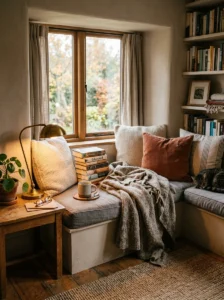
Some of the best reading nooks feel slightly imperfect in the best possible way. The blanket isn’t folded perfectly. Books are stacked casually. Pillows look soft and lived-in instead of overly arranged. That relaxed feeling is actually what makes a nook inviting. Trying too hard to style every inch can sometimes make cozy spaces feel stiff. I honestly think reading corners should feel personal first and polished second. The goal is creating somewhere you genuinely want to spend time. If the space encourages you to slow down, unplug, and stay awhile, then it’s already working beautifully.