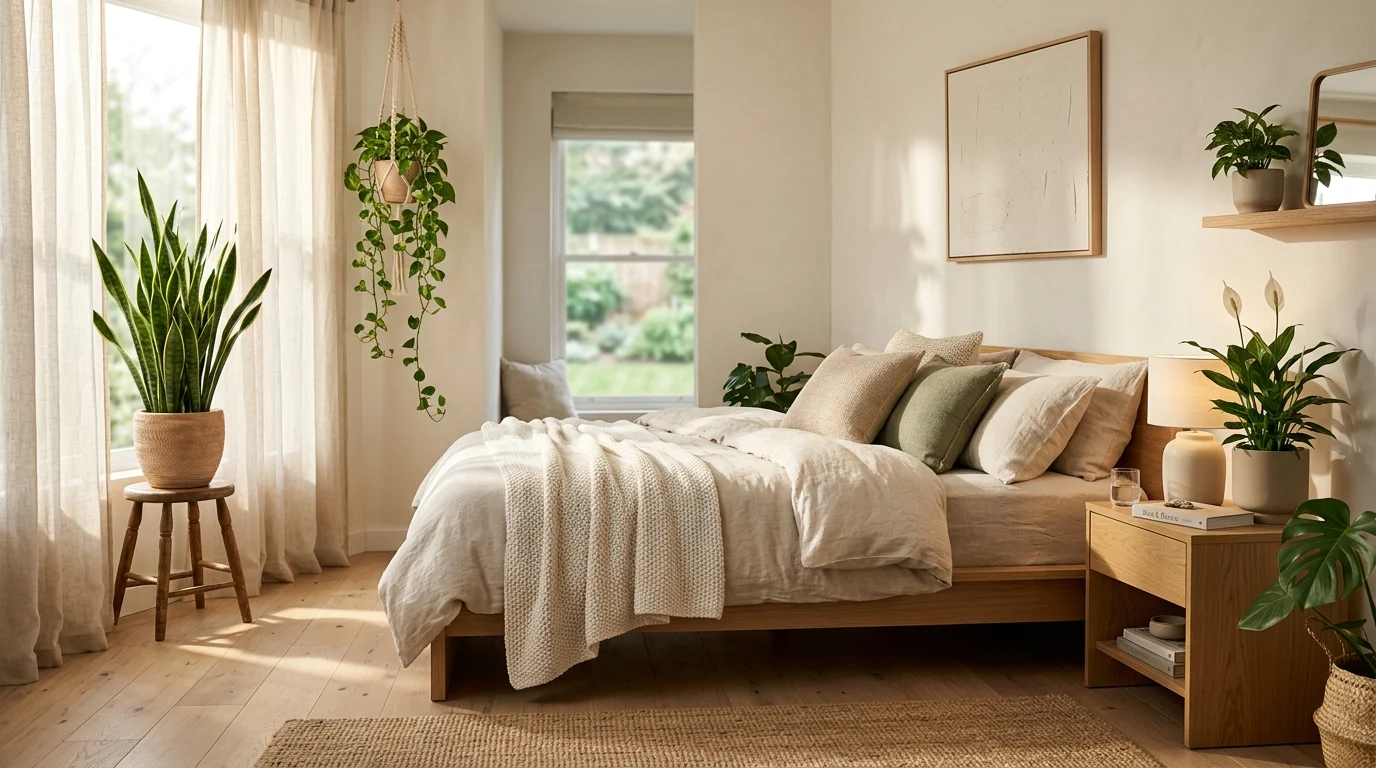
Creating a relaxing and healthy bedroom environment is about more than just stylish furniture or cozy bedding. The atmosphere of your room plays a huge role in how calm, refreshed, and comfortable you feel every day. One of the easiest ways to make a bedroom feel fresher and more peaceful is by adding indoor plants. Bedroom plants not only enhance the beauty of a space but can also help create a more calming and natural environment that supports relaxation and better sleep habits.
Over the years, indoor plants have become increasingly popular in home decor because they bring life, texture, and warmth into interiors. Research, including NASA’s famous Clean Air Study, explored how certain plants may help reduce indoor toxins in controlled environments while improving the overall feeling of freshness indoors. While houseplants alone cannot completely purify the air in a home, they still contribute positively by increasing humidity, reducing stress, and creating a soothing atmosphere.
The right bedroom plants can also improve the visual aesthetic of your room. Whether you prefer a minimalist bedroom, a cozy neutral aesthetic, or a luxurious modern space, indoor greenery makes the room feel softer and more inviting. Many bedroom plants are also low maintenance, making them perfect even for beginners who don’t have much experience caring for houseplants.
In this guide, we’ll explore the best bedroom plants that may help improve air quality while also making your bedroom feel more peaceful, elegant, and relaxing.
1. Snake Plant (Sansevieria)
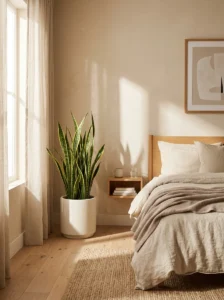
The snake plant is one of the most recommended bedroom plants because it combines beautiful minimalist aesthetics with incredibly easy maintenance. Its tall upright leaves give bedrooms a clean and organized appearance, making it especially popular in modern, Scandinavian, and Japandi-inspired interiors. The deep green leaves with subtle patterns add natural texture without making the room feel cluttered or overwhelming.
One reason snake plants are so widely loved is because they are incredibly beginner-friendly. Unlike many indoor plants that require constant attention, snake plants can survive in low light conditions and only need watering every couple of weeks. This makes them ideal for busy homeowners or people who often forget to water plants regularly. Their resilience is one of the main reasons they remain one of the most popular bedroom plants worldwide.
Snake plants also became famous because NASA’s Clean Air Study highlighted their potential ability to help remove indoor toxins such as benzene and formaldehyde in controlled environments. Another reason people prefer snake plants in bedrooms is that they release oxygen during the night, which contributes to a fresher feeling environment while you sleep.
In terms of styling, snake plants look beautiful in bedroom corners, beside dressers, near windows, or on floating shelves. Their sleek architectural shape works perfectly with neutral color palettes and cozy minimalist aesthetics. Even a single snake plant can instantly make a bedroom feel calmer, fresher, and more sophisticated without requiring expensive decor or complicated maintenance.
2. Peace Lily (Spathiphyllum)
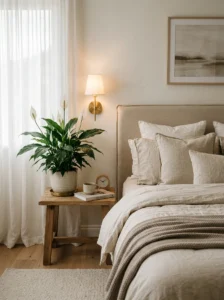
Peace lilies are one of the most elegant indoor plants you can place in a bedroom because they instantly create a calm and luxurious atmosphere. Their glossy green leaves and soft white flowers add a spa-like feeling to interiors, making them perfect for people who want their bedroom to feel peaceful and relaxing. Peace lilies work especially well in cozy neutral bedrooms, modern interiors, and minimalist spaces where greenery becomes part of the room’s overall aesthetic.
One reason peace lilies are so popular is their reputation for helping improve indoor air quality. NASA’s research found that peace lilies were among the plants capable of filtering certain airborne pollutants in controlled settings. They may also help increase humidity indoors, which can make dry bedrooms feel more comfortable, especially during colder seasons when indoor heating removes moisture from the air.
Peace lilies are also relatively low maintenance, although they need slightly more care than snake plants. They prefer indirect sunlight and evenly moist soil. Overwatering should be avoided because it can damage the roots. One helpful feature is that peace lilies visibly droop when they need water, making it easier to know when the plant requires attention.
From a design perspective, peace lilies soften the appearance of a bedroom beautifully. Their elegant leaves and blooms pair perfectly with neutral bedding, soft lighting, and warm textures. However, it’s important to remember that peace lilies can be toxic if ingested by pets or small children, so they should always be placed safely out of reach.
3. Spider Plant (Chlorophytum comosum)
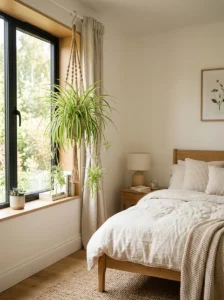
Spider plants are one of the easiest and most affordable bedroom plants, making them perfect for beginners or anyone wanting low-maintenance greenery. Their long flowing leaves create a soft and airy appearance that instantly makes a bedroom feel more relaxed and inviting. Unlike plants with rigid shapes, spider plants add movement and softness to interiors, which helps create a cozier and more natural atmosphere.
One reason spider plants remain so popular is their adaptability. They can tolerate different lighting conditions and don’t require frequent watering, which makes them ideal for busy lifestyles. Spider plants also grow quickly and produce small offshoots called “baby spiders,” which can eventually be replanted into new pots. This gives the plant an organic, overflowing appearance that works beautifully in bedrooms.
Research has suggested that spider plants may help absorb certain airborne particles and pollutants indoors. While no houseplant can completely clean the air on its own, spider plants still contribute to a fresher-feeling environment while increasing humidity and bringing calming natural energy into the room. Their greenery can also positively affect mood and reduce feelings of stress or mental fatigue.
Spider plants are especially beautiful in hanging baskets, floating shelves, or elevated planters where their cascading leaves can flow naturally downward. They pair perfectly with cozy bedroom aesthetics, Scandinavian interiors, and boho-inspired decor. Another major advantage is that spider plants are considered pet-friendly, making them one of the safest choices for households with cats or dogs.
4. Aloe Vera
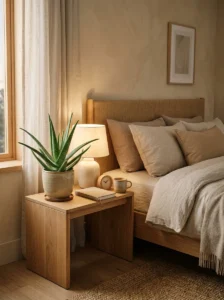
Aloe vera is one of the best bedroom plants for people who want something simple, modern, and extremely low maintenance. Known for its thick succulent leaves and clean sculptural appearance, aloe vera fits perfectly into minimalist, modern, and Japandi bedroom designs. Even though it has a very simple look, it adds a calming natural element that instantly makes a room feel fresher and more balanced.
One reason aloe vera is commonly recommended for bedrooms is because it releases oxygen at night. Many people believe this contributes to a fresher sleeping environment and creates a more relaxing atmosphere overall. Aloe vera is also well known for its soothing gel, which is often used for skincare, burns, and irritation, making it both decorative and practical.
Another huge advantage of aloe vera is how little care it requires. Since it is a succulent, aloe stores water within its thick leaves, meaning it only needs occasional watering. In fact, overwatering is usually the biggest mistake people make when caring for aloe vera. The plant thrives best in bright indirect sunlight and works beautifully near windows, bedside tables, or floating shelves.
Aloe vera also pairs wonderfully with neutral bedroom aesthetics because its soft green tone complements beige, white, cream, and wood textures naturally. It helps create a clean and organized atmosphere while bringing subtle natural beauty into the room. For anyone wanting a stylish plant without complicated care routines, aloe vera is one of the best choices available.
5. Pothos (Epipremnum aureum)
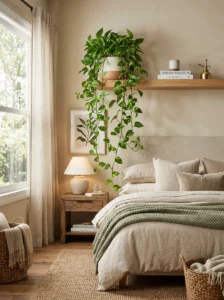
Pothos is one of the most versatile and visually beautiful bedroom plants because of its long trailing vines and effortless growth. Its cascading leaves create softness and movement within a room, helping bedrooms feel more relaxed, cozy, and connected to nature. Pothos works beautifully in hanging planters, floating shelves, tall cabinets, or wall-mounted pots where the vines can naturally drape downward.
One of the biggest reasons pothos is so popular is because it’s extremely easy to care for. It can survive in low to moderate light conditions and doesn’t require frequent watering, making it ideal for beginners or busy homeowners. Pothos also grows quickly, which allows the plant to create a lush and organic look over time without requiring much effort.
Research connected to indoor plants has shown that pothos may help reduce certain airborne compounds in controlled environments. While the actual air-purifying effects inside normal homes are more limited than many people believe, pothos still contributes positively by increasing humidity, reducing visual stress, and creating a calmer atmosphere within the bedroom.
From a design perspective, pothos adds warmth and texture without making the room feel crowded. Its flowing vines soften hard furniture lines and pair beautifully with cozy textiles, wood furniture, and neutral color palettes. However, pothos should be kept away from pets because its leaves can be toxic if ingested. Despite this, it remains one of the most stylish and beginner-friendly bedroom plants available today.