
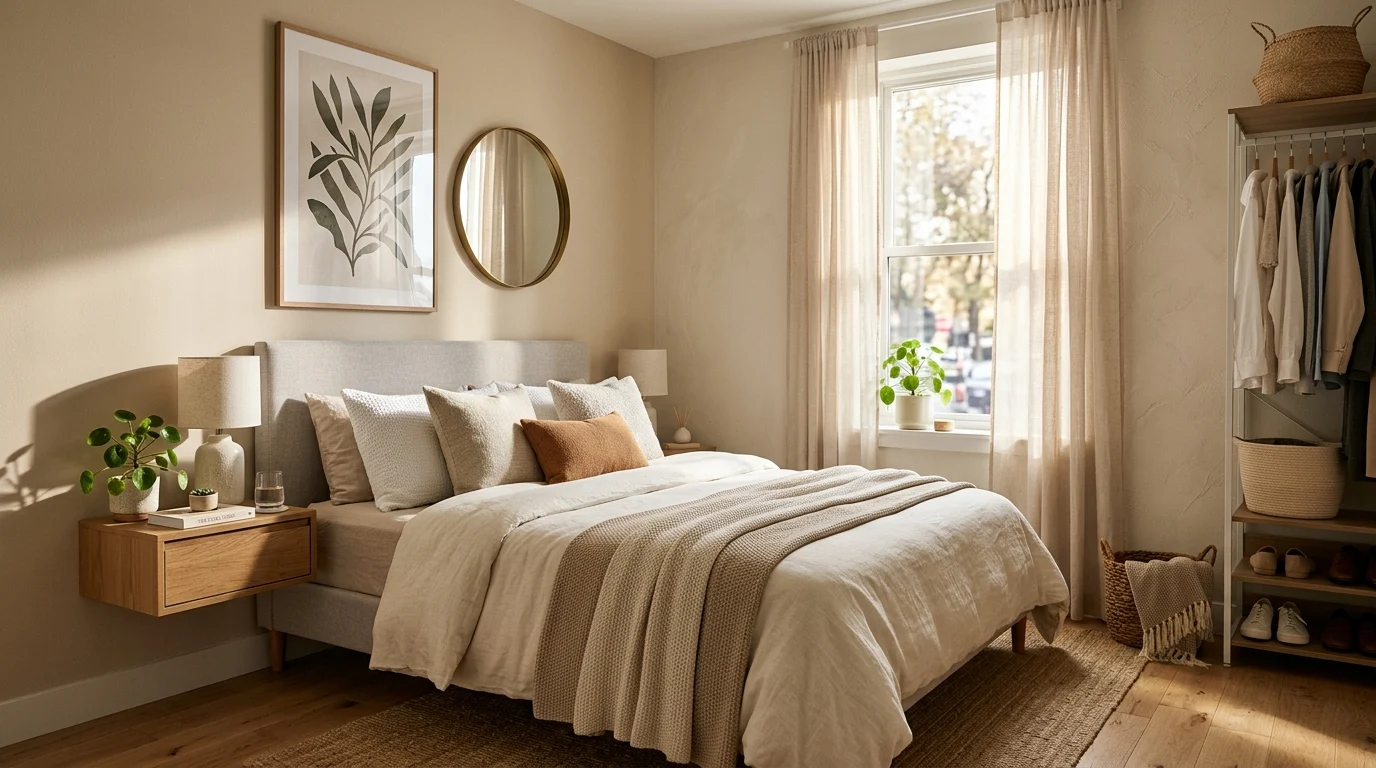
1. Using Oversized Furniture
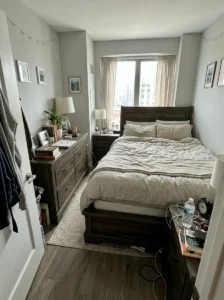
One of the biggest mistakes people make when decorating a small bedroom is choosing furniture that is too large for the space. Oversized beds, bulky dressers, large nightstands, and heavy furniture pieces can quickly make a small room feel crowded and uncomfortable. When furniture takes up too much floor space, the room loses its openness and becomes difficult to move around in comfortably.
Many people assume fewer large furniture pieces will make the room look more luxurious, but in reality, oversized items can overpower a small bedroom and make it feel visually smaller. A king-size bed in a tiny room, for example, can leave almost no walking space and create a cramped atmosphere. Instead, it’s important to choose furniture that fits the scale of the room properly.
Space-saving furniture like slim nightstands, beds with built-in storage, or compact dressers can help maximize functionality without overwhelming the room. Furniture with exposed legs or lighter finishes can also make the space feel more open because it allows light to move freely throughout the room.
The goal is to create balance. Properly sized furniture improves both comfort and visual flow, helping a small bedroom feel organized, functional, and surprisingly spacious.
2. Ignoring Vertical Storage
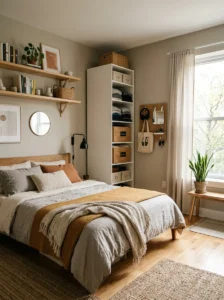
Many homeowners focus only on floor space when decorating a small bedroom and completely ignore the vertical space available on the walls. This is a huge mistake because vertical storage is one of the smartest ways to maximize a compact room without making it feel cluttered. When storage is limited to the floor, the room can quickly become crowded with dressers, bins, and storage boxes.
Using wall-mounted shelves, tall bookcases, floating cabinets, and hanging organizers allows you to store items while keeping the floor area more open. Vertical storage also draws the eye upward, which creates the illusion of higher ceilings and makes the bedroom feel larger than it actually is.
For example, floating shelves above the bed or desk can hold books, decor, or baskets without taking up valuable floor space. Tall wardrobes and narrow shelving units are also perfect for small bedrooms because they provide extra storage while using minimal room width.
In addition to being practical, vertical storage can improve the overall style of the bedroom. Properly styled shelves with plants, framed art, or decorative storage boxes can make the room look modern and organized rather than cramped.
Making use of wall space is one of the easiest and most effective ways to create a cleaner, more spacious small bedroom.
3. Choosing Dark Paint Colors Everywhere
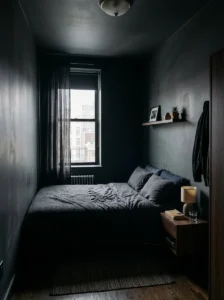
Dark paint colors can look beautiful and dramatic, but using too many dark shades in a small bedroom is a common decorating mistake. Deep colors like charcoal gray, dark brown, navy blue, or black absorb light instead of reflecting it, which can make a compact room feel even smaller and more closed in.
While dark tones can create a cozy atmosphere, covering every wall in heavy colors may make the bedroom feel cramped and overwhelming, especially if the room already has limited natural light. Small bedrooms benefit more from colors that reflect light and create an airy feeling.
Light neutral shades such as soft white, warm beige, pale gray, or muted greige can instantly make the room appear brighter and larger. These colors help bounce natural and artificial light around the space, making it feel more open and welcoming.
This doesn’t mean you must completely avoid darker colors. Rich tones can still work beautifully when used in moderation through accent walls, bedding, curtains, rugs, or decorative accessories. Combining lighter walls with darker accents creates balance and adds personality without shrinking the room visually.
Choosing the right color palette is essential because paint has a major impact on how spacious, relaxing, and comfortable a small bedroom feels every day.
4. Adding Too Much Decor
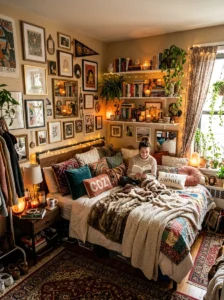
Decorating a small bedroom with too many accessories, furniture pieces, and decorative items is another very common mistake. While it’s natural to want your room to feel stylish and personal, overdecorating can quickly create visual clutter that makes the space feel messy and overcrowded.
Too many throw pillows, blankets, wall frames, candles, storage baskets, and decorative objects can overwhelm a small room and reduce the feeling of openness. When every corner is filled with decor, the eye has nowhere to rest, making the bedroom feel chaotic instead of relaxing.
Small bedrooms look best when decor is intentional and balanced. Instead of filling every shelf or wall, focus on a few carefully chosen pieces that add personality without creating clutter. A single large artwork, a stylish mirror, or textured bedding can often make a stronger design statement than many smaller accessories.
Minimal but meaningful decor also helps improve functionality. Keeping surfaces cleaner and more organized makes the room easier to maintain and creates a calmer atmosphere for sleeping and relaxing.
A well-decorated small bedroom should feel cozy, stylish, and breathable — not crowded. Choosing quality over quantity is the key to making a compact space feel beautiful and comfortable without sacrificing style.
5. Poor Lighting Choices
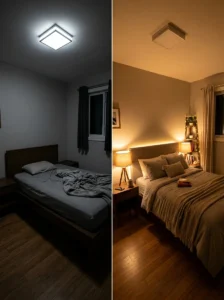
Lighting plays a huge role in how a small bedroom feels, yet many people rely only on a single overhead light fixture. Poor lighting can make even a nicely decorated room feel dark, flat, and much smaller than it actually is. In compact spaces, proper lighting is essential for creating warmth, depth, and visual openness.
A single harsh ceiling light often creates shadows that make corners appear darker and tighter. Instead, designers recommend layering different types of lighting throughout the room. Combining ambient lighting, task lighting, and accent lighting helps distribute brightness more evenly and creates a cozy atmosphere.
For example, bedside lamps, wall sconces, LED strip lights, and soft floor lamps can instantly make a small bedroom feel warmer and more inviting. Mirrors placed near windows or light sources can also help reflect light around the room and create the illusion of extra space.
Natural light is equally important. Heavy curtains that block sunlight can make the room feel closed in, while sheer curtains or lighter window treatments help maximize brightness during the day.
Good lighting not only improves visibility but also changes the mood and appearance of the entire room. A properly lit bedroom feels larger, cleaner, more comfortable, and far more relaxing.
6. Forgetting Multifunctional Furniture
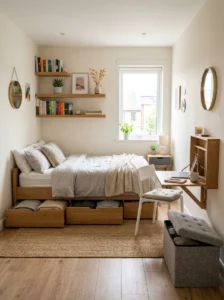
In a small bedroom, every piece of furniture should serve a purpose, yet many people waste valuable space on items that only have one function. Choosing multifunctional furniture is one of the smartest ways to maximize storage and improve organization in compact rooms.
For example, a bed with built-in drawers underneath can provide extra storage for clothes, blankets, or shoes without needing an additional dresser. Storage ottomans can work as seating while also hiding clutter inside. Floating desks, foldable tables, and wall-mounted shelves are also excellent solutions for saving space while keeping the room functional.
Multifunctional furniture helps reduce the number of items in the room, which instantly creates a cleaner and more open appearance. Instead of overcrowding the bedroom with separate furniture pieces, smart furniture combines multiple uses into one compact design.
This approach is especially useful in apartments or homes where bedroom space is limited. Furniture that folds away, stacks efficiently, or provides hidden storage can dramatically improve daily comfort and organization.
In addition to being practical, modern multifunctional furniture often looks sleek and stylish, making small bedrooms feel more modern and thoughtfully designed. Choosing smarter furniture solutions allows you to enjoy both beauty and functionality without sacrificing precious floor space.
7. Avoiding Personality and Color
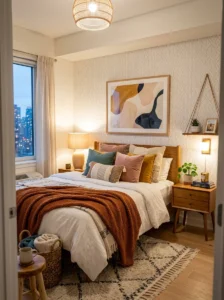
Many people believe small bedrooms should only use plain white walls and minimal decor to avoid making the space feel crowded. While light colors can help open up a room, avoiding all personality and color can make a small bedroom feel boring, cold, and lifeless.
A compact room doesn’t have to feel plain to appear spacious. Adding personality through color, texture, artwork, or decorative accents can actually make the space feel more inviting and visually interesting. The key is finding balance instead of overwhelming the room with too many bold elements.
For example, soft patterned pillows, textured bedding, a stylish rug, or a colorful piece of wall art can add warmth and character without making the room feel cluttered. Accent walls, wallpaper, or subtle color palettes like sage green, dusty blue, or warm terracotta can also create a cozy and modern atmosphere.
Personal touches such as framed photos, books, candles, or meaningful decor items help make the bedroom feel unique and comfortable. Small spaces often benefit from thoughtful design details because they make the room feel intentional and stylish.
A well-designed small bedroom should reflect your personality while still maintaining simplicity and organization. Adding carefully selected color and decor can transform a basic room into a cozy and beautiful retreat.