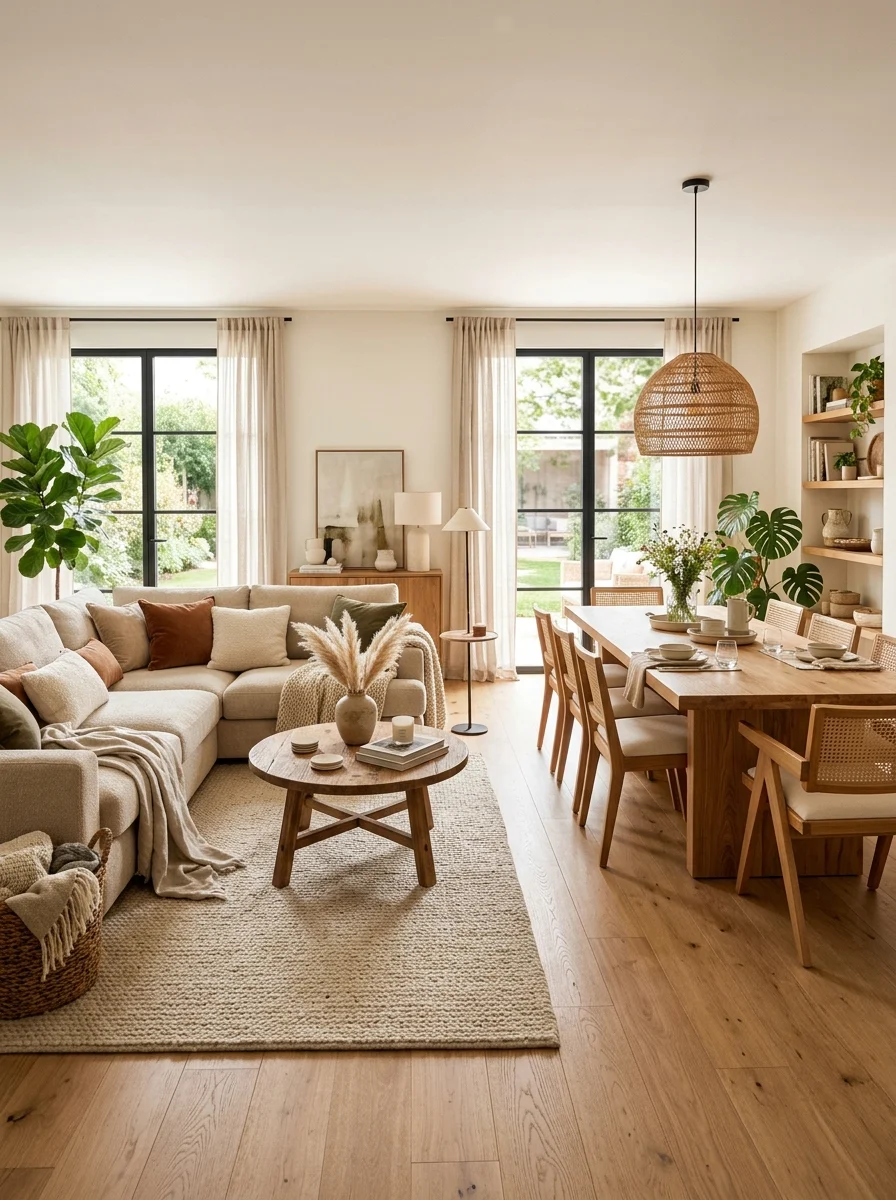
Open spaces can feel amazing… or a little confusing.
Sometimes everything blends too much, and nothing feels defined.
The right open concept living and dining room ideas can fix that, making your space feel connected, warm, and easy to move through.
Define Zones with Rugs
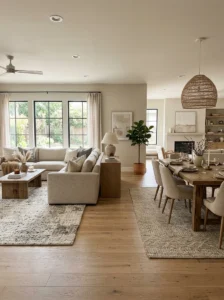
Open spaces need subtle boundaries, and rugs do that quietly. Place one under the sofa and another beneath the dining table to separate the areas without adding walls. It keeps everything connected but visually organized. Stick to similar tones so the flow feels natural, not broken. Size matters here. A rug that’s too small can make the space feel scattered. Go a little bigger than you think. It makes both areas feel grounded and more intentional.
Use a Consistent Color Palette
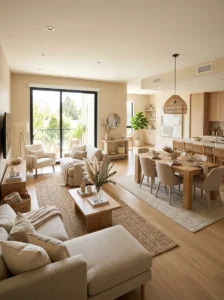
Color plays a huge role in how your space flows. When your living and dining areas share the same palette, everything feels connected without effort. You don’t need exact matches. Just keep tones similar—warm neutrals, soft grays, or earthy shades work well. This creates a calm, seamless look. If one area feels slightly different, repeat a color through pillows or decor. It ties everything together without making the space feel repetitive or overly planned.
Add a Statement Light Fixture
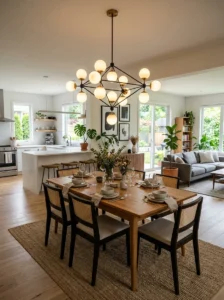
Lighting can define a space without adding clutter. A bold pendant over the dining table instantly separates it from the living area. It draws the eye upward and gives that zone its own identity. Meanwhile, keep living room lighting softer and layered. This contrast works well. It creates balance without making the space feel divided. Choose a fixture that fits your overall style. Something simple but noticeable often works better than overly dramatic pieces.
Arrange Furniture to Create Flow
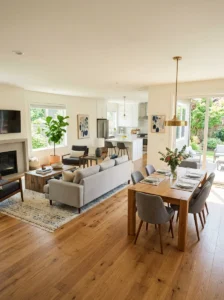
Furniture placement can either help or block movement. Keep pathways clear so the space feels easy to walk through. Avoid pushing everything against the walls. Instead, float your sofa slightly inward and align it with your dining setup. It creates a natural transition between areas. Think about how you move through the room daily. If something feels awkward, it probably is. Small shifts can make a big difference in how the space functions.
Use Matching Materials
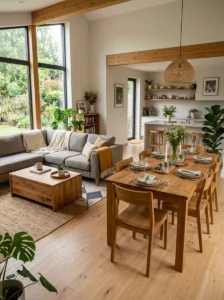
Repeating materials across both areas helps everything feel connected. For example, if your dining table is wood, bring in a wooden coffee table or side table. It doesn’t have to match exactly. Just stay within a similar tone or finish. This creates a subtle link between the spaces. It’s one of those details people don’t always notice, but they feel it. The room feels more cohesive without trying too hard.
Create a Visual Divider with Furniture
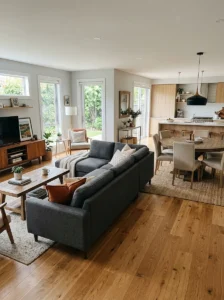
You don’t need walls to separate spaces. A sofa placed with its back toward the dining area can act as a natural divider. It keeps both zones distinct while still open. You can also use a console table behind the sofa for added function. It’s practical and looks intentional. This approach works especially well in smaller spaces where adding partitions would feel too heavy or restrictive.
Keep the Layout Balanced
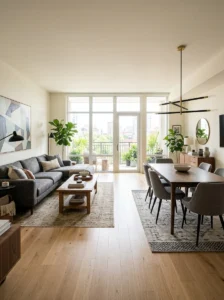
Balance matters more in open spaces because everything is visible at once. If one side feels heavier, the whole room can feel off. Try to distribute furniture and decor evenly between the living and dining areas. This doesn’t mean symmetry. Just a sense of visual weight being spread out. If your dining table is large, keep your living area from feeling too minimal. A few extra textures or pieces can help balance things naturally.
Layer Lighting for Each Zone
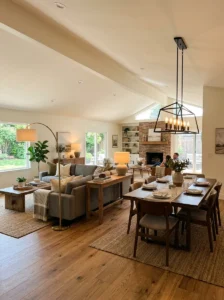
One overhead light isn’t enough for an open concept room. Each area needs its own lighting style. Use a pendant over the dining table, then add lamps in the living area for softer light. This layering creates depth and makes each zone feel purposeful. It also allows you to adjust the mood depending on the time of day. Lighting should feel flexible, not fixed. That’s what makes the space feel comfortable.
Add a Cohesive Flooring Style
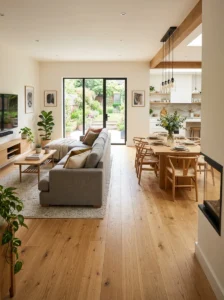
Flooring ties everything together more than you might expect. Using the same flooring throughout keeps the space visually connected. It creates a smooth transition from one area to another. If you want variation, use rugs instead of changing the floor material. Mixed flooring can break the flow. A continuous surface keeps the room feeling open, larger, and more harmonious without extra effort.
Incorporate Open Shelving
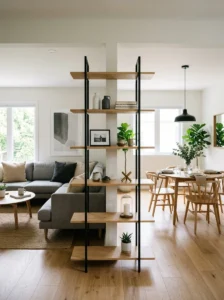
Open shelving can act as both storage and a subtle divider. Place a shelf unit between the living and dining areas without fully blocking the view. It keeps the open feel while adding structure. Style it lightly with books, plants, or simple decor. Avoid overcrowding it. The goal is to create a soft separation, not a wall. It also adds personality to the space without making it feel busy.
Use Neutral Base Colors
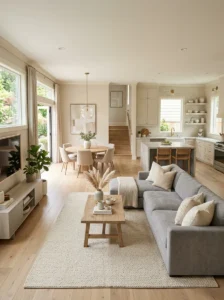
Neutral tones make it easier to blend both areas smoothly. Start with a base of whites, beiges, or soft grays, then build from there. This keeps the space calm and cohesive. You can always add small accents later. When the base is neutral, everything else feels easier to style. It also helps the room age well over time. Trends change, but neutral foundations stay relevant.
Add Texture for Depth
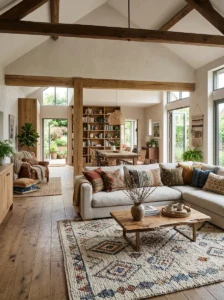
Without walls, texture becomes even more important. It keeps the space from feeling flat. Mix materials like wood, fabric, metal, and woven elements across both areas. A textured rug, soft cushions, or a linen dining setup can make a difference. These details add warmth and interest without adding clutter. It’s subtle, but it makes the room feel more complete and thoughtfully designed.
Keep Decor Minimal but Intentional
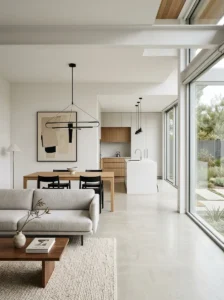
Too many decorative pieces can make an open space feel overwhelming. Keep things simple and intentional instead. Choose a few items that actually add value to the room. A statement vase, a piece of art, or a plant can be enough. Leave some empty space. It helps everything breathe. When decor feels controlled, the room automatically feels calmer and more welcoming.
Align Furniture Styles
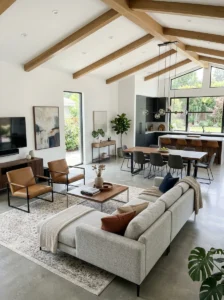
Mixing styles can work, but in an open layout, it needs to feel connected. Try to keep your furniture within a similar style range. For example, if your dining set is modern, avoid a heavily traditional sofa. Small differences are fine. Just avoid extremes. This keeps the overall look cohesive. The goal is for both areas to feel like they belong to the same home, not separate rooms pushed together.
Use a Statement Dining Table
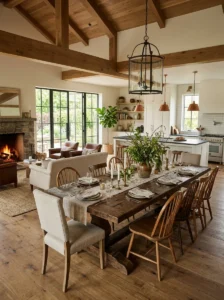
The dining table can anchor the entire open space. Choose one that stands out slightly without clashing. It gives the dining area a clear identity. Pair it with simple chairs so it doesn’t feel too heavy. This balance works well. A strong focal point in one area helps define it, while the rest of the space stays calm and connected.
Add Greenery Throughout
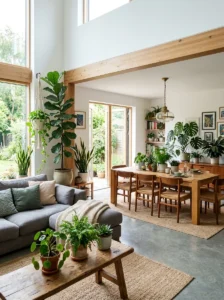
Plants bring life into open spaces without disrupting the flow. Place a few in both the living and dining areas to keep things balanced. They add color, texture, and freshness. You don’t need many. Even two or three well-placed plants can make the space feel more alive. It’s a simple way to connect both areas visually while keeping the atmosphere light and natural.
Use a Consistent Accent Color
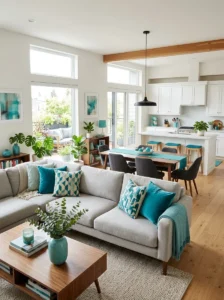
Adding one accent color across both areas can tie everything together. It could be through pillows, artwork, or small decor pieces. Keep it subtle. The goal is connection, not contrast. When the same color appears in different spots, the eye naturally links the spaces. It’s an easy trick that makes the entire room feel more cohesive without much effort.
Keep Pathways Clear
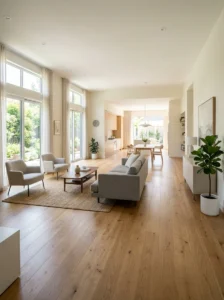
Flow isn’t just visual—it’s physical too. Make sure there’s enough space to move easily between areas. Avoid blocking walkways with furniture or decor. Open layouts should feel easy to navigate. If you have to squeeze through, something needs adjusting. Clear pathways make the space feel bigger and more comfortable. It’s one of those details that quietly improves how the room works every day.
Mix Comfort with Function
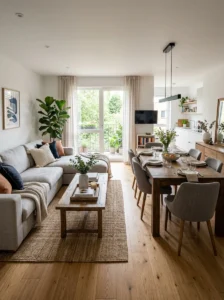
An open space should feel good to live in, not just look nice. Balance comfort with practicality. Choose furniture that works for both relaxing and everyday use. A comfortable sofa, a functional dining setup, and flexible pieces make the space more livable. It doesn’t have to be perfect. Just something that fits your lifestyle. When a room works well, it naturally feels more welcoming.