
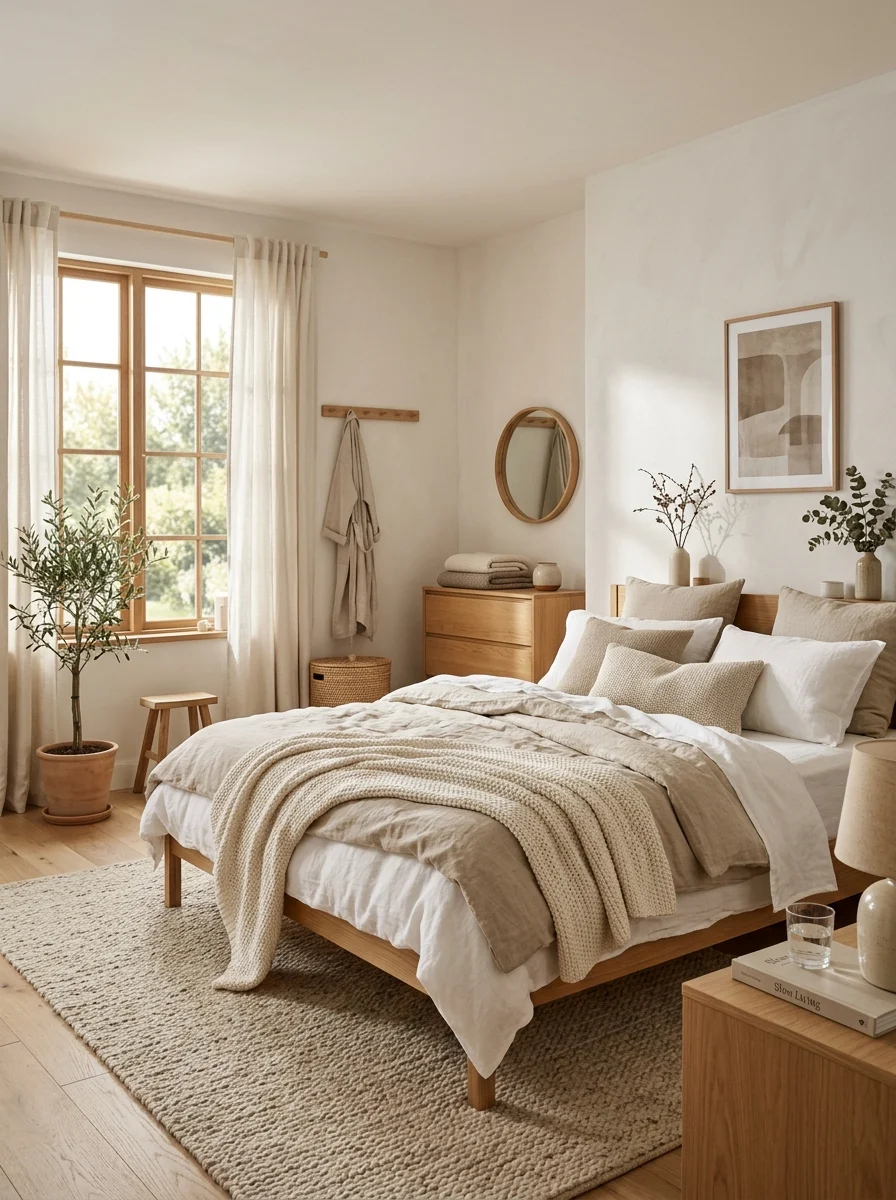
A calm bedroom never goes out of fashion.
But getting that soft, effortless look? Not always easy.
If your space feels cluttered, mismatched, or just “not right,” neutral bedroom decor ideas can fix that fast—without constant updates.
Layered Neutral Bedding

There’s something about a well-layered bed that instantly makes a room feel put together. Start with soft white or cream sheets, then add a slightly warmer duvet and finish with a textured throw. It doesn’t have to be perfect—actually, it shouldn’t be. Let things fall naturally. That relaxed look feels more inviting than stiff hotel corners. Mixing fabrics like linen and cotton adds depth without adding color. And honestly, nothing beats climbing into a bed that looks this cozy after a long day.
Soft Beige Wall Tones

Bright white walls can feel a bit harsh, especially in the evening. A soft beige or warm off-white instantly changes the mood. It wraps the room in a gentle, calming tone without feeling dull. You don’t need to go dark—just enough warmth to take the edge off. These shades also work with almost any decor style, which makes them a safe long-term choice. If you’re unsure, test a small patch first. Lighting can shift everything more than you expect.
Natural Wood Furniture

Wood brings a quiet warmth that paint alone can’t achieve. A simple oak bed frame or a small wooden nightstand can ground the entire room. It doesn’t need to match perfectly either. Slight variations in tone often feel more natural. Avoid overly glossy finishes—matte or lightly treated wood feels softer and more relaxed. Even a small bench at the foot of the bed can make a difference. It’s subtle, but it adds that lived-in, comfortable feel people always notice.
Minimalist Nightstands

Too much clutter next to your bed can make the whole room feel busy. A clean, simple nightstand works better. Keep only what you actually use—a lamp, maybe a book, and something small like a candle or dish. That’s enough. Empty space isn’t wasted space here. It gives your eyes somewhere to rest. And strangely, it makes everything look more intentional. If your nightstand feels crowded, try removing half the items. You’ll notice the difference right away.
Linen Curtains for Soft Light

Heavy curtains can block more than just light—they can weigh down the whole room. Linen curtains feel lighter, softer, and a bit more relaxed. They let sunlight filter through instead of shutting it out completely. That gentle glow makes everything look better. Choose neutral shades like ivory or sand for a clean look. And don’t stress about wrinkles. Linen looks best slightly imperfect. It adds to that effortless, calm atmosphere you’re trying to create.
Textured Area Rugs

A neutral bedroom without texture can fall flat pretty quickly. That’s where a good rug comes in. Go for something woven, slightly thick, or even a little uneven in texture. It adds warmth underfoot and visual interest without needing bold colors. Placement matters too—let it extend beyond the bed so it frames the space properly. A rug that’s too small can make the room feel disconnected. Bigger often works better here, even if it feels like a stretch.
Neutral Wall Art
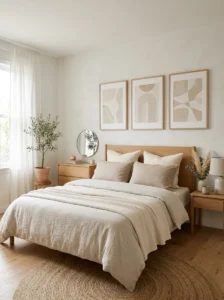
Blank walls can feel unfinished, but loud artwork can ruin the calm vibe. Neutral wall art sits right in the middle. Think soft landscapes, abstract shapes, or simple line drawings. Keep the colors muted and the frames minimal. You don’t need a full gallery wall either. One or two well-placed pieces often look better than a crowded setup. If you’re unsure, lean artwork against the wall instead of hanging it. It feels more relaxed and easier to change later.
Cozy Throw Blankets

A throw blanket does more than keep you warm—it adds a layer of comfort to the room visually. Drape it loosely over the bed or a chair. Don’t fold it perfectly. Neutrals like cream, taupe, or light gray work year-round and don’t compete with other elements. Texture matters more than color here. Chunky knits or soft woven fabrics make the space feel more inviting. It’s a small detail, but it’s one people always notice without realizing why.
Subtle Pattern Mixing

Patterns can work in a neutral room—you just have to keep them soft. Thin stripes, faded checks, or low-contrast prints add interest without overwhelming the space. The trick is staying within the same color family. That way, nothing feels out of place. Mixing two or three patterns usually works best. Any more, and things start to feel busy. If you’re hesitant, start small with pillows or a throw. It’s an easy way to test what feels right.
Statement Headboard
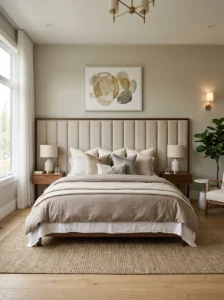
A headboard can quietly change the entire feel of your bedroom. Go for something neutral but textured—maybe upholstered fabric or lightly padded panels. It adds height and makes the bed feel more complete. You don’t need bold colors for it to stand out. Shape and material do most of the work. Slightly oversized headboards often look more luxurious, even in smaller rooms. And once it’s in place, you’ll notice how everything else starts to feel more balanced around it.
Warm Ambient Lighting

Lighting can shift a room from cold to cozy in seconds. Skip harsh overhead lights when you can. Instead, use bedside lamps or soft floor lighting with warm bulbs. The glow feels gentler, especially at night. It also softens neutral tones, making them feel richer and more layered. Try turning off your main light one evening and relying only on lamps. It’s a small change, but it completely alters the mood of the space.
Clean, Simple Furniture Lines
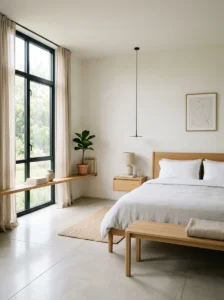
Furniture with clean lines keeps a neutral bedroom from feeling cluttered. Avoid overly detailed or bulky pieces. Simple shapes feel lighter and easier on the eyes. A sleek bed frame or a minimal dresser can do more than something heavily designed. It’s not about having less—it’s about choosing pieces that don’t compete for attention. When everything feels balanced, the room naturally feels calmer. And that’s really the goal here.
Soft Grey Accents

Grey works well as a quiet contrast in a neutral palette. It breaks up all the warm tones without making the room feel cold. A soft grey throw, cushion, or even a rug can add just enough variation. Stick to lighter shades rather than deep charcoal. Those can feel heavy in smaller spaces. When paired with beige or cream, grey feels balanced and modern. It’s subtle, but it keeps the room from looking too one-note.
Decluttered Surfaces
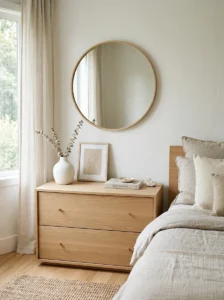
A neutral bedroom depends heavily on what’s not there. Too many items can make even the prettiest decor feel overwhelming. Keep surfaces like dressers and nightstands mostly clear. Choose a few meaningful pieces instead of filling every corner. It’s not about being minimal—it’s about being selective. If something doesn’t add value or comfort, it probably doesn’t need to stay. A clear surface often feels more calming than one filled with decorative items.
Mixed Fabric Textures

Neutral doesn’t mean flat. Mixing fabrics brings life into the room without needing color. Combine linen, cotton, wool, or even a bit of velvet if you like contrast. Each texture catches light differently, which adds depth in a subtle way. It’s one of those details that makes a room feel thoughtfully designed instead of plain. Try layering different materials on the bed or seating area. Even small changes can make the whole space feel richer.