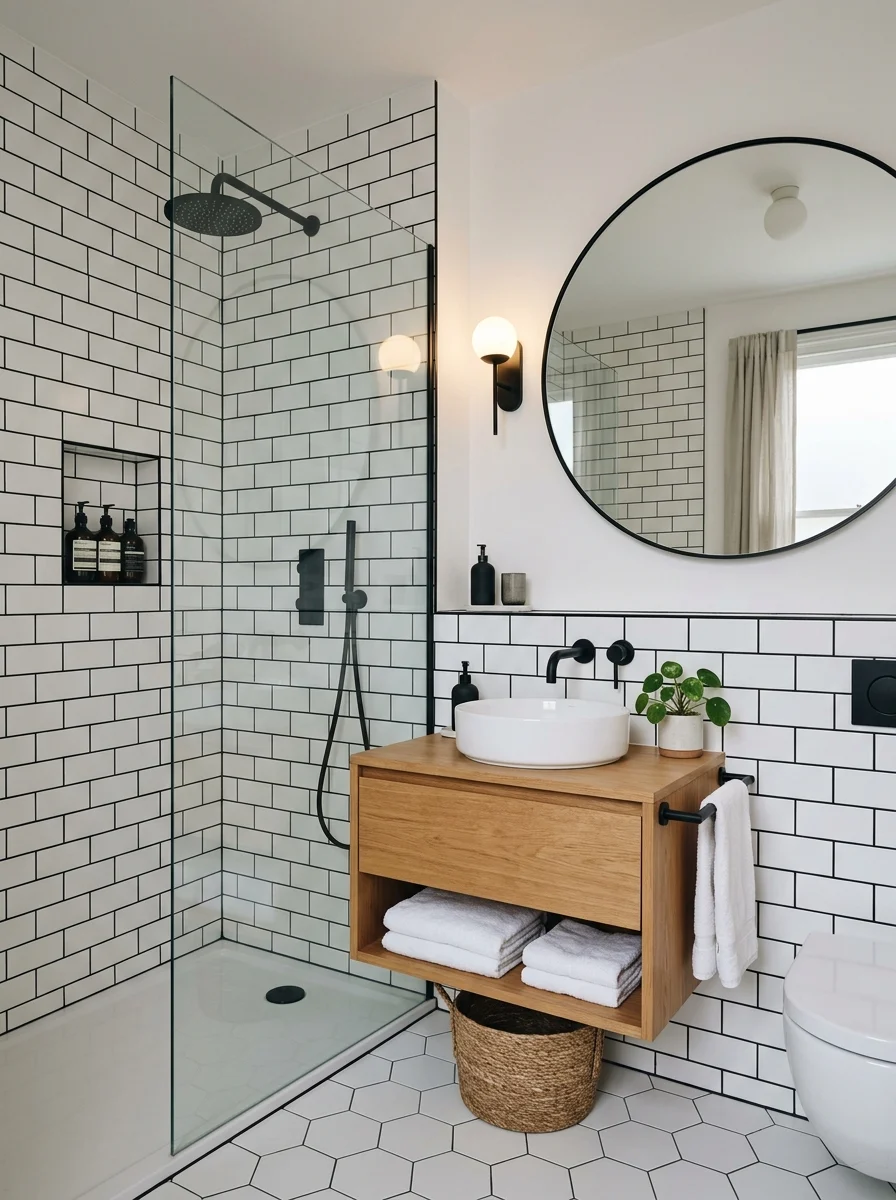
Black grout changes the whole look of a bathroom. It’s a small detail, but it stands out.
It adds contrast without adding clutter. And somehow, everything feels more defined.
If your space looks a little flat, this might be exactly what it needs.
1. White Subway Tiles with Bold Black Grout
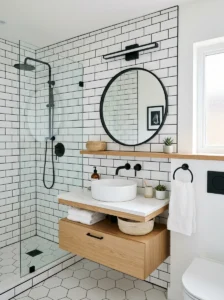
White subway tiles are simple on their own, but black grout gives them a completely different feel. The lines become more visible, creating a clean grid that adds structure. It’s not just about color, it’s about definition. The contrast feels sharp but still classic. You can keep everything else minimal. A black mirror or faucet ties it together nicely. The overall look stays fresh, but with a bit more personality than plain white tiles. It’s a small change that makes a noticeable difference.
2. Glossy Tiles with Deep Contrast Lines
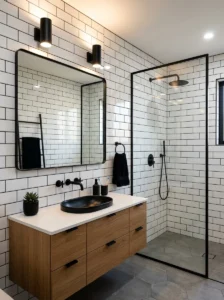
Glossy tiles reflect light beautifully, but adding black grout gives them more presence. The shine stays, but now there’s structure underneath. The contrast between the smooth surface and dark lines creates a layered look. It feels slightly modern, but not too bold. You can use this on walls or even inside a shower. Pair it with soft lighting and simple decor. The grout does most of the work, turning basic tiles into something more visually interesting.
3. Black Grout in a Minimal White Bathroom
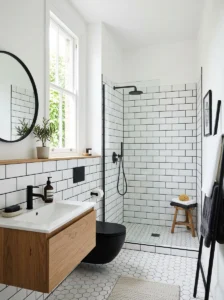
A minimal white bathroom can sometimes feel too plain. Black grout helps break that up without adding extra decor. It adds detail where you need it most. The lines create a subtle pattern, making the space feel more designed. You don’t have to change much else. Maybe add a few black fixtures to match. The balance stays clean, but now it has depth. It’s a quiet upgrade, but one that makes the whole room feel more intentional.
4. Herringbone Tile Pattern with Black Grout
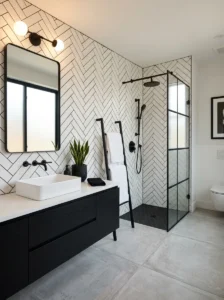
Herringbone tiles already have movement, but black grout makes the pattern stand out even more. Each piece becomes more defined, which adds a sense of texture. It draws your eye without feeling overwhelming. This works especially well in smaller spaces where you want interest without clutter. Keep the colors neutral to let the pattern shine. The grout highlights every angle, giving the bathroom a slightly elevated, custom look that still feels easy to live with.
5. Marble Tiles with Black Grout Contrast
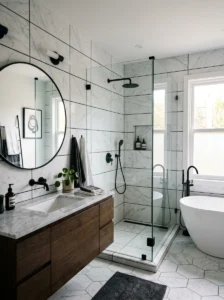
Marble tiles usually feel soft and subtle, but black grout adds a sharper edge. It outlines each tile, making the pattern more noticeable. The mix of natural veining and bold lines creates contrast in a quiet way. It doesn’t take away from the marble, just enhances it. Pair this with simple fixtures and soft lighting. The result feels balanced. A little refined, a little modern. It’s a nice way to add character without losing that calm, polished look.
6. Floor Tiles with Black Grout Detailing
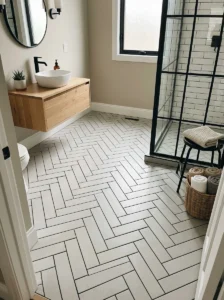
Using black grout on floor tiles adds definition where you don’t always expect it. It makes each tile stand out more, especially in lighter shades. The pattern becomes clearer, even if the tiles are simple. It also hides dirt better, which is practical. The look feels grounded, not too busy. You can keep walls softer to balance things out. It’s a subtle way to add contrast underfoot, without making the whole bathroom feel heavy or dark.
7. Shower Walls with Black Grout Lines
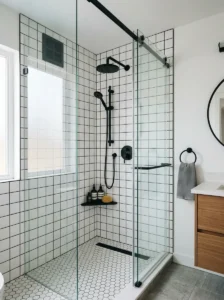
Inside the shower, black grout can completely change the feel of the space. It adds structure to the walls, making everything look more organized. Even simple tiles start to feel more intentional. Pair it with black hardware for a cohesive look. The contrast stands out, especially with lighter tiles. It’s clean, but not plain. The lines guide your eye, giving the shower area a bit more presence without adding anything extra.
8. Small Bathroom with Defined Tile Grid
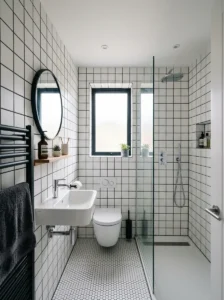
In a small bathroom, details matter more. Black grout helps define the tile layout, making the space feel more structured. It can actually make the room feel more designed, even if it’s compact. Light tiles keep it from feeling cramped, while the grout adds depth. You don’t need bold decor. The pattern itself becomes the feature. It’s a simple trick, but it works well in tight spaces where every detail counts.
9. Matte Tiles with Strong Grout Contrast
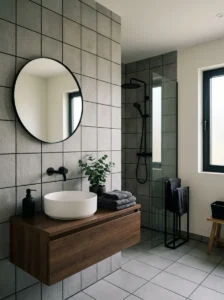
Matte tiles have a softer finish, but black grout adds contrast that keeps them from feeling flat. The mix of textures creates a nice balance. It’s not shiny or bold, just quietly interesting. The grout lines give the tiles more presence. You can use this on walls or floors. Keep the rest of the design simple. The combination feels modern, but still relaxed. It’s an easy way to add detail without overcomplicating the space.
10. Vintage Style Tiles with Black Grout
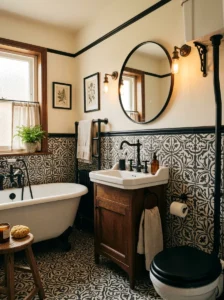
Vintage-style tiles already have character, and black grout enhances that. It highlights the shapes and patterns, making them stand out more. The look feels a bit nostalgic, but still fresh. Pair it with classic fixtures for a cohesive feel. The grout adds definition without taking away from the design. It’s a nice balance between old and new. The bathroom feels more personal, with just a bit of contrast to keep things interesting.
11. Large Format Tiles with Subtle Grout Lines
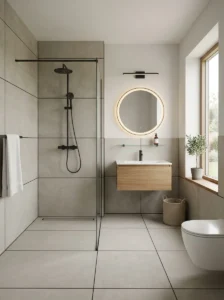
Large tiles usually have fewer grout lines, but using black grout still adds contrast. It creates a subtle outline that breaks up the surface just enough. The look stays clean, but gains a bit of structure. It’s not as bold as smaller tiles, but it still makes a difference. Pair it with minimal decor to keep the focus on the materials. The result feels modern, simple, and quietly detailed.
12. Black Grout with Neutral Color Palette
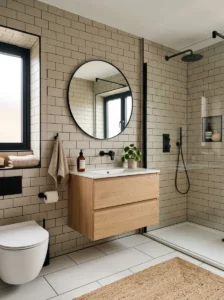
A neutral palette can sometimes feel too soft. Black grout brings in contrast without adding new colors. It works well with beige, white, or even soft gray tiles. The lines add definition while keeping the overall tone calm. You don’t need bold accents. The grout itself becomes part of the design. It’s a simple way to add depth without changing the entire look of the bathroom.
13. Mixed Tile Shapes with Black Grout
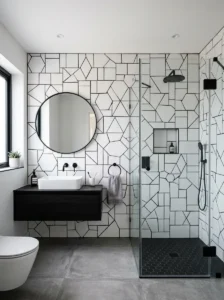
Using different tile shapes can create visual interest, and black grout helps tie everything together. It outlines each piece, making the mix feel intentional. The contrast keeps the design from looking messy. Even with different shapes, the space feels cohesive. You can keep colors simple to let the layout stand out. It’s a more playful idea, but still controlled. The grout acts like a guide, bringing everything into balance.