
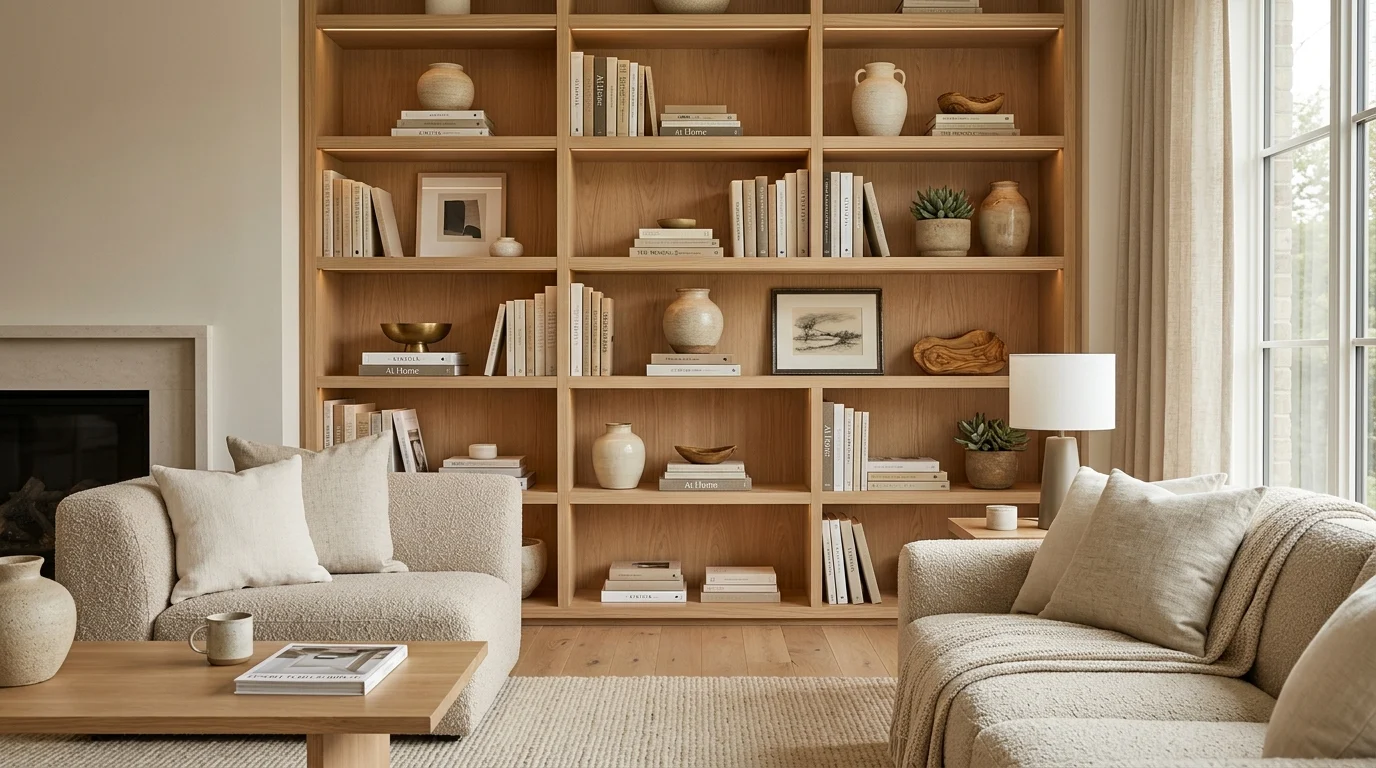
A beautifully styled bookshelf can completely transform the look and feel of a room. More than just a place to store books, shelves act as a design feature that adds personality, warmth, texture, and visual balance to your home. Whether you have built-in shelves in your living room, a modern open bookcase in your office, or floating shelves in a bedroom, learning how to style them properly can instantly make your space feel more polished and professionally designed.
Many people struggle with bookshelf styling because it can easily look too cluttered, too empty, or visually unbalanced. The secret to achieving that effortless designer look is understanding how to combine books, decorative objects, textures, artwork, and negative space in a thoughtful way. Professional designers carefully layer items with different shapes, heights, and materials to create shelves that feel curated instead of chaotic.
The good news is that you don’t need expensive decor or a huge budget to create stunning shelves. By using a few simple styling principles and arranging items intentionally, you can achieve a timeless bookshelf design that reflects your personality and complements your home aesthetic. In this step-by-step guide, you’ll learn exactly how to style a bookshelf like a professional interior designer.
1. Start With a Clean Slate
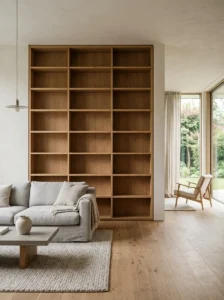
The very first step to styling a bookshelf like a professional is removing everything from the shelves and starting with a completely clean slate. While this may feel time-consuming at first, it’s one of the most important parts of the entire process because it allows you to see the space clearly and rethink the arrangement from scratch. Many shelves look cluttered simply because items have been added over time without any real intention or balance.
Clearing the shelves gives you the opportunity to evaluate every object individually. As you remove items, decide which pieces actually fit your aesthetic and which ones no longer work in the space. This helps create a more intentional and cohesive design instead of overcrowded shelves filled with random decor.
Once the shelves are empty, clean the surfaces thoroughly and take a moment to analyze the structure of the bookshelf itself. Notice the spacing between shelves, the height, width, and overall layout. This helps you plan where larger objects, stacked books, or decorative accents will look best later on.
Starting fresh also helps you approach the styling process more creatively. Instead of trying to work around existing clutter, you’ll have the freedom to build a curated bookshelf design from the ground up with balance, harmony, and visual flow in mind.
2. Gather All Your Styling Essentials
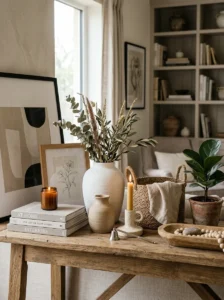
Before placing anything back onto the shelves, it’s helpful to gather all of your styling pieces in one area. Professional interior designers often “shop their home” first, meaning they collect decor from different rooms before buying anything new. This approach saves money while helping create a more personal and layered design aesthetic.
Your bookshelf styling essentials may include books, ceramic vases, framed artwork, decorative bowls, candles, baskets, trays, plants, sculptures, or sentimental objects collected over time. The key is choosing items with different heights, textures, shapes, and finishes so the shelves feel visually interesting rather than flat or repetitive.
Books are usually the foundation of shelf styling because they naturally add structure, height, and texture. Decorative objects should complement the books instead of competing with them. Try to stick with a cohesive color palette so the shelves feel balanced and harmonious. Neutral tones mixed with wood, stone, ceramic, glass, or metal textures often create the most timeless look.
Gathering everything beforehand also makes the styling process much easier because you can experiment with combinations freely. Seeing all your decor pieces together allows you to identify which items work best together and which ones may feel too bulky, too small, or visually distracting once placed on the shelves.
3. Use Books as the Foundation
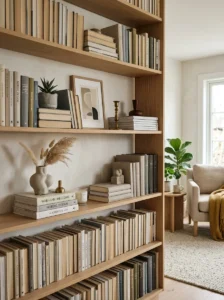
Books are the heart of bookshelf styling and should always serve as the foundation of your design. Without books, shelves can feel empty or overly decorative. Even in modern minimalist interiors, books add warmth, personality, texture, and authenticity to the space. They help create the layered, collected look that professional designers often achieve.
One of the easiest ways to style bookshelves beautifully is by mixing vertical and horizontal book arrangements. Vertical rows create height and structure, while horizontal stacks break up the layout and provide surfaces for decorative objects. A small vase, candle, or sculpture placed on top of stacked books instantly creates depth and dimension.
Color coordination can also make shelves look more cohesive. Some homeowners prefer arranging books by neutral tones for a soft minimalist aesthetic, while others use colorful spines to add personality and visual interest. Removing bright dust jackets can also help create a cleaner and more sophisticated appearance.
Books should feel natural rather than overly perfect. Slightly uneven stacks or casually layered arrangements often make shelves feel more relaxed and lived-in. The goal is to create balance without making the shelves appear stiff or overly staged.
Remember that bookshelves are meant to showcase your interests and personality. Including books you genuinely love helps the shelves feel authentic while making the space more inviting and personal.
4. Layer Decorative Objects Thoughtfully
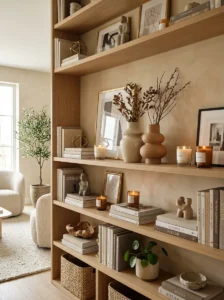
Once the books are in place, the next step is layering decorative objects throughout the shelves. This is where your bookshelf begins to feel styled and curated rather than simply functional. The key to professional-looking shelves is layering objects in a way that creates depth, movement, and visual balance.
Start by placing larger items first, such as framed artwork, vases, baskets, or sculptural decor. Leaning artwork against the back of the shelf instantly adds dimension and prevents the arrangement from looking too flat. Smaller decorative pieces can then be layered in front of books or beside taller objects to create a more natural composition.
Mixing different materials is also important for adding texture and contrast. Combining smooth ceramics with natural wood, woven baskets, glass accents, or matte stone finishes helps the shelves feel richer and more visually dynamic. Professional designers often combine soft and hard textures to create balance and warmth.
When styling shelves, avoid placing decor in perfectly straight lines or symmetrical patterns on every shelf. Instead, vary the placement slightly so the arrangement feels organic and relaxed. Odd-numbered groupings often look more visually appealing and less predictable than perfectly matched pairs.
The overall goal is to create shelves that feel layered, intentional, and collected over time rather than overly styled or cluttered with too many decorative items.
5. Create Balance With Negative Space
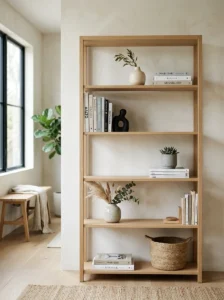
One of the biggest mistakes people make when styling bookshelves is overfilling every available space. Professional designers understand that negative space is just as important as the objects themselves. Negative space refers to the empty areas around decor items that allow the eyes to rest and appreciate the arrangement more clearly.
Leaving some shelves partially empty creates a sense of openness and balance. It prevents the bookshelf from feeling visually heavy or chaotic. Negative space also helps highlight your favorite decor pieces because they have room to stand out instead of competing with too many surrounding objects.
A well-balanced bookshelf combines filled sections with open breathing room. For example, one shelf may feature a stack of books and a vase, while the shelf above remains more minimal with only one sculptural object. This variation creates rhythm and movement throughout the entire bookshelf design.
Negative space is especially important in modern, minimalist, Japandi, or Scandinavian interiors where simplicity plays a major role in the overall aesthetic. However, even more eclectic or maximalist styles benefit from moments of openness to maintain visual harmony.
If your shelves start looking cluttered, try removing a few objects rather than adding more. Often, the simplest adjustments create the most elegant and professional-looking results. Remember that bookshelf styling is about thoughtful curation, not filling every inch of available space.