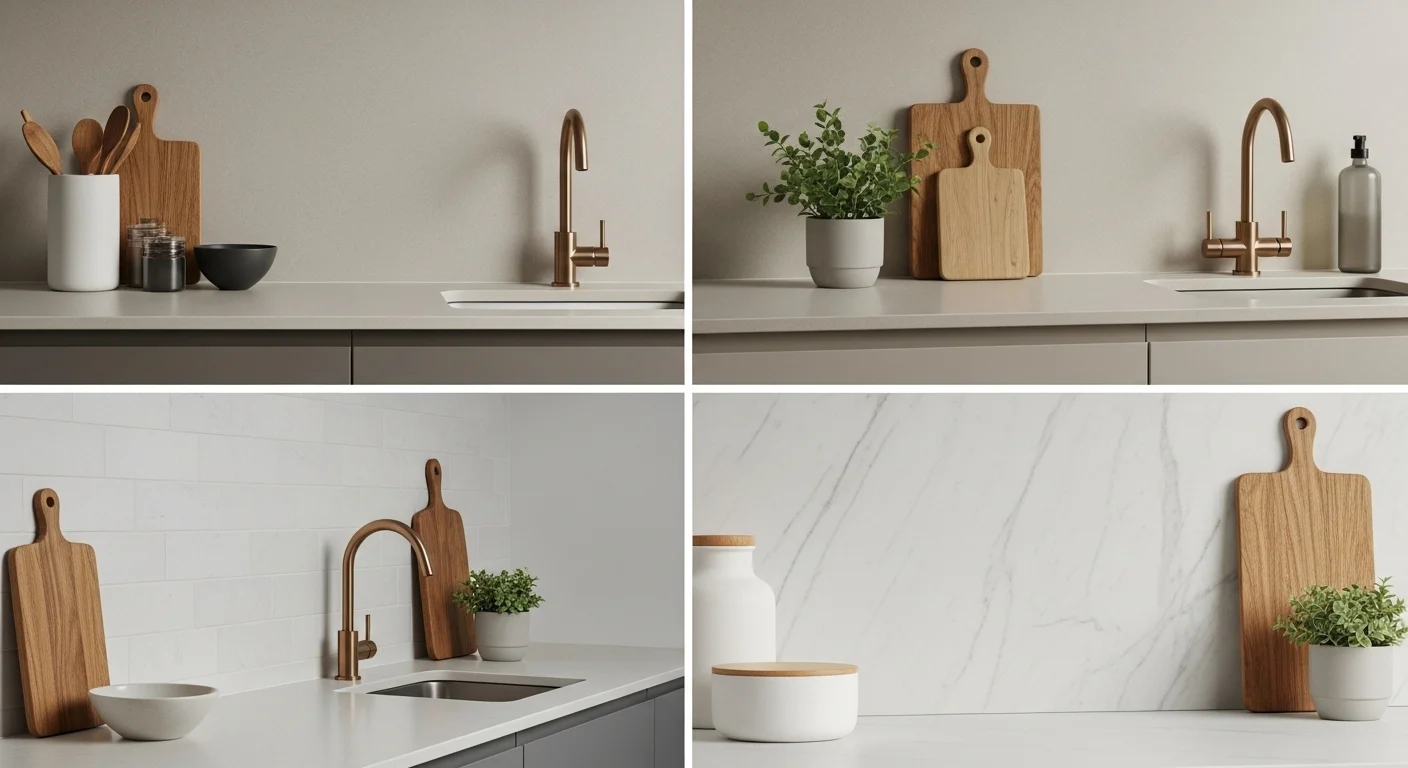
Kitchens are changing in subtle ways.
Less flashy, more thoughtful.
It’s about how the space feels, not just how it looks.
These 2026 trends focus on warmth, function, and clean design.
1. Warm Neutral Color Palettes
Cool greys are fading out. Warm neutrals are taking over instead. Think beige, cream, soft taupe. These tones make the kitchen feel more inviting. And less sterile. They work well with wood, stone, and natural textures. The overall space feels softer. More relaxed. It’s a small shift, but it changes everything.
2. Natural Wood Finishes
Wood is everywhere again. Cabinets, shelves, even islands. The grain adds texture without needing extra decor. And it brings warmth into the space. Light oak and walnut are especially popular. They feel modern, but still natural. It’s a balance that works well.
3. Minimal Cabinet Designs
Cabinets are becoming simpler. Flat fronts, clean lines, less detail. It creates a seamless look. And keeps the kitchen from feeling busy. Handleless designs are part of this trend. Everything feels more streamlined.
4. Mixed Material Kitchens
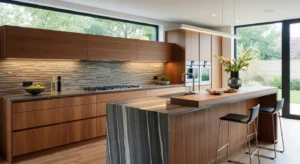
Combining materials adds depth. Wood with stone. Matte with gloss. It keeps the kitchen interesting without using bold colors. The key is balance. Too much contrast can feel overwhelming. But done right, it feels layered and modern.
5. Open Shelving Accents
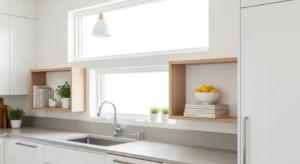
Open shelves are still popular, but used more carefully. Just a small section, not the whole kitchen. It adds openness without losing storage. Style them simply. Keep it minimal. It’s about balance again.
6. Statement Kitchen Islands
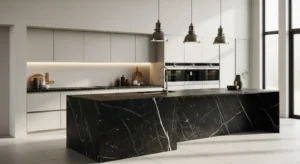
Islands are becoming the focal point. Different color, different material. Something that stands out slightly. But still fits the overall palette. It adds personality without overwhelming the space.
7. Soft Matte Finishes
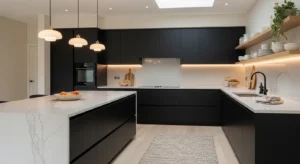
Glossy surfaces are being replaced with matte finishes. They feel softer and more modern. And they reduce reflections. Which makes the kitchen feel calmer. It’s subtle, but noticeable.
8. Integrated Appliances
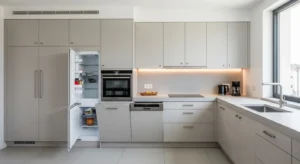
Appliances are being hidden more. Built into cabinets. Covered with matching panels. It creates a clean, uninterrupted look. And keeps the focus on the design. Not the appliances.
9. Warm Metal Accents
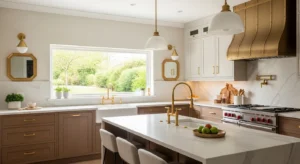
Cold chrome is fading out. Warm metals like brass and gold are coming in. They add a soft shine without feeling too bold. Use them in small details. Handles, faucets, lighting. It’s enough to lift the space.
10. Textured Backsplashes
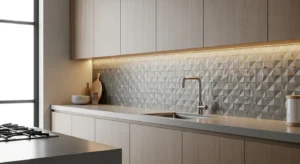
Flat backsplashes are being replaced with texture. Subtle patterns, handmade tiles, or slight variation. It adds depth without needing color. And it makes the kitchen feel more interesting.
11. Floor-to-Ceiling Storage
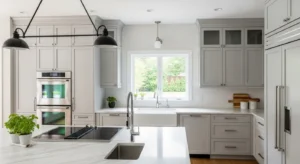
Storage is going vertical. Tall cabinets create a clean, structured look. And they maximize space. Everything feels more organized. And less cluttered. It’s practical and stylish at the same time.
12. Soft Lighting Layers
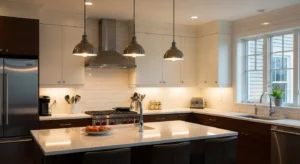
Lighting is becoming more layered. Not just one overhead light. But under-cabinet lights, pendant lights, soft ambient lighting. It creates a more relaxed atmosphere. And makes the kitchen feel more inviting.
13. Earth Tone Accents
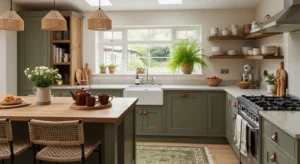
Earth tones are showing up more. Soft greens, browns, clay tones. They bring warmth into the kitchen. And connect the space to natural elements. It feels calm. And slightly more unique.
14. Minimal Decor Styling
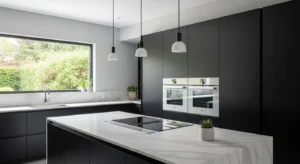
Decor is becoming simpler. Fewer items, more space. It keeps the kitchen feeling clean. And easier to maintain. A few well-chosen pieces are enough. It’s about quality, not quantity.
15. Sustainable Material Choices
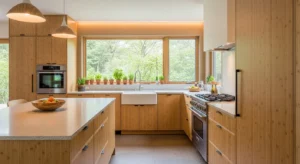
Sustainability is becoming more important. Natural materials, recycled finishes, eco-friendly options. It’s not just about style anymore. It’s about making better choices. And it adds authenticity to the design.
16. Hidden Storage Solutions
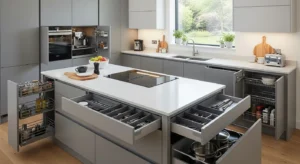
Storage is getting smarter. Pull-out shelves, hidden drawers, built-in organizers. It keeps everything out of sight. And makes the kitchen easier to use. Functional, but still clean.
17. Calm Minimal Layouts
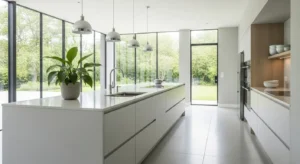
Layouts are becoming simpler. Less clutter, more open space. It makes the kitchen easier to move through. And more enjoyable to use. The focus is on flow. Not just design.