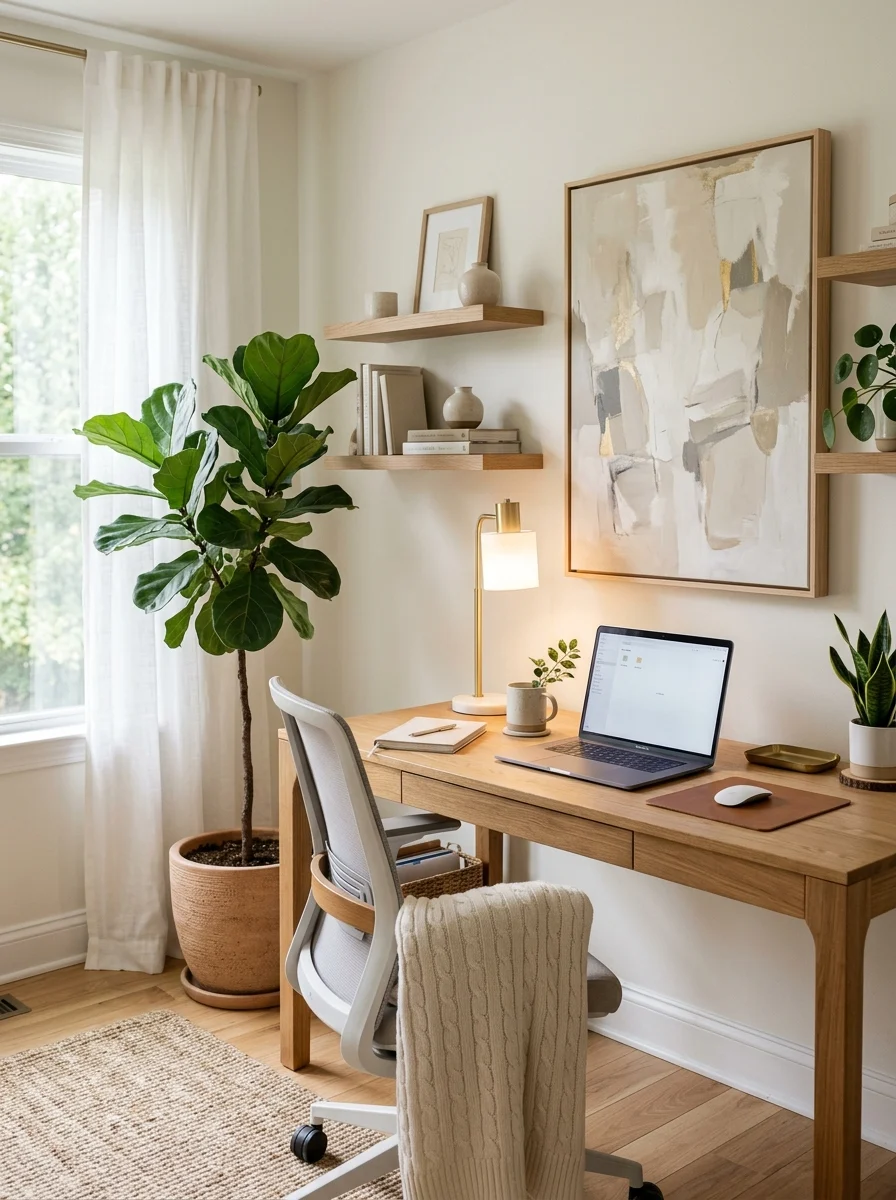
Your workspace says a lot about how you work.
Sometimes it even affects your mood more than you realize.
A few thoughtful changes can make it feel calmer, sharper, more put together.
Here are ideas that actually look good and feel right.
1. Neutral Color Palette with Warm Accents
A neutral color palette creates a quiet, focused atmosphere that feels instantly professional. Soft whites, warm beige, and light gray tones set the base without overwhelming the space. Then add warmth through small accents. Maybe a wooden tray, a tan chair cushion, or even a soft cream rug. It doesn’t need much. These subtle layers make the office feel more inviting while still looking clean. The balance matters. Too plain feels cold, too busy feels distracting. This approach sits comfortably in between.
2. Minimalist Desk Setup
A minimalist desk setup isn’t about having nothing, it’s about keeping only what matters. Clear surfaces, simple tools, and a bit of breathing room. It feels lighter right away. Keep your laptop, a notebook, and one or two essentials nearby. That’s enough. When everything has space, your mind does too. And somehow, work feels less overwhelming. It’s not about perfection either. Just being intentional with what stays on your desk and what quietly disappears.
3. Statement Wall Art
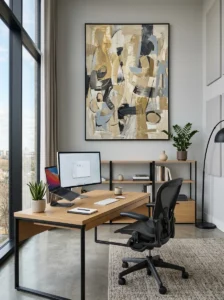
Wall art can quietly define your entire workspace without taking over. One bold piece is often enough. Abstract prints, soft landscapes, or even simple black-and-white photography can work beautifully. The key is scale. Too small gets lost, too large feels heavy. Place it right above your desk so it anchors the space naturally. It adds personality without clutter. And on long workdays, having something visually interesting in front of you makes the room feel less repetitive.
4. Indoor Plants for Fresh Energy
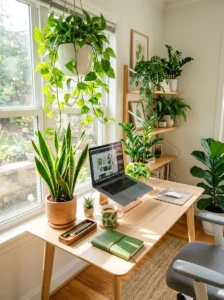
There’s something about plants that softens a workspace instantly. Even a single green plant can shift the mood. Snake plants, pothos, or small fiddle leaf figs are easy to manage and look clean. Place one near your desk or by a window where light hits gently. The green tones break up neutral decor in a subtle way. And the space feels more alive. It’s a small detail, but it brings a quiet kind of energy you don’t get from decor alone.
5. Elegant Desk Lighting
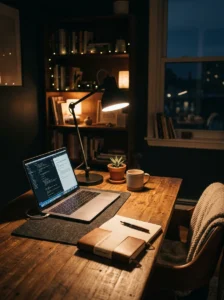
Lighting changes everything, especially during late work hours. A well-chosen desk lamp adds both function and mood. Go for something simple but refined. Matte black, brushed gold, or soft metallic finishes work nicely. The glow should feel warm, not harsh. It creates a softer environment that’s easier on your eyes. And it adds depth to the space. Overhead lighting can feel flat, but a desk lamp makes the whole setup feel more intentional and comfortable.
6. Organized Shelving Display
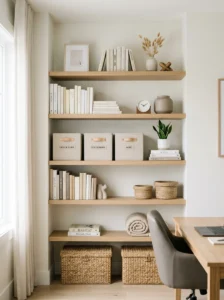
Shelving can easily turn messy, but when styled right, it looks curated and calm. Mix practical storage with a few decorative items. Books stacked horizontally, a small plant, maybe a framed print. Don’t fill every inch. Leaving gaps makes everything feel lighter. Stick to a consistent color palette so it doesn’t look chaotic. It’s not about perfection. Slight imbalance actually feels more natural. The goal is to create a space that looks thoughtful but still functional.
7. Comfortable Yet Stylish Chair
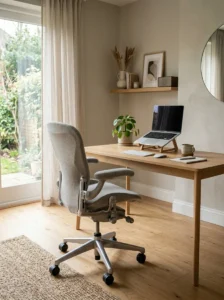
A good office chair matters more than most decor pieces. You sit in it for hours, so comfort comes first. But style doesn’t have to be sacrificed. Look for clean lines, supportive design, and neutral upholstery that blends with your space. A soft fabric or light leather works well. Add a small cushion if needed. It should feel easy to sit in, not stiff or bulky. When your chair feels right, the rest of your workspace just falls into place.
8. Subtle Personal Touches
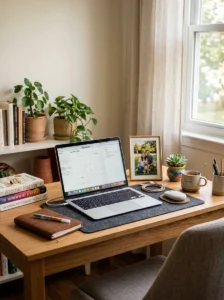
Adding personal touches makes your office feel less generic and more yours. But keep it simple. A small framed photo, a favorite book, or something meaningful from your travels works well. You don’t need much. Too many personal items can feel distracting. The idea is to add warmth without clutter. These small details bring comfort during long workdays. And they quietly remind you that your workspace isn’t just functional, it’s part of your daily life.
9. Coordinated Office Supplies
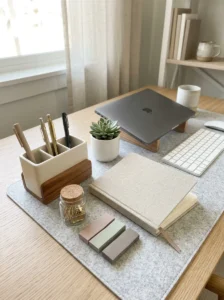
Matching office supplies might seem like a small detail, but they pull everything together. Pens, files, notebooks, even trays—when they share a similar color or finish, the desk looks more intentional. Neutral tones are usually the easiest to style. Black, white, beige, or soft gray. It creates visual consistency without trying too hard. And oddly enough, it makes everyday tasks feel more organized. It’s simple, but it adds a polished look that stands out.
10. Functional Wall Calendar or Planner
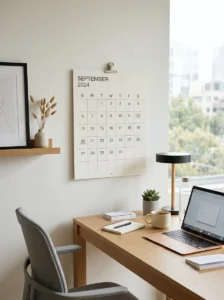
A wall calendar can be both practical and visually appealing when chosen carefully. Look for clean designs with simple layouts and soft tones. Nothing too loud. It should blend into your decor while still being easy to read. Place it where you naturally glance throughout the day. It helps keep your schedule in check without relying only on screens. And it fills empty wall space in a way that feels useful rather than purely decorative.
11. Soft Textures for Warmth
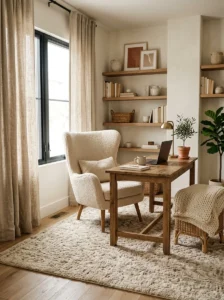
Offices often feel rigid because of hard surfaces and sharp lines. Adding soft textures changes that quickly. A small rug under your desk, linen curtains, or even a fabric pinboard can help. It doesn’t need to be dramatic. Just enough to soften the overall look. These elements add quiet comfort without making the space feel casual. The mix of textures creates depth. And suddenly, the office feels less like a work zone and more like a place you enjoy.
12. Cable Management for Clean Look
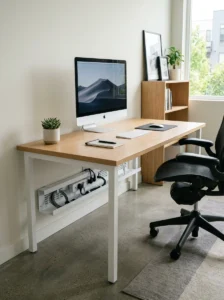
Cables can easily ruin a clean workspace if left visible. They create visual clutter without you noticing at first. Using simple cable management tools makes a big difference. Clips, sleeves, or small boxes can hide wires neatly. It keeps everything looking organized and polished. And it makes cleaning easier too. Once the cables are out of sight, the desk feels calmer. It’s one of those small upgrades that quietly improves the entire setup.