
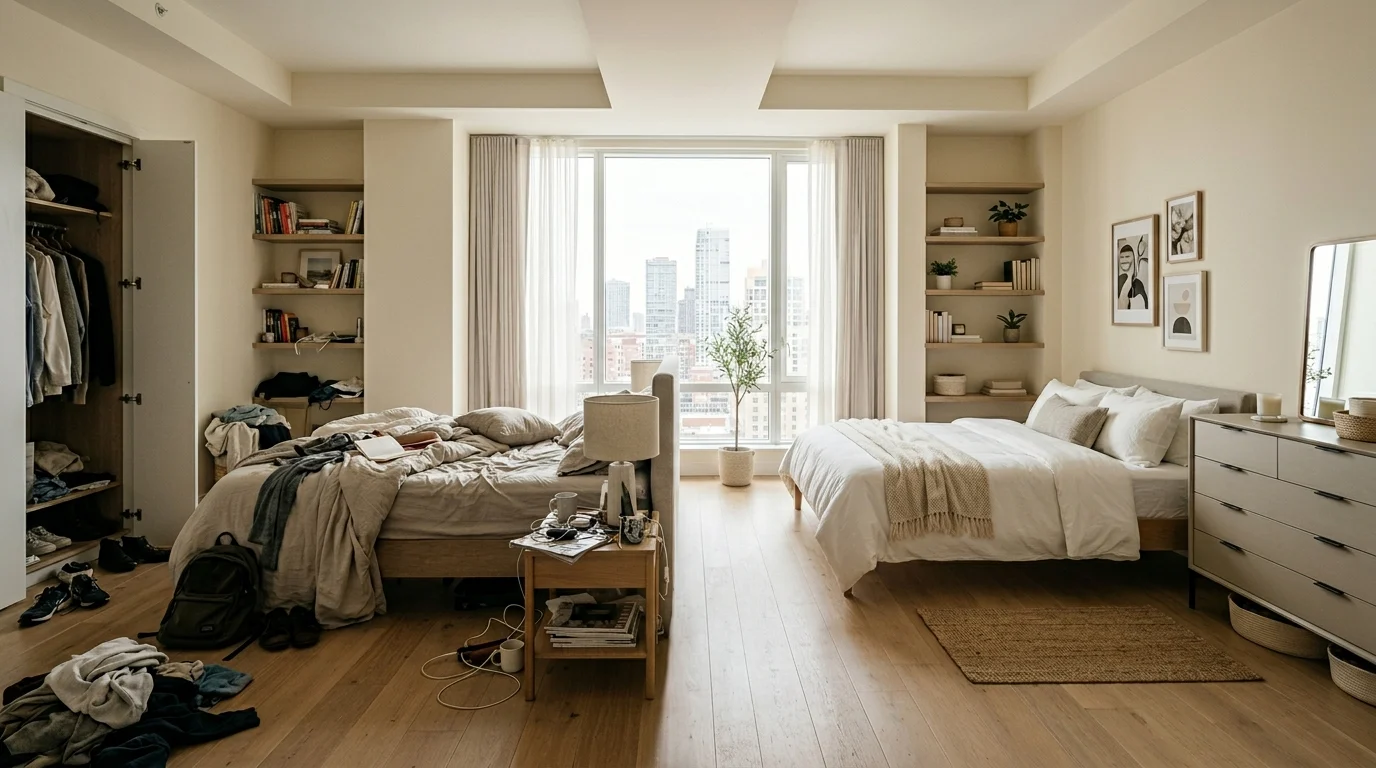
Have you ever cleaned your room, organized everything, and still felt like the space somehow looked messy or overwhelming? You’re definitely not alone. Many people assume clutter only comes from having too much stuff, but in reality, the problem is often connected to interior design choices, furniture placement, poor storage solutions, or visual imbalance. A room can technically be “clean” and still feel chaotic if the layout, decor, or organization isn’t working properly together.
Sometimes clutter isn’t about dirt or untidiness at all—it’s visual clutter. Too many colors, overcrowded shelves, bulky furniture, exposed cords, or excessive decorations can make a room feel stressful even when everything is technically in its place. The way a room is styled has a huge impact on how calm, open, and organized it feels.
The good news is that you don’t need a full renovation or expensive makeover to fix the problem. Small changes in layout, storage, lighting, and styling can completely transform the atmosphere of your room. By understanding the most common reasons a room feels cluttered, you can create a space that looks cleaner, feels larger, and functions better for your everyday life.
In this guide, we’ll explore the biggest reasons rooms feel cluttered and the best practical solutions to make your home feel calm, stylish, and beautifully organized.
1. Too Much Furniture Makes the Room Feel Heavy
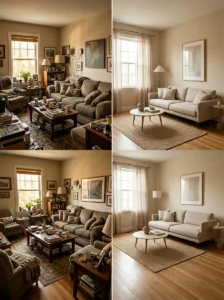
One of the biggest reasons a room looks cluttered is having too much furniture squeezed into the space. Many people try to maximize functionality by adding extra chairs, side tables, cabinets, or storage pieces, but overcrowding a room actually makes it feel smaller, heavier, and more visually stressful. Even expensive furniture can make a room feel messy if there isn’t enough breathing space between pieces.
Large bulky furniture is especially problematic in smaller rooms because it interrupts visual flow and blocks natural movement throughout the space. When furniture is pushed too closely together, the room starts feeling cramped and uncomfortable rather than cozy. Oversized sectionals, multiple accent chairs, or excessive shelving can quickly overwhelm the layout.
The solution is to prioritize quality over quantity. Instead of filling every corner, choose fewer furniture pieces that are functional and proportionate to the size of the room. Look for furniture with cleaner lines, exposed legs, or lighter colors to create a more open appearance. Multifunctional furniture, such as storage ottomans or nesting tables, can also reduce clutter while still serving practical needs.
Spacing matters just as much as the furniture itself. Leaving open areas between pieces allows the eyes to rest and makes the room feel calmer, brighter, and more balanced overall.
2. Open Shelving Can Easily Become Visual Clutter
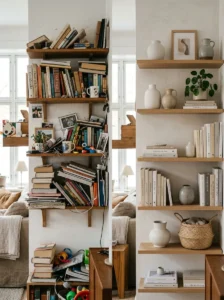
Open shelving may look beautiful in Pinterest photos and designer homes, but if it isn’t styled carefully, it can quickly become one of the biggest sources of visual clutter in a room. Shelves packed with random decor, mismatched objects, overflowing books, or everyday items without organization can make even a clean room feel chaotic and busy.
Many people make the mistake of treating shelves as storage instead of intentional display space. When every inch is filled, the room loses balance and starts to feel visually overwhelming. Too many small decorative objects can also create unnecessary distraction because the eyes don’t know where to focus.
To fix this problem, style shelves with a balance of decorative and functional items. Group objects together intentionally instead of scattering them randomly across every shelf. Use baskets, boxes, or trays to hide smaller items and create cleaner visual lines. Mixing books, ceramics, framed artwork, and greenery can add personality without making the shelves feel overcrowded.
Negative space is also extremely important. Leaving some empty areas on the shelves creates breathing room and instantly makes the arrangement feel more curated and sophisticated. A few carefully chosen pieces often look far more luxurious than shelves packed with excessive decor or unnecessary accessories.
3. Too Many Colors and Patterns Create Chaos
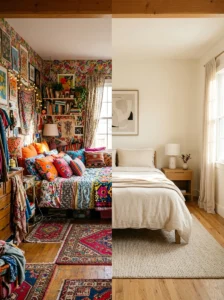
Color and pattern play a huge role in how organized or cluttered a room feels. Even if a space is tidy, too many competing colors, busy prints, or mismatched decor styles can overwhelm the eyes and create visual chaos. This is one of the most common reasons people feel uncomfortable or stressed in their rooms without realizing why.
Rooms with multiple bright colors, bold patterns, or unrelated design styles often lack visual harmony. For example, combining heavily patterned rugs, colorful throw pillows, loud artwork, and different furniture finishes can make the space feel disorganized even when everything is technically arranged properly.
The easiest solution is simplifying your color palette. Choose two or three main colors and repeat them consistently throughout the room. Neutral base tones like white, beige, gray, taupe, or soft earth tones help create a calmer and more cohesive atmosphere. Accent colors can still be used, but they should feel intentional rather than random.
Patterns should also be balanced carefully. If you use patterned curtains or rugs, keep surrounding decor more minimal so the room doesn’t feel visually crowded. Mixing textures instead of excessive patterns can create depth while maintaining a clean and sophisticated appearance.
A more consistent color palette instantly makes a room feel calmer, more elegant, and significantly less cluttered.
4. Lack of Hidden Storage Creates Everyday Mess
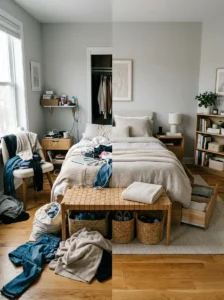
One major reason rooms constantly feel cluttered is the lack of proper hidden storage. Everyday items like chargers, blankets, paperwork, shoes, beauty products, toys, or remote controls often end up sitting out in the open simply because there’s nowhere practical to store them. Over time, these small visible items create visual noise that makes the room feel messy even after cleaning.
Open surfaces tend to attract clutter naturally. Coffee tables, dressers, countertops, and nightstands quickly become dumping zones when the room lacks functional storage systems. The more visible items you have, the busier and more stressful the room appears.
The best solution is adding hidden storage that blends seamlessly into the room’s design. Furniture with built-in storage, such as ottomans, storage benches, beds with drawers, or side tables with cabinets, can dramatically reduce visible clutter without sacrificing style. Decorative baskets and boxes also work well for organizing smaller everyday items while maintaining a clean aesthetic.
Closets and cabinets should also be organized intentionally rather than stuffed randomly. A cluttered hidden space often leads to clutter returning quickly to visible areas. Creating systems for storing everyday items makes it easier to maintain a cleaner room long-term.
A room with effective hidden storage instantly feels calmer, cleaner, and more visually balanced because fewer objects compete for attention.
5. Poor Lighting Makes a Room Feel More Cluttered
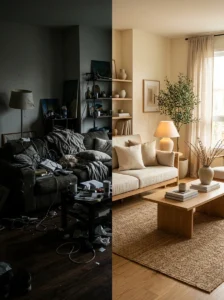
Lighting has a surprisingly powerful effect on how organized and spacious a room feels. Dark corners, harsh overhead lighting, or uneven light distribution can make a room feel cramped, gloomy, and visually cluttered even when the space itself is fairly organized. Poor lighting often exaggerates shadows and makes furniture or decor feel heavier within the room.
Many homes rely only on one central ceiling light, which creates flat lighting and harsh shadows. This can make the room feel less inviting and highlight cluttered areas more aggressively. Rooms with limited natural light may also feel visually smaller and more enclosed.
To fix this problem, layer different types of lighting throughout the room. Combining table lamps, floor lamps, wall sconces, and soft ambient lighting creates a warmer and more balanced atmosphere. Warm-toned bulbs often feel cozier and more relaxing than cool white lighting.
Natural light is equally important. Keeping windows less obstructed, using sheer curtains, and placing mirrors strategically can help reflect sunlight and brighten the room naturally. Brighter rooms automatically feel cleaner, larger, and more open.
Lighting also helps highlight focal points within the room, guiding attention toward beautiful design elements instead of clutter. A well-lit room feels calmer, more welcoming, and significantly more organized overall.