
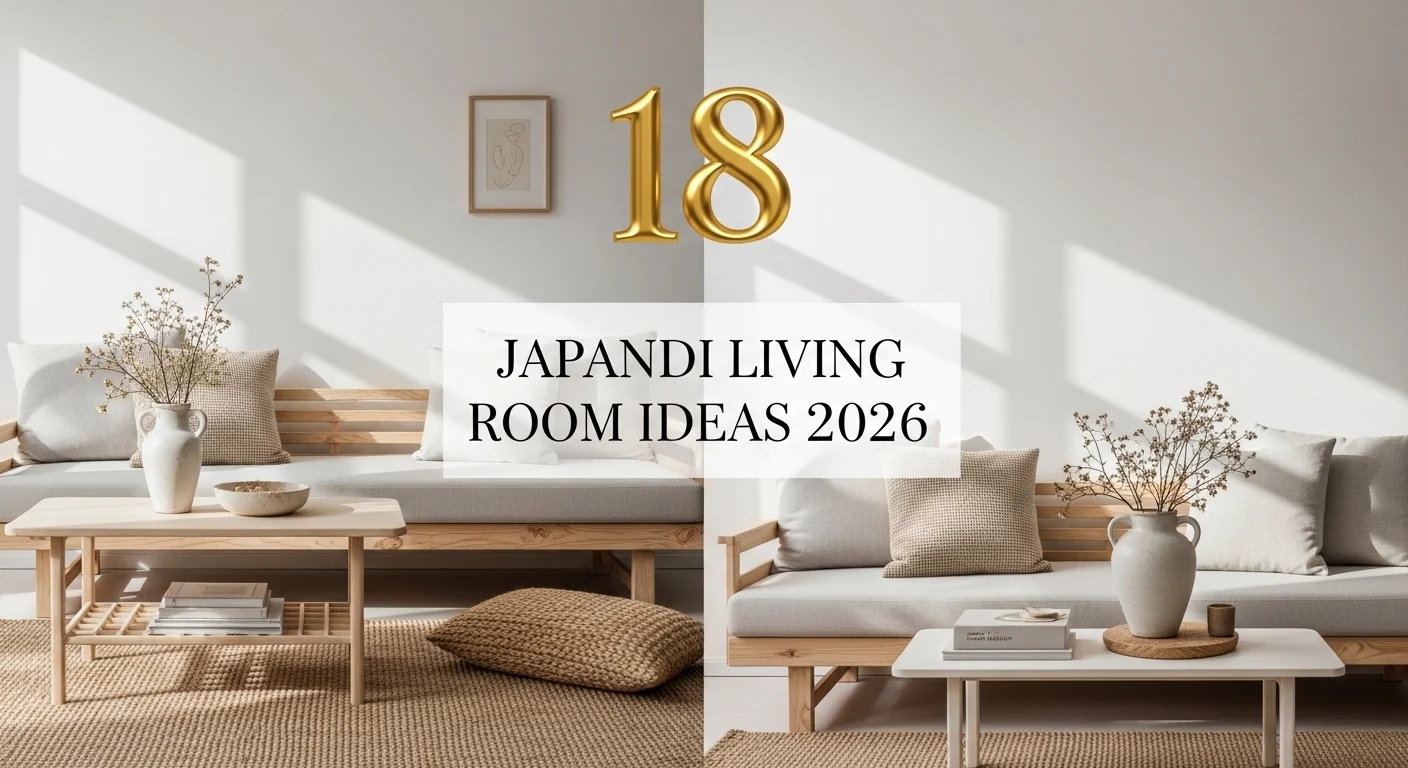
Japandi feels quiet in the best way.
Nothing extra, nothing loud.
Just clean lines, soft tones, and natural textures.
These ideas make it easier to bring that calm into your living room.
1. Soft Neutral Base Palette
Start with soft neutrals like beige, warm white, or light taupe. These tones set a calm foundation. They make the space feel open and relaxed. And they allow textures to stand out more. Keep everything slightly warm rather than cool. It feels more inviting. This base makes it easier to layer other elements later without the room feeling busy.
2. Low Profile Furniture Layout
Japandi style leans toward low furniture. Sofas, tables, even seating stay closer to the ground. It creates a more grounded feel. And it makes the room look more open. The space feels less crowded. And more balanced overall. Simple shapes work best here.
3. Light Wood Accents
Light wood is key in Japandi design. It adds warmth without making the space heavy. Use it in coffee tables, shelves, or flooring. The natural grain brings subtle texture. And it keeps everything feeling organic. It pairs perfectly with soft neutral tones.
4. Minimal Decor Styling
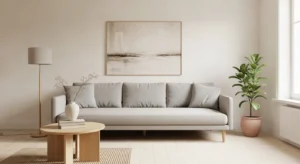
Decor should feel intentional. A few pieces are enough. Maybe a ceramic vase, a small plant, or simple artwork. Leave space between items. It helps the room breathe. And keeps the look clean. Less really matters here.
5. Natural Linen Textiles
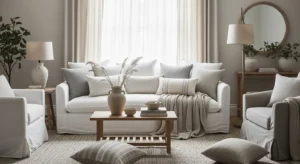
Linen adds softness without looking too polished. Use it in cushions, curtains, or throws. The slightly imperfect texture fits the Japandi style. And it brings a relaxed feel into the room. Stick to neutral shades for consistency.
6. Warm Neutral Color Layers
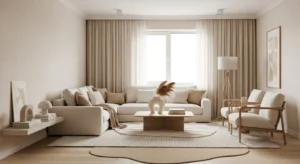
Layer different neutral tones to add depth. Beige, cream, soft brown. It keeps the space from feeling flat. And it creates a cozy atmosphere. Even small variations make a difference.
7. Simple Wooden Coffee Table
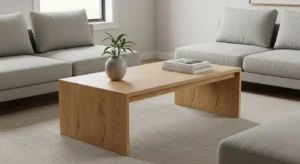
A clean, simple wooden table anchors the space. Choose natural finishes over glossy ones. Keep the shape minimal. It blends into the room without taking attention away from the overall design. Subtle, but important.
8. Soft Ambient Lighting
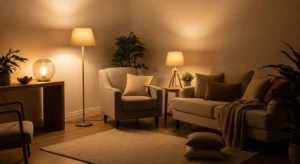
Lighting should feel warm and soft. Avoid harsh overhead lights. Use floor lamps or table lamps instead. It creates a calm atmosphere. And enhances the natural tones in the room. Lighting really changes how everything feels.
9. Japandi Style Open Space Layout
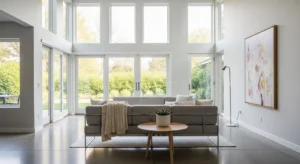
Keep the layout open and uncluttered. Leave enough space between furniture pieces. It makes movement easier. And it keeps the room feeling light. The goal is simplicity, not emptiness.
10. Muted Earth Tone Accents
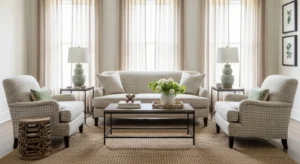
Add small touches of earthy colors. Soft greens, muted browns, or clay tones. Keep them subtle. They bring warmth without breaking the calm palette. And they add a bit of variation.
11. Textured Neutral Rugs
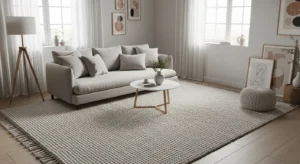
A rug adds comfort and warmth underfoot. Choose neutral tones with slight texture. Maybe woven or slightly patterned. It adds depth without standing out too much. And it ties everything together.
12. Clean Line Sofa Design
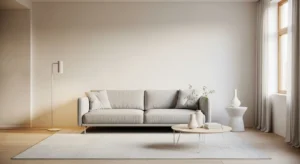
Choose a sofa with simple, straight lines. No heavy detailing. Keep the color neutral. It helps maintain the clean aesthetic. And keeps the focus on the overall space rather than one piece.
13. Natural Elements and Greenery
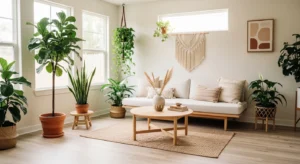
Plants add life without disrupting the calm look. Choose simple greenery. One or two pieces are enough. It brings freshness into the room. And softens the space naturally.
14. Wooden Slat Wall Feature
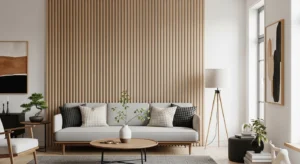
A wood slat wall adds texture in a subtle way. It creates interest without using color. And it fits perfectly with the Japandi style. It feels modern but still warm.
15. Minimal Wall Art Choices
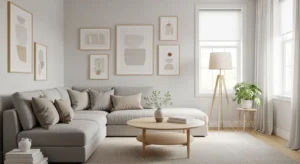
Wall art should stay simple. Neutral tones, abstract designs, or soft landscapes. Keep frames minimal. It adds personality without cluttering the space.
16. Balanced Symmetry Layout
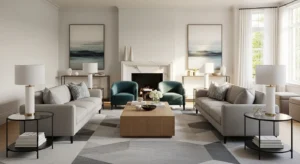
Symmetry creates calm. Matching elements on each side of the room help. It feels more organized. And visually pleasing. Even small details can make a difference.
17. Light and Airy Window Treatments
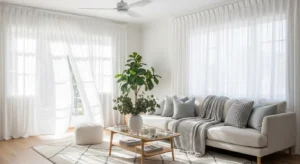
Keep window treatments simple. Light curtains work best. They allow natural light to flow in. And they soften the room without blocking it. The space feels more open.
18. Neutral Monochrome Styling
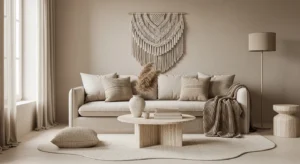
Using one color in different shades creates a cohesive look. Beige, grey, or brown tones layered together. It feels calm and intentional. And it keeps the design consistent.