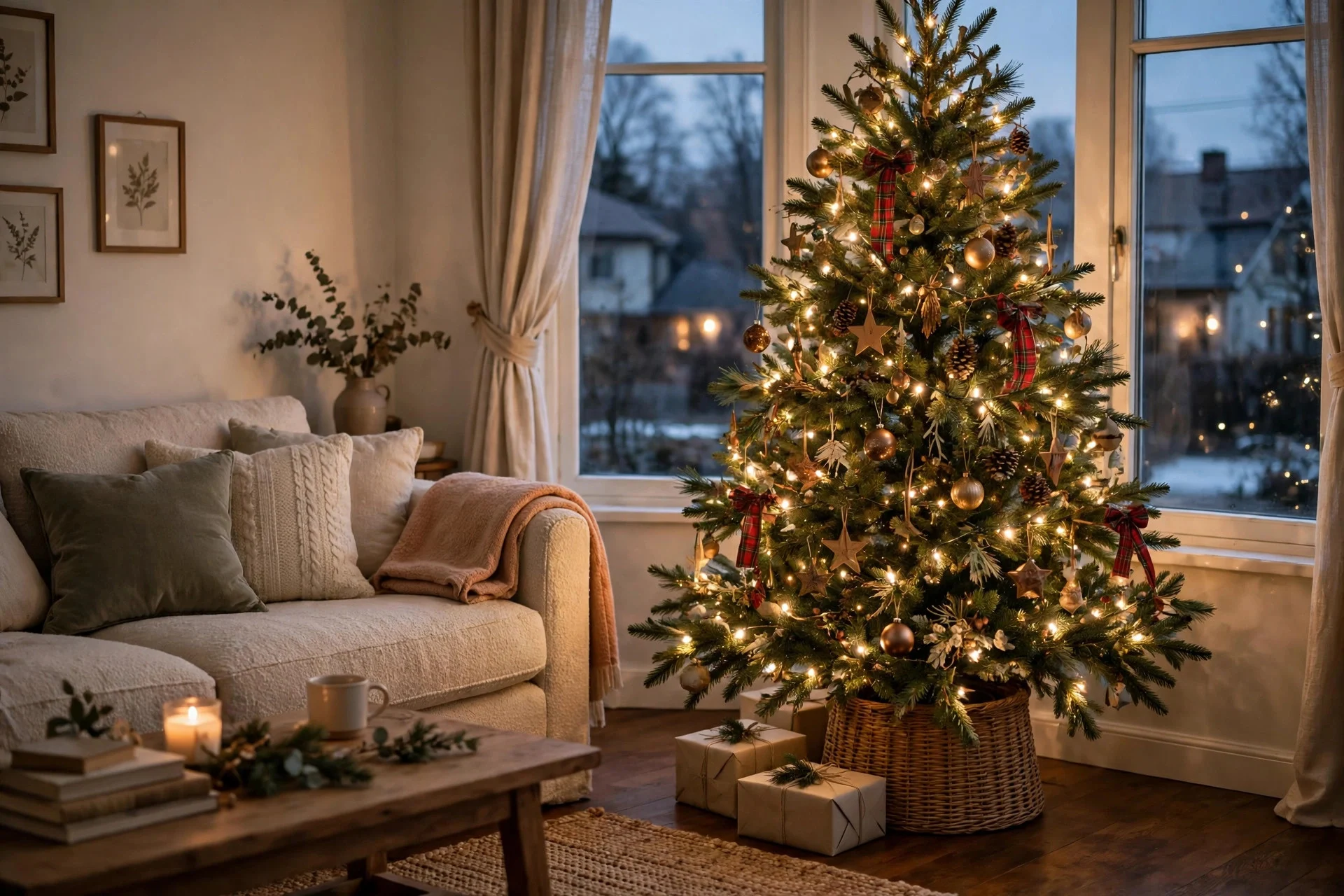
The first Christmas in our current house, I put the tree where the empty space was — right at the end of the hallway, in front of the living room window. It looked wonderful for about a day. Then every trip to the kitchen meant squeezing past the branches, the dog knocked two ornaments off with his tail before breakfast, and on the third morning I found a dark ring on the rug where the stand had leaked overnight. We spent the whole season apologising to the tree instead of enjoying it, and by New Year’s Day I was just relieved to drag it back out again.
That year taught me the one thing nobody tells you when you bring a tree home: christmas tree placement is decided before the tree ever comes inside, not after you have dragged it through the door and you are standing in the middle of the room holding a seven-foot fir and wondering where it fits. The spot decides the size, the shape, and how much of December you will spend moving furniture around it. Get the spot right and everything else — the lights, the ornaments, the photos — falls into place, so it is worth ten quiet minutes with a tape measure before the tree even leaves the lot.
Start With the Room, Not the Tree
Most of us shop backwards. We fall for a tree, bring it home, and then hunt for a place big enough to hold it. Do it the other way round and the whole season gets easier. Walk into the room and look at it the way a guest would: where do people walk, and where do they sit? The best spot is usually the quietest corner, not the most obvious one.
Here is how I do it now. First, I stand in the doorway and picture the room with the tree in it, then I mark the footprint on the floor with painter’s tape — a circle about as wide as the tree will be at its fullest branches. Second, I live with that taped circle for a day, walking past it and sitting on the sofa, just to see whether it gets in the way. Third, I measure the taped spot: ceiling height, distance to the nearest outlet, and the width of the door the tree has to come through. Only then do I buy a tree that fits those numbers. It takes less time than one afternoon of rearranging furniture, and if you are still switching the house over from Thanksgiving, it fits naturally into the changeover — I covered that whole switch in my guide to moving from Thanksgiving to Christmas, and the tree spot is really the first decision in it.
1. Keep the Walkways Clear
A Christmas tree is at its widest right where people walk: about knee height, where the lower branches spread out and catch coats, bags, shopping, and small children running past. The rule I use now is simple — nobody should have to turn sideways to get past the tree, and nobody should have to duck under a branch to reach the kitchen or the front door. If a path narrows to less than about three feet once the tree is in place, the spot is wrong.
Here is the test. First, trace the routes people actually use every day, not the ones on a floor plan: the hallway to the kitchen, the sofa to the front door, the stairs to the bedrooms. Second, put the taped circle on the floor and walk each route twice, carrying a mug of coffee the way you normally would. Third, check the doors — an interior door should swing fully open without brushing the branches, and the front door should open wide enough for guests carrying coats and gifts. I learned this the year our tree sat beside the front door and every guest arrival turned into a wrestling match with a fir branch. The entryway matters more than people think — my fifteen-minute entryway refresh is built on the same idea of keeping that first impression clear.
2. Find an Outlet Before You Find a Spot
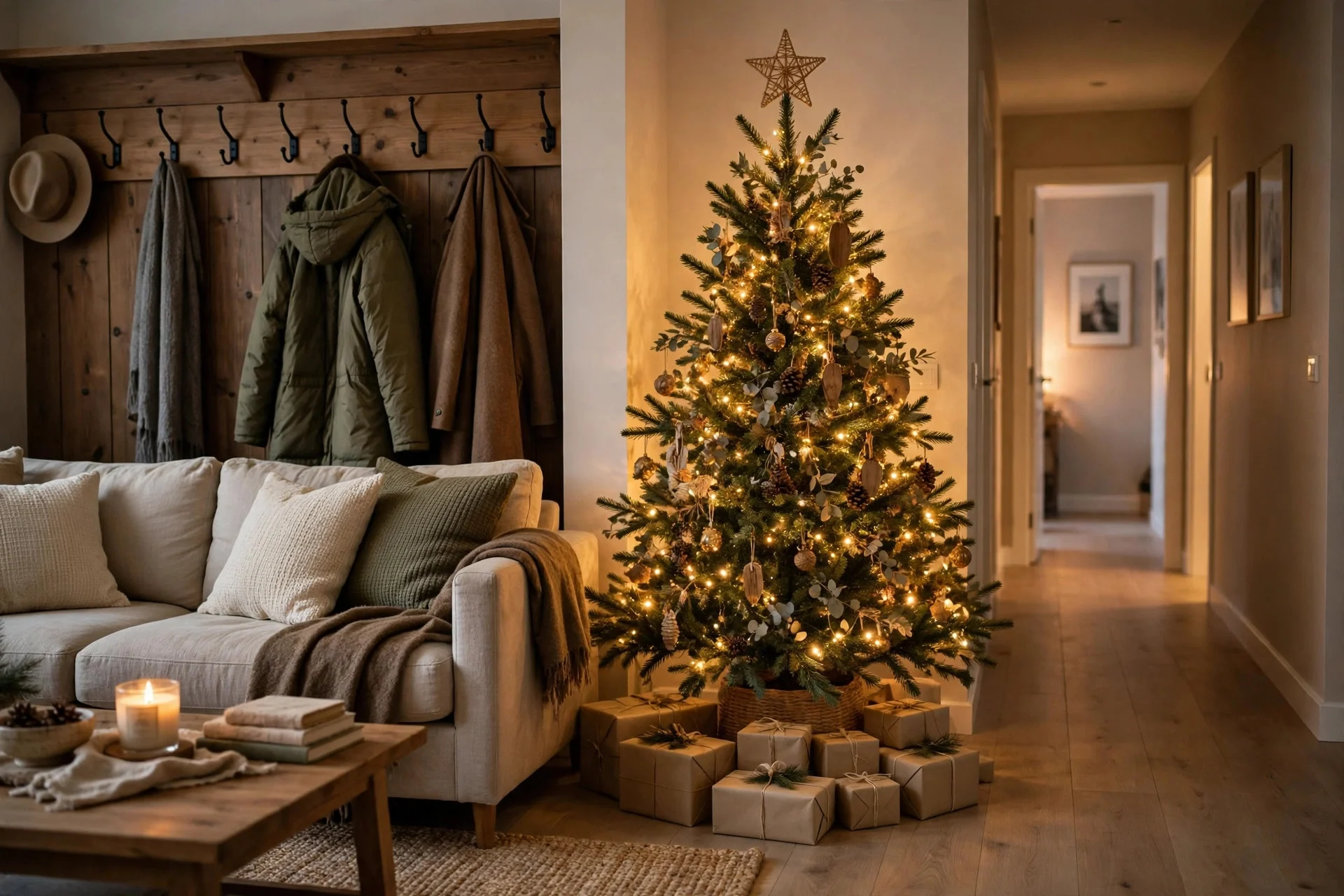
A tree without lights is just a plant in the corner, and lights need power, so the outlet is part of the spot, not an afterthought. I once placed a tree in the perfect corner of the room, stepped back to admire it, and then realised the nearest socket was on the opposite wall, which meant an extension cord stretched across the floor like a tripwire for the whole month. Somebody tripped on it twice.
Do it in this order instead. First, walk the room and note every outlet, including the ones hiding behind the sofa and the ones halfway up the wall that nobody uses. Second, pick your spot from the shortlist of places within a comfortable cord’s reach of one of them — the tree’s own light cord is usually about six feet long, so that is your radius. Third, plug the lights in and test them before you hang a single ornament — finding out a socket is dead is much easier when the tree is still bare. One more thing: make sure the cord runs along a wall or behind furniture, never across a walkway, and never under a rug, where it can overheat. A good spot makes the lights easy; a bad spot makes them a daily hazard.
3. Stay Away From Heat
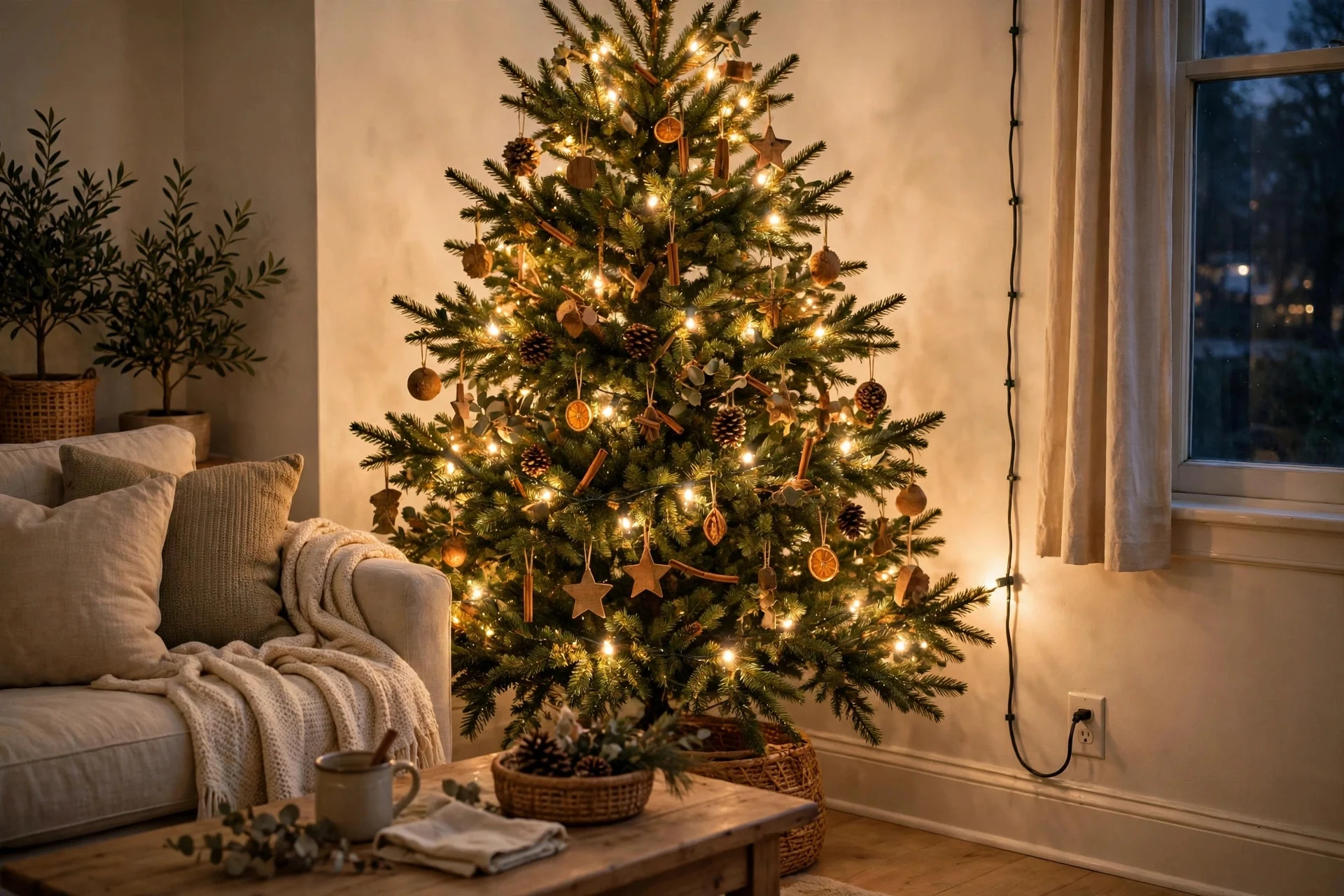
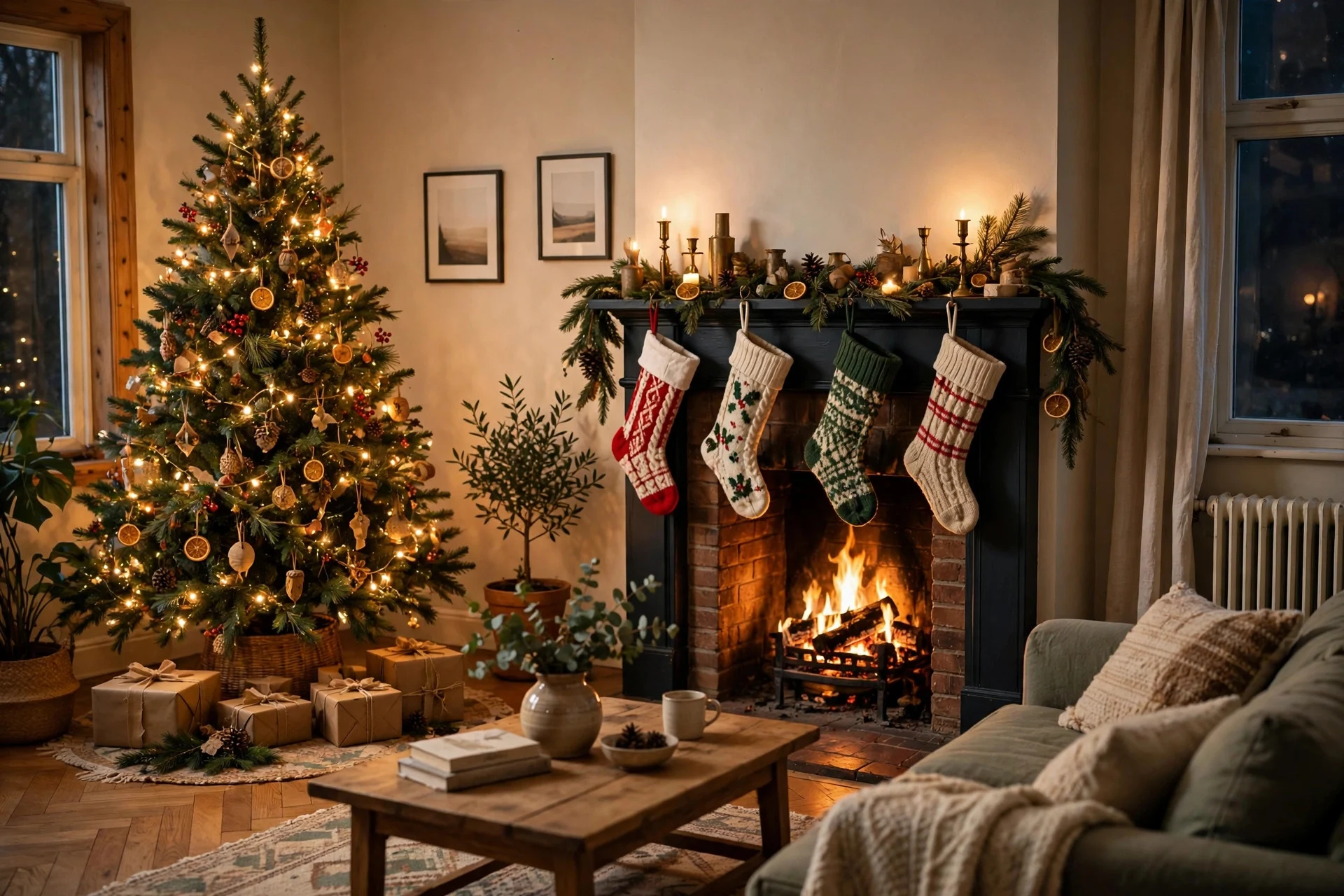
Heat is the quiet enemy of a Christmas tree. A real tree near a radiator, a fireplace, or a heating vent dries out far faster than the same tree in a cool corner, and a dry tree drops needles everywhere and becomes a genuine fire risk. My rule is three feet from any heat source, and further from an open fire.
Here is how to check. First, stand at your chosen spot and look around for every heat source, including the radiator under the window, the floor vent, and the fireplace. Second, hold your hand near the spot on a cold evening when the heating is on; if you can feel warm air blowing across it, move the tree. Third, if the only spot you love is near the fireplace, pick the far side of the room, or angle the tree so the mantel is not radiating heat straight at it. I made this mistake once: by the second week, the branches on the fire side were bare and brown while the other side still looked fresh. The mantel can still carry the season — my Halloween mantel ideas show how — but the tree and the fire need their distance.
4. Mind the Windows — Light and Curb Appeal
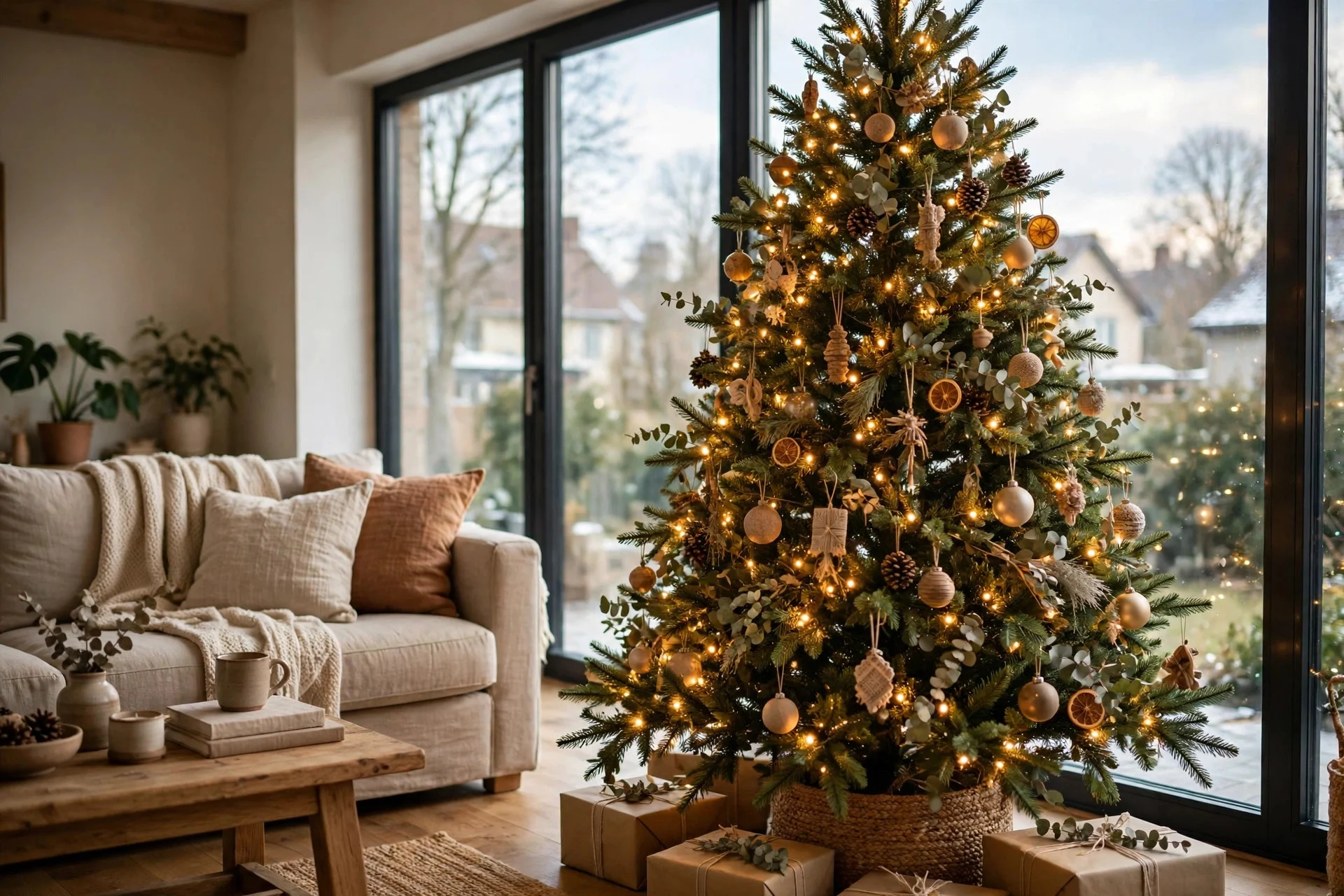
A tree in the window is the classic Christmas picture: from the street it glows and neighbours slow down to look. From inside, though, the same spot can be a problem. A big tree in front of a window blocks the daylight for a month, and in a south-facing window the sun beats on it all afternoon, drying a real tree out and fading the ornaments on the sunny side.
So weigh both sides before you commit. First, stand outside in the evening and check whether this window shows the tree off best, or whether a side window would do the same job. Second, check what the tree blocks from inside: the view, the light over the reading chair, the plant on the sill. Third, if you do choose the window, pull the tree a foot into the room rather than pressing it against the glass, so air moves behind it. My favourite compromise is a tree beside the window rather than in front of it — you still get the glow from the street, the room keeps its light, and the tree does not spend December slowly baking in the sun. It is the one spot where the outside of the house and the inside of it have to agree, so choose it with both in mind.
5. Measure the Ceiling (and the Tree)
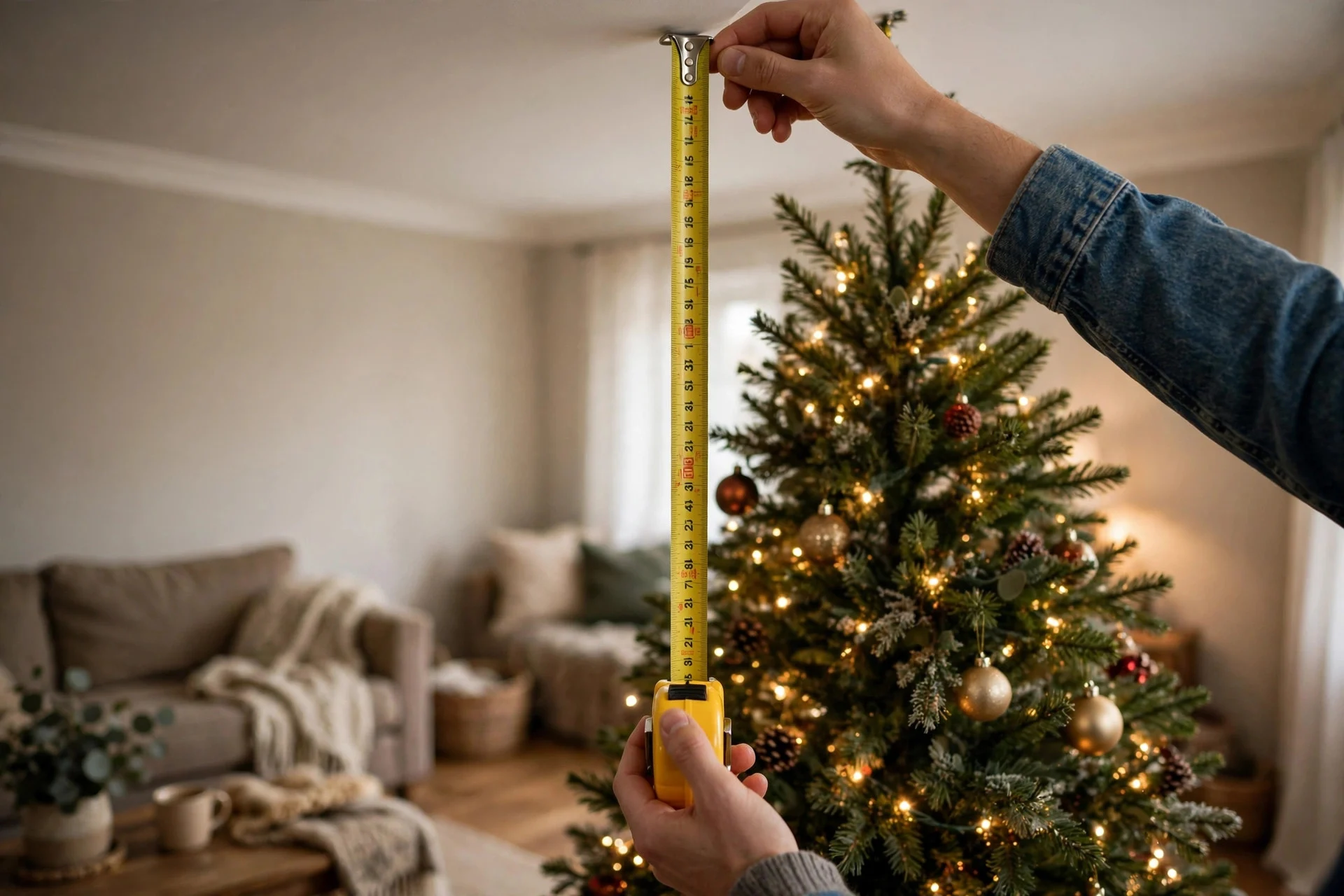
Nothing ruins a tree faster than discovering it is too tall, and nothing is easier to prevent. I have done the maths wrong myself, forgetting that the stand adds four or five inches and the star adds another six. The tree you measure in the lot is not the tree that stands in your living room — the stand lifts it, the topper crowns it, and the ceiling is always lower than you remember.
Measure twice, buy once. First, measure the ceiling at the exact spot where the tree will stand, not in the middle of the room, because a ceiling fan or pendant light over the spot can steal a foot you were counting on. Second, subtract at least a foot for the topper and a little breathing room above it; a star squashed against the ceiling looks wrong. Third, measure the tree before you pay for it, from the bottom of the trunk to the very tip, and then add the height of your stand, or ask the seller to measure it for you. Do not forget the width: measure the widest branches, then the doorway the tree has to come through. A tree that fits the ceiling but not the front door is a tree that spends December in pieces on the porch.
6. Pick Your Sightline
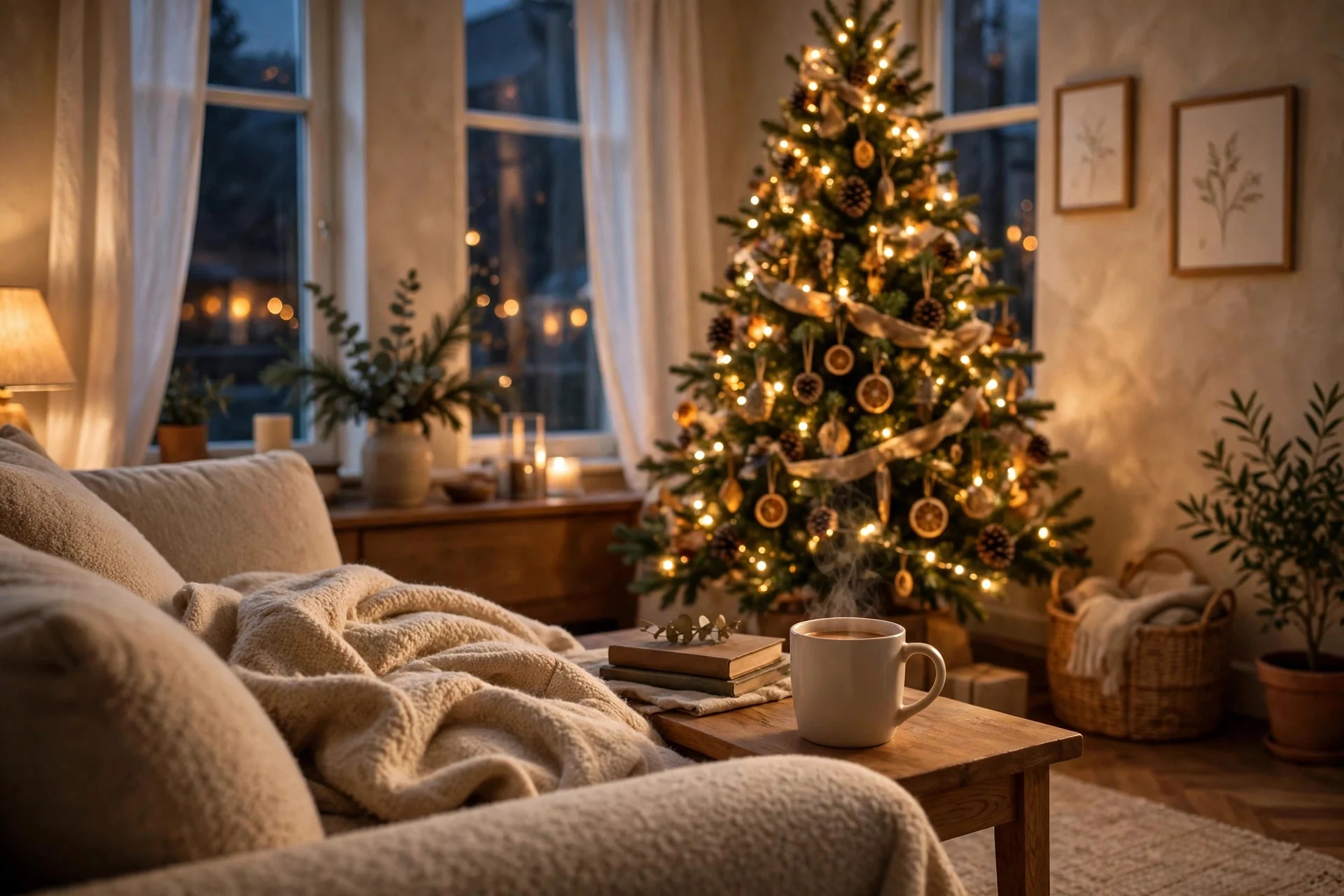
A tree is not just an object in a room, it is the thing your eyes land on when you walk in, when you sit down with a coffee, and when you take the photo that goes on the Christmas card. So pick the spot from the sofa, not from the doorway. Sit where you actually sit in the evening and ask whether the tree fills that view or you are staring at its back.
Here is how I choose. First, sit on the sofa and look toward each possible spot — the one that makes you smile without turning your head is the winner. Second, check the view from the dining table too, because a tree that is lovely from the sofa but invisible from the table is only doing half its job. Third, think about the room as a whole: the tree should balance the mantel and the big pieces of furniture, not crowd them, and it should not hide the artwork or the window you love most. The same eye for balance applies here — my Thanksgiving living room guide is about letting one beautiful thing lead the room without shouting over everything else.
7. Think About Kids and Pets
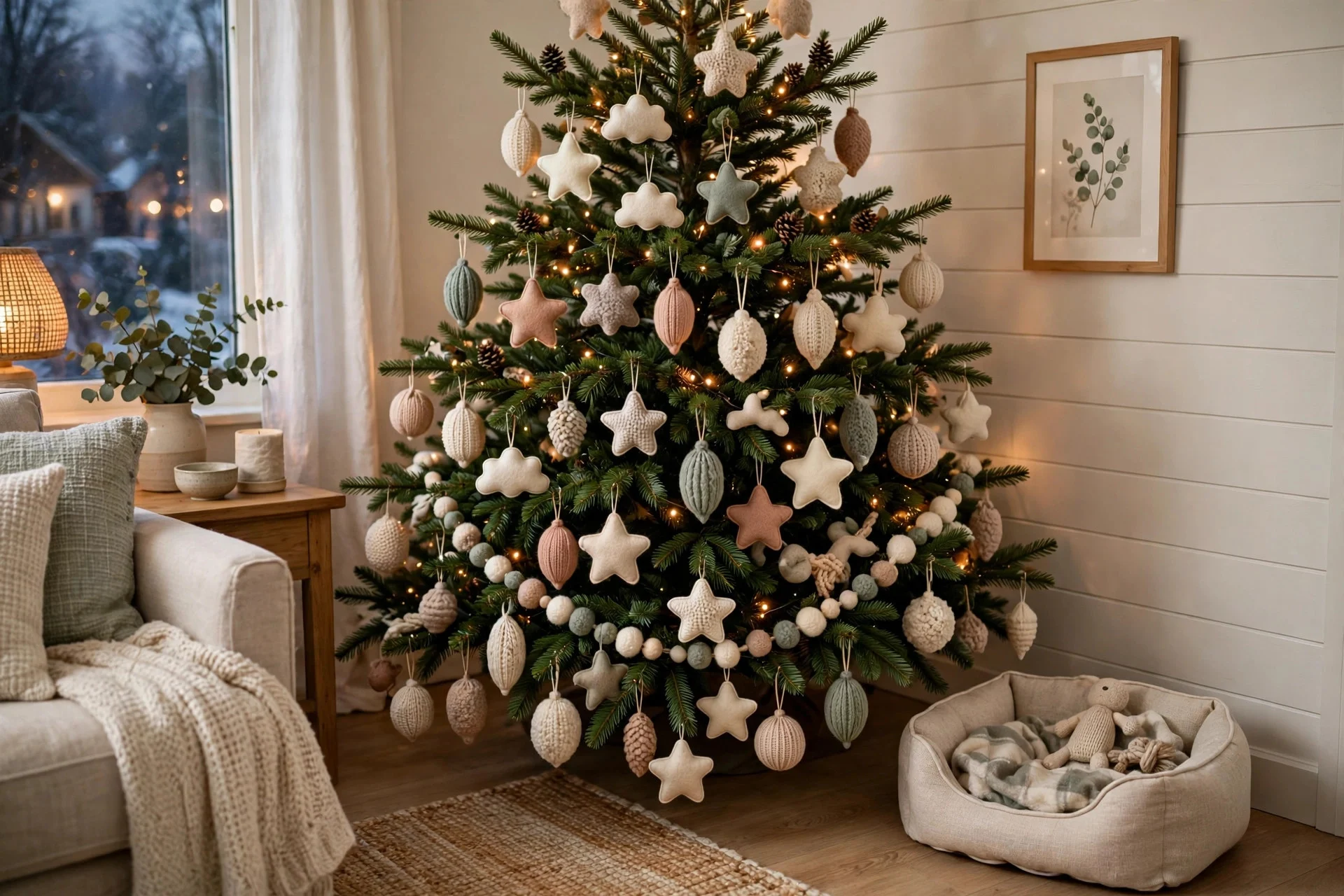
If you have small children or pets, the tree spot is also a safety decision, and the cosy corner by the sofa might be the worst place in the house for it. Toddlers pull, cats climb, and dogs wag — I have lost more ornaments to a wagging tail than to anything else, and one year our cat treated the lower branches as a staircase until the whole tree leaned sideways.
Plan for it before the tree goes up. First, pick a spot with a wall behind it on at least one side, so you can anchor the tree to the wall with a discreet bit of fishing line or a small hook — nobody sees it, and it stops the whole thing tipping forward. Second, keep the fragile ornaments above toddler and tail height and put the soft, unbreakable ones on the lower branches, so the inevitable grabbing does not end in tears or broken glass. Third, cover or fence the stand if you have a dog or a cat that drinks from it, because stand water is not safe to drink, and a curious pet can knock the whole stand over trying.
8. The Small-Space Corners That Actually Work
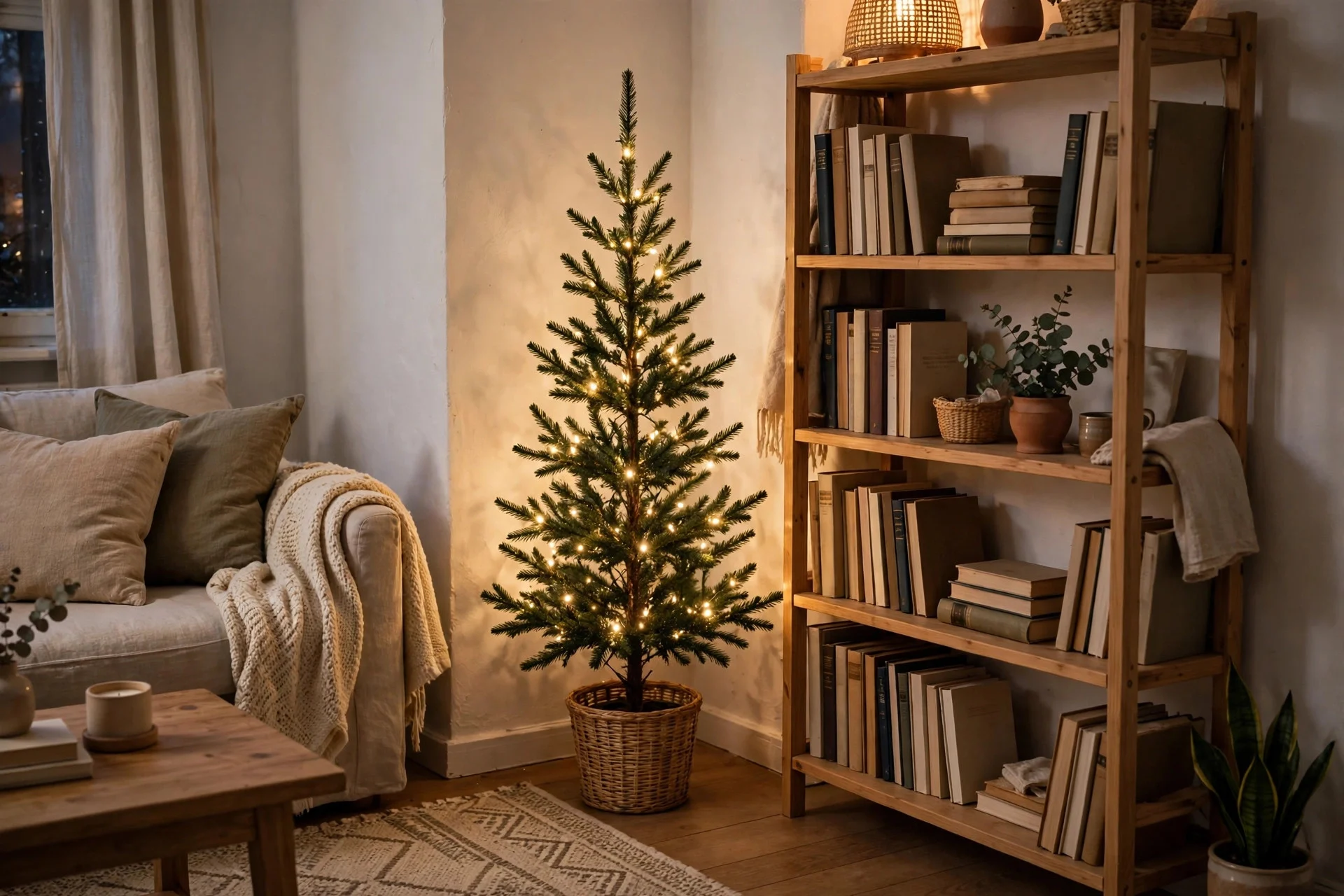
Small rooms do not mean no tree; they mean a smarter tree in a smarter spot. The corners people dismiss — beside the bookshelf, between the sofa and the wall, the shallow bay window — are often the best places for a tree, because a tree is tall and narrow and those spots are doing nothing else. I lived in a flat once where the only space was a corner by the front door, and that little tree felt more Christmassy than any big tree ever had.
Try these. First, look for a corner with two walls, because a tree in a corner needs less floor space, looks fuller from the front, and stays out of the walkways on both sides. Second, consider a slim or pencil tree — a seven-foot slim tree can stand in a space a regular tree never could. Third, if even that is too much, a tabletop tree on a sturdy side table or a plant stand gives you the whole ritual — the lights, the ornaments, the star — at eye level, with no floor space at all. I am a firm believer in giving old decor a second job — my guide to reusing fall decor has ideas that work nicely under a small tree, like a woven basket, which looks intentional, not improvised.
My Quick Placement Checklist
- Pick the spot before you pick the tree, and tape the footprint on the floor for a day.
- Keep every walkway at least three feet wide, and check that doors swing clear.
- Choose a spot within easy reach of an outlet, with the cord running along a wall.
- Keep the tree at least three feet from radiators, vents, and the fireplace.
- Put the tree beside the window, not pressed against it, so the room keeps its light.
- Measure the ceiling at the exact spot, subtract a foot for the topper, and measure the tree plus its stand.
- Sit on the sofa and check the view — the tree should fill it, not hide behind furniture.
- Anchor the tree if you have kids or pets, and keep fragile ornaments up high.
- In a small room, use a corner, a slim tree, or a tabletop tree.
The right spot will not be the same in any two houses, and that is the point — it is the spot that fits your room, your doors, your outlets, and the way your family actually lives in December. Take the ten minutes, tape the circle, sit on the sofa, and look. When the tree goes up in a place that was chosen for it rather than found for it, the whole month feels calmer, the lights look better, and nobody has to apologise to a fir tree on their way to the kitchen. That is a good Christmas.