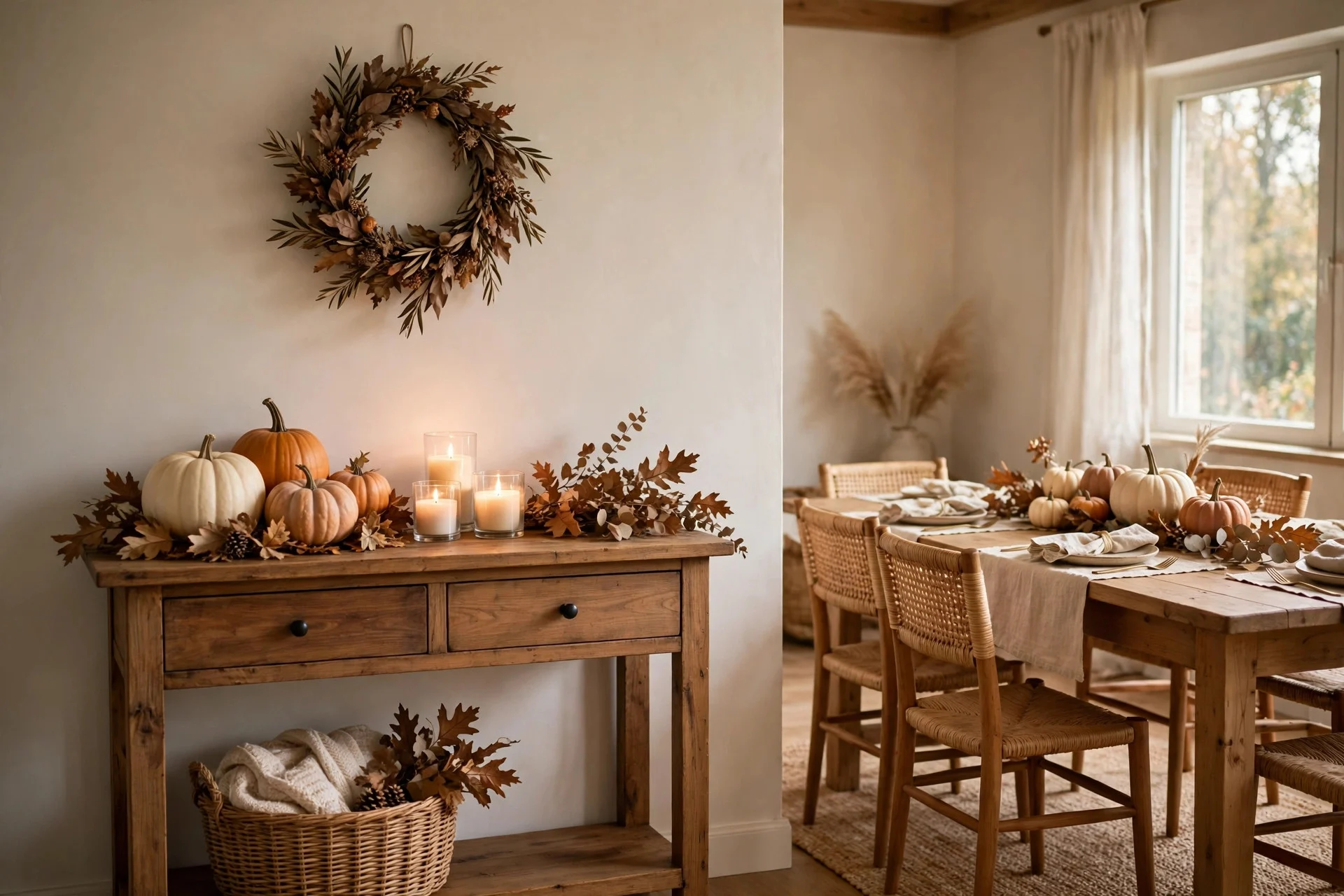
The morning after Halloween always catches me a little off guard. The candy bowl is half empty, there is fake cobweb stuck to a doorframe I swore I cleaned, and the porch still looks like it is waiting for trick-or-treaters who are not coming back. Thanksgiving is suddenly only a few weeks away, and the house feels like it belongs to a holiday that is already over. I used to leave the Halloween things up for days, then rush the Thanksgiving decorating at the last minute.
It turns out the switch does not need a whole weekend, and it definitely does not need a shopping trip. Most of what makes a house feel ready for Thanksgiving is already sitting in your rooms, hiding underneath the spooky stuff. The trick is doing the changeover in the right order: spooky things out first, fall things kept, and only then the small Thanksgiving touches that make each room feel intentional. Done this way, the whole house can turn over in about an hour to an hour and a half. Keep a laundry basket or an empty box nearby as you go, and start at the front door.
First, Take Down Only the Spooky Stuff
The biggest mistake in this switchover is treating it like a full undecorating. You do not need to strip the house bare and start again. You need to remove the things that say Halloween, specifically, and leave everything else exactly where it is. Walk through each room once with a box and take down skeletons, ghosts, witches, bats, spiders, fake cobwebs, and anything with a face that was meant to scare somebody. That first pass usually takes fifteen minutes or less, and it is the only pass where you should be holding a box.
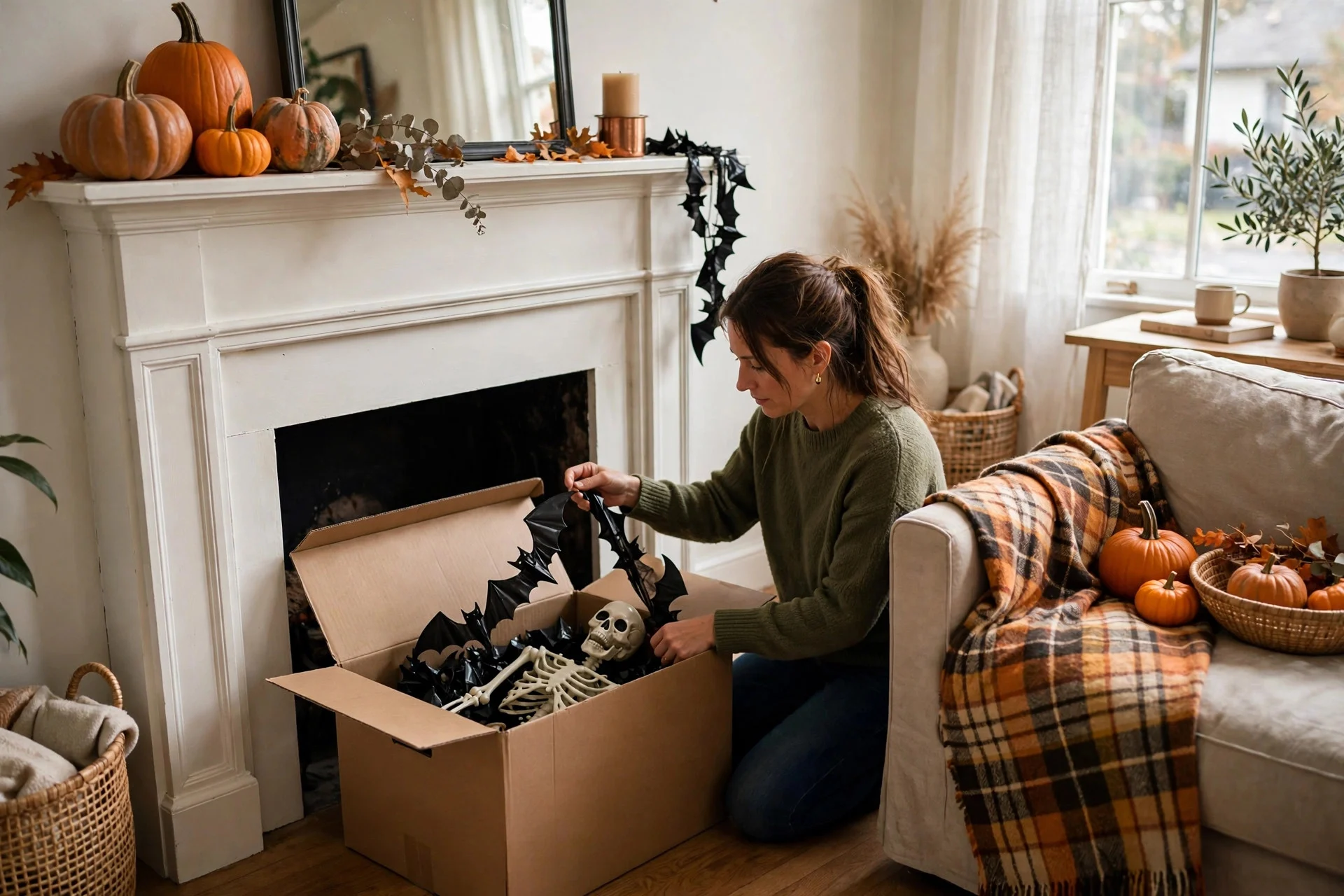
Fake cobwebs deserve special attention because they get everywhere, so check doorframes, light fixtures, mirrors, and the corners of the porch ceiling, and pull them off gently so they do not leave residue on paint or fabric. Peel off window clings while you are already at the windows. As you pack, sort lightly: one box for things you will use again next year, and a small bag for anything broken or bought on impulse and never really liked. One thing worth checking is your pumpkins, since carved ones rarely survive past Halloween night while uncarved ones are the heroes of this switchover. If you are unsure how much life yours have left, our guide to how long real pumpkins last on the porch will help you decide which to keep and which to compost.
What Stays: The Fall Pieces That Carry Over
Here is the good news, and it is the whole reason this switchover is fast: most fall decorating is not Halloween decorating. Pumpkins without faces, dried leaves, wheat stems, plaid throws, warm candles, wooden beads, baskets, and anything in cream, rust, mustard, or deep green already reads as Thanksgiving. You bought or gathered those things for autumn, not for one night, and they will carry you straight through November without a single change. Leaving them in place is not laziness. It is the plan.
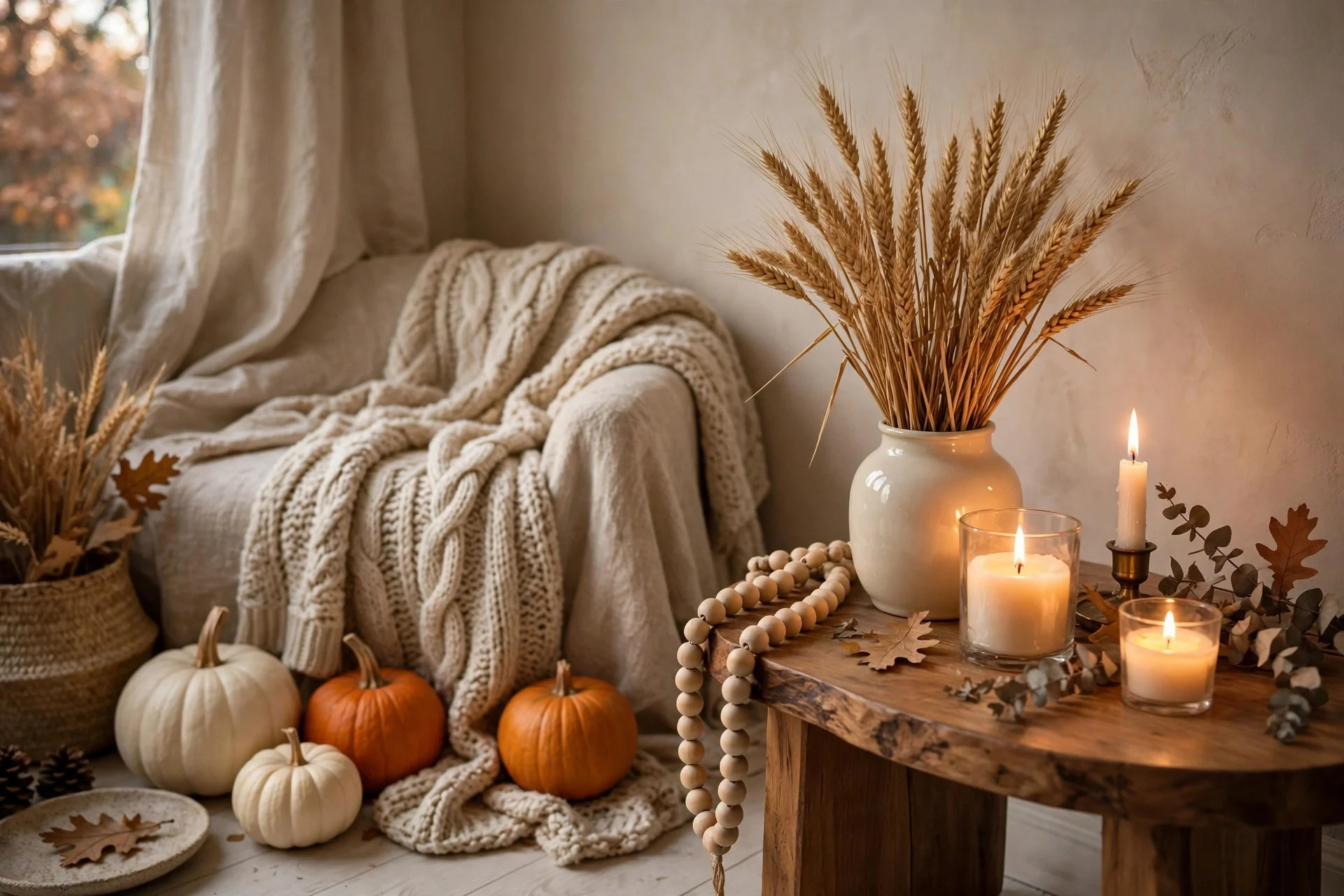
Stand in each room after the spooky pass and look at what is left with fresh eyes. Usually the room already looks about halfway to Thanksgiving, just a little emptier than before, and that emptiness is useful, because it shows you exactly where a small addition will have the most impact. A mantel that lost its bats might only need candles moved closer together and a small stack of books to look finished. This is also the moment to rescue the pieces you forgot about, like the basket of pinecones from September or the amber glass bottles on the bookshelf. The same principle behind our guide to reusing fall decor works in reverse just as well: keep the warm, natural, and neutral pieces, and remove only what is obviously tied to a single night.
The 60–90 Minute Switchover Timeline
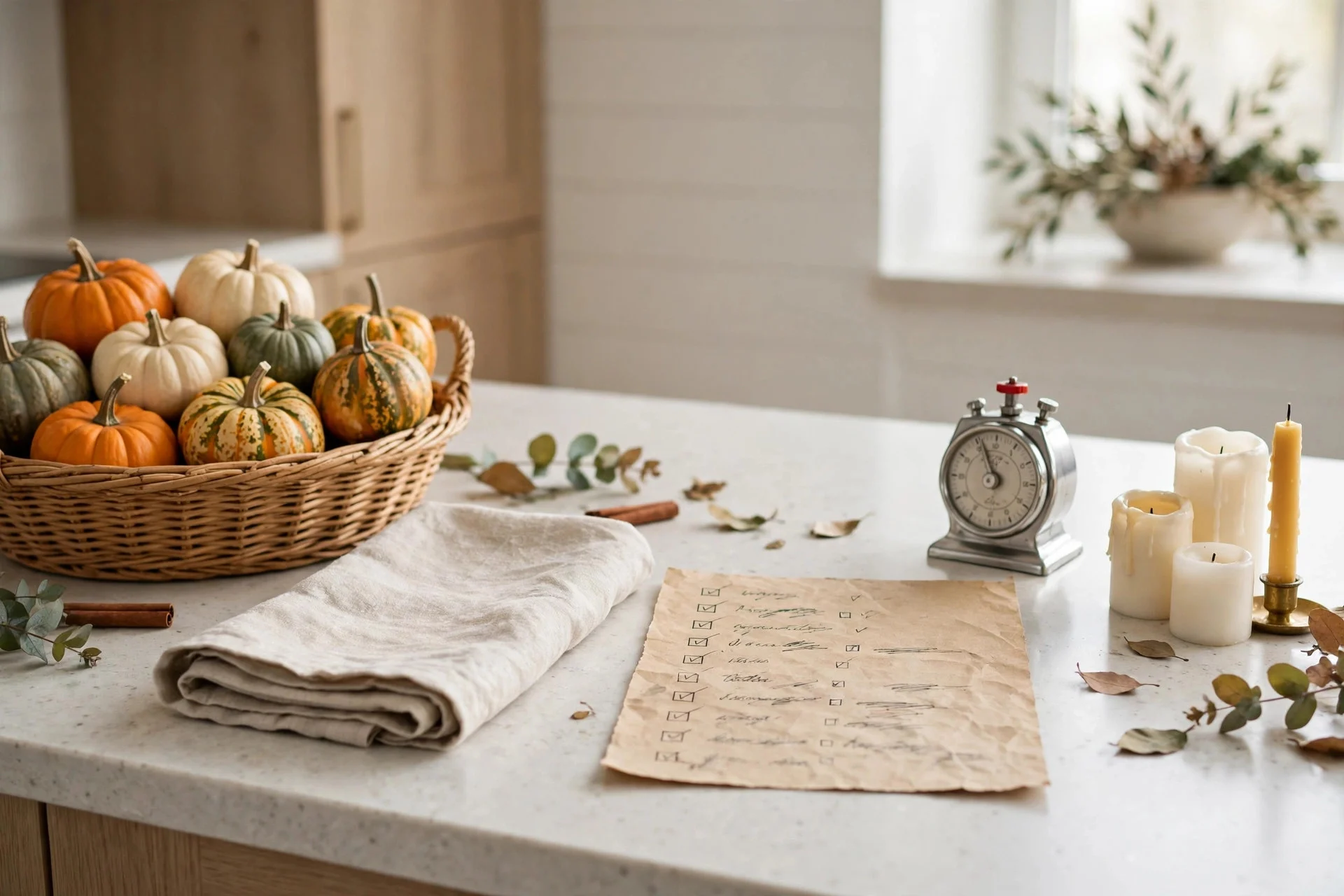
A switchover without a plan tends to expand to fill the whole afternoon, because you keep wandering from room to room and redoing decisions. A loose timeline fixes that. Minutes zero to fifteen are the spooky pass: one box, one walk through the house, Halloween-only items out, and no rearranging yet. Minutes fifteen to thirty are the porch and entryway, because those are the spots guests and neighbours actually see first. Minutes thirty to fifty are the table, since it is the centre of Thanksgiving. Minutes fifty to seventy are the mantel and living room, and the final twenty minutes are for the walk-through, the candles, and putting the storage box away.
If you only have an hour, cut the living room to ten minutes and skip any room guests will not enter. If you have the full ninety, spend the extra time on the table, because that is where people will sit for hours. And if you are doing this with someone else, split the work by room rather than by task: one person takes the porch and entryway while the other takes the table and mantel, and you meet in the living room at the end. Two people following this order can genuinely finish in under an hour.
The Entryway: First Impressions in Ten Minutes
The entryway is the smallest space with the biggest job. It is the first thing guests see, and after Halloween it is also the place most likely to still look like a haunted house, because that is where the bats, the door wreath with the spider, and the bowl of leftover candy tend to live. Start by clearing the console or side table completely, just for a minute, so you are styling a clean surface rather than squeezing new things around old ones.
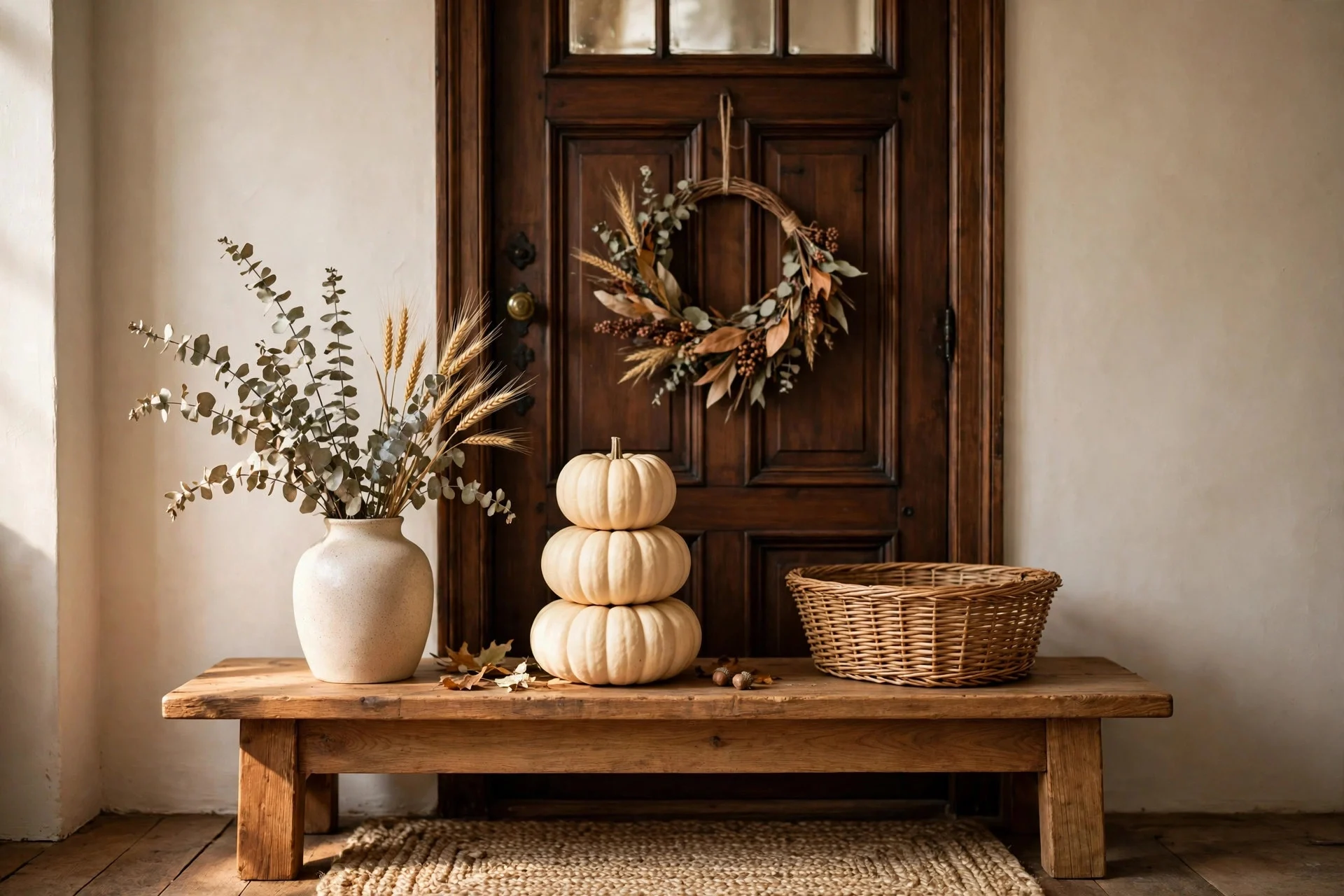
Then rebuild it with three things only: something tall, something low, and something warm. The tall thing can be a vase of dried eucalyptus, wheat stems, or bare branches from the garden. The low thing can be a small stack of cream or orange pumpkins, a basket, or a short stack of books with a candle on top. The warm thing is light, either a candle in a glass holder or a small lamp left on in the afternoon. Swap the door wreath next if you have a plain fall one, and if you do not, leave the door bare rather than rushing to buy something. Finally, empty the candy bowl.
The Table: Where Thanksgiving Actually Happens
Thanksgiving lives at the table, so this is the room where the switchover earns its keep. Start by taking off anything black, neon, or novelty from the Halloween table, including dark runners, skull-shaped candle holders, and place cards shaped like ghosts. You are not trying to erase personality from the table. You are shifting its mood from spooky to warm, and that shift mostly comes down to colour and height. Lay a tablecloth or runner in a warm neutral first, cream, oatmeal, rust, or a soft plaid, and then build the centrepiece low and long rather than tall and dramatic, because people need to see each other across a Thanksgiving table.
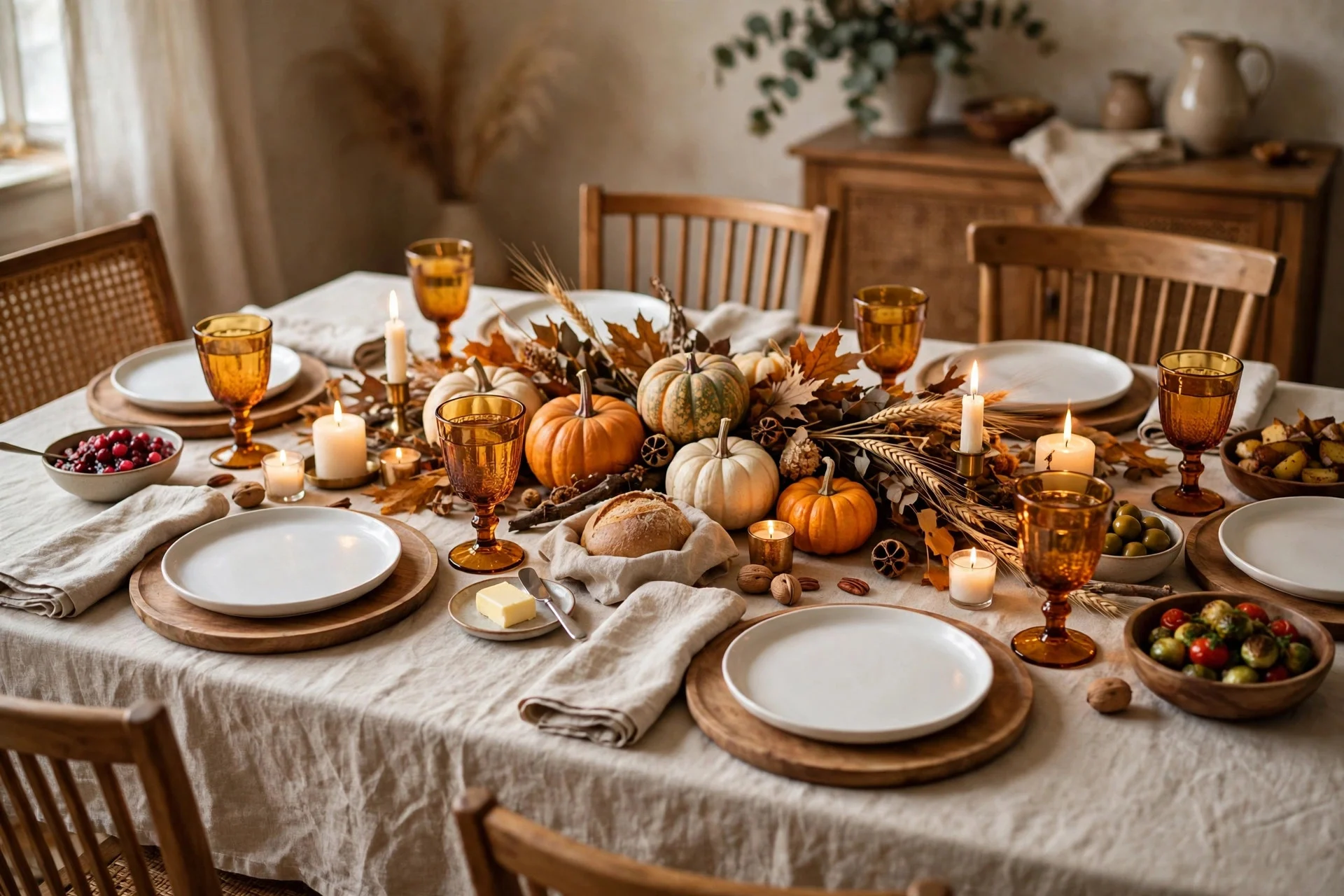
A row of small pumpkins, a few candles in glass holders, and some scattered dried leaves or eucalyptus along the middle of the table will look generous without blocking a single face. Everyday dishes are completely fine here, and they often look better than fussy formal sets, because they keep the table feeling like a real family meal rather than a display. What matters more is that the table feels set on purpose: placemats in place, glasses out, napkins folded, candles ready to light. For a deeper look at the grown-up table mood, our guide to Halloween table settings for grown-ups covers the same principles of candlelight and restraint, and they transfer directly to Thanksgiving once the spooky colours are gone.
The Mantel: Swap the Mood, Keep the Warmth
The mantel is where the Halloween-to-Thanksgiving change is most visible, because it is usually the most decorated surface in the living room. Start by removing the Halloween-only pieces, then look at the mantel empty for a moment. Most mantels need fewer things than we think, and the empty version often reveals that the fireplace itself, the mirror or art above it, and a pair of candle holders were already doing most of the work.
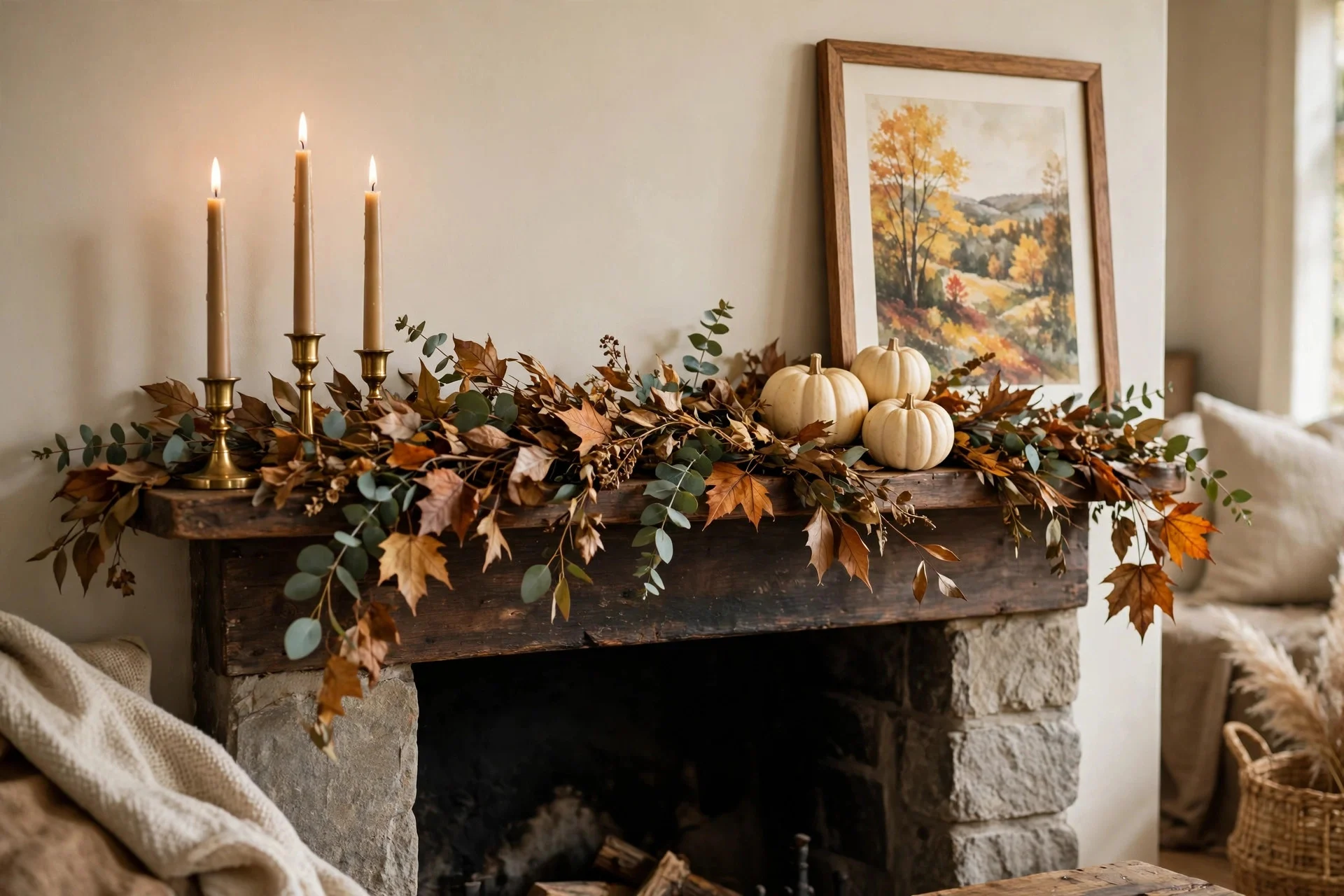
Rebuild from the outside in. Put your tallest pieces at the ends, usually candle holders or a vase of dried stems, and keep the middle lower so the mirror or artwork above the mantel stays visible. Fill the gaps with small pumpkins, a garland of dried leaves or eucalyptus if you have one, and a stack of two or three books laid flat with a candle on top, in a warm palette of cream, rust, gold, and deep green. Before reusing a garland, shake it out outside and trim any ends damaged by hooks or tape. Our earlier guide to Halloween mantel formulas is useful here too, because the underlying formula, tall at each end, low in the middle, one focal point, works for every season. Only the characters change.
The Porch: From Trick-or-Treat to Welcome Home
The porch takes the hardest hit at Halloween, because it carries the most decorations and the most foot traffic, and it is also the place where the switchover is most satisfying, because the change is visible from the street. Start by removing anything that was meant to startle, skeletons, hanging ghosts, motion-activated props, and the fake webs that collect in corners. Then sweep, because a clean porch floor instantly makes everything else look better.
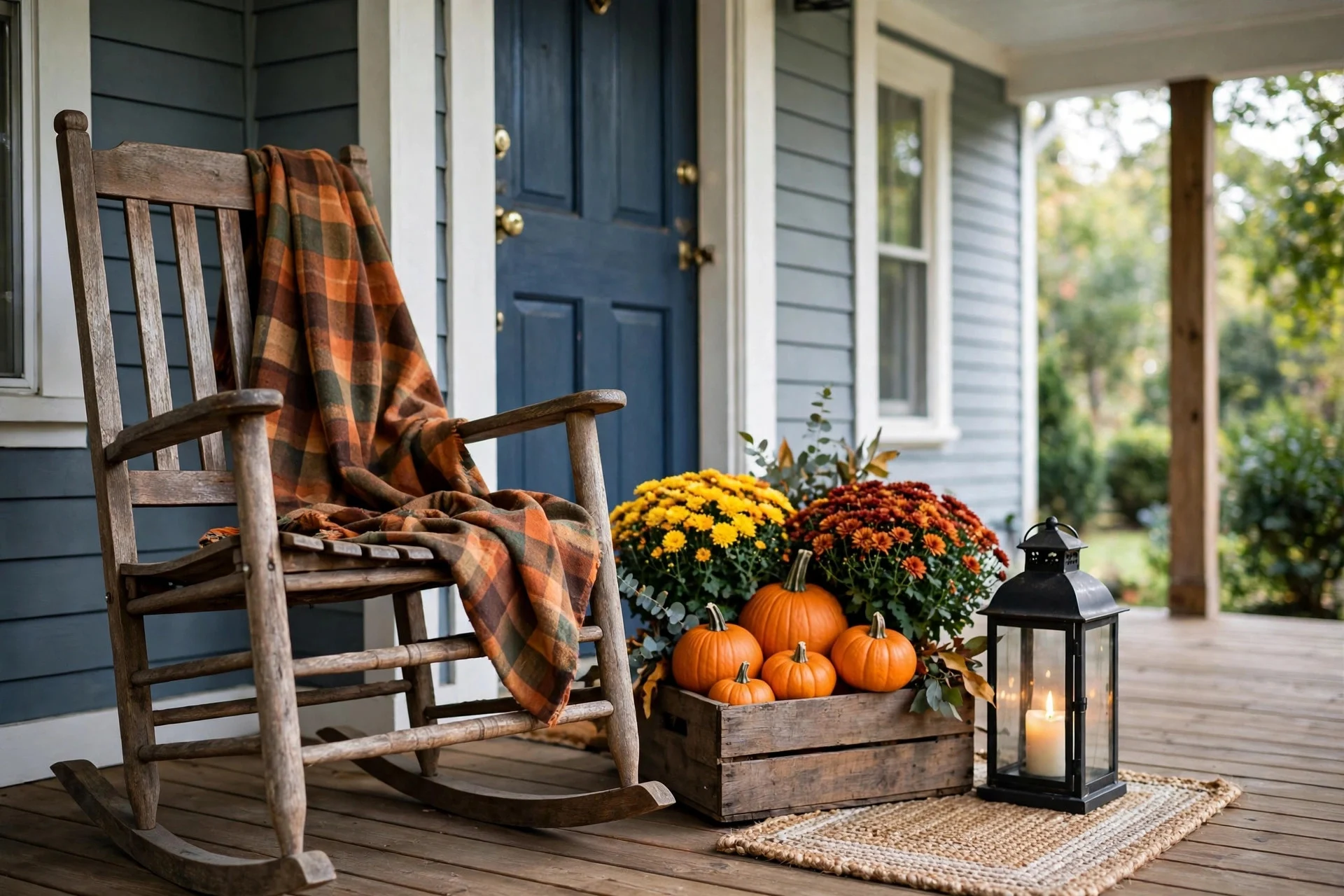
After that, rebuild the porch around the pieces that already survived Halloween in good shape. Uncarved pumpkins and mums are the obvious keepers, and they look even better grouped in odd numbers by the door than they did scattered across the steps. Add a lantern with a real or battery candle, a doormat in a warm neutral, and a plaid blanket draped over a chair if you have one. That combination is the entire Thanksgiving porch formula. Our guide to last-minute Halloween porch ideas was built on using what you already own, and the Thanksgiving porch works exactly the same way. One last job that is easy to forget: check the porch light, since a burnt-out bulb makes even a lovely porch feel unwelcoming after dark, when Thanksgiving guests often arrive.
What NOT to Do in the Switch
Most switchover mistakes are not about taste. They are about rushing, and they are all avoidable once you know what they look like. The first is trying to do Halloween takedown and Thanksgiving decorating in the same pass, room by room, box in one hand and new decorations in the other. That sounds efficient and it is not, because you end up making styling decisions while you are still surrounded by spooky things. Do the full takedown first, then decorate. The separation is what makes both jobs faster. The second mistake is buying a whole new set of Thanksgiving decorations before checking what you already own, so check the garage, the basement, and the top of the wardrobe first, and make a short list of only the gaps.
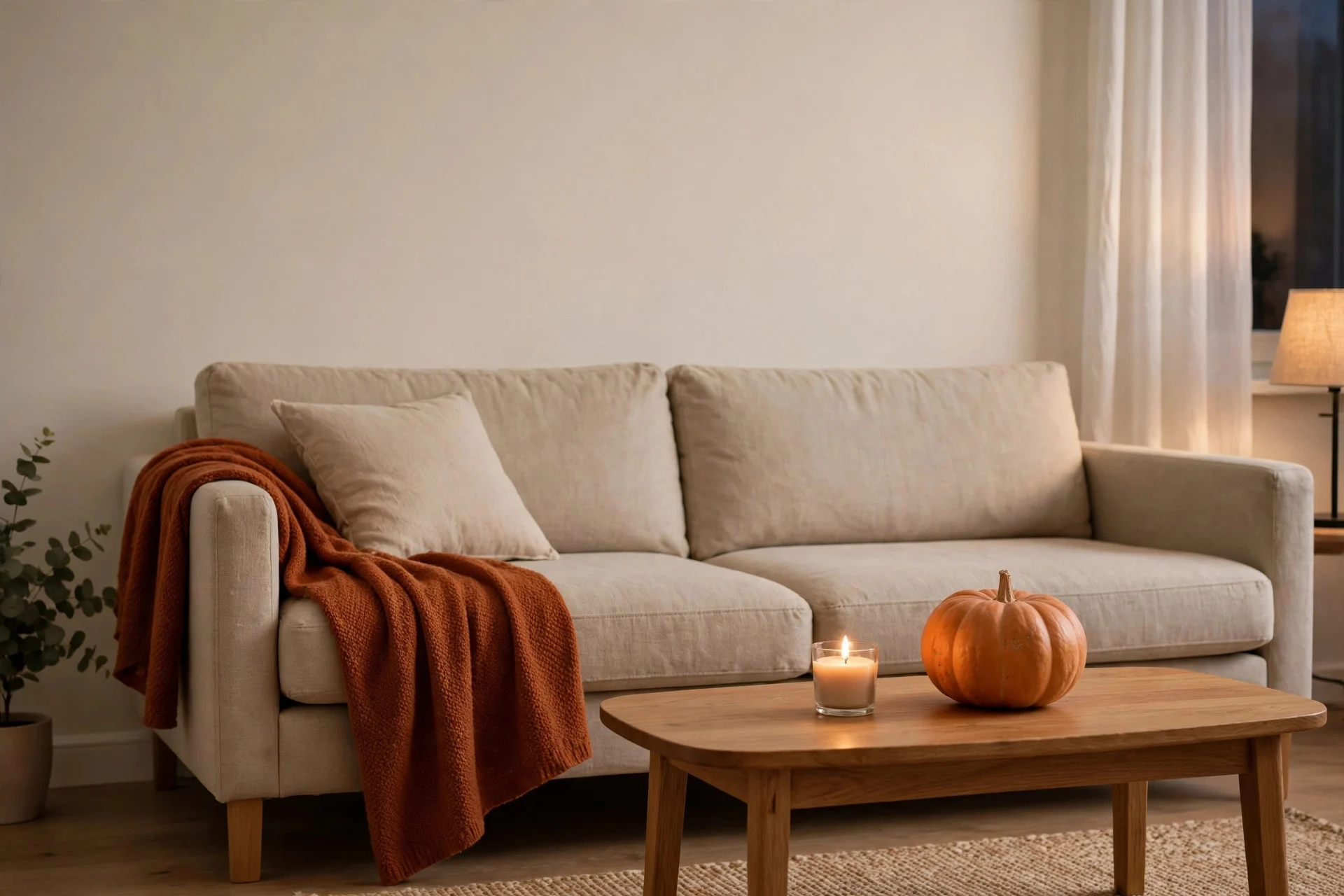
The third mistake is over-decorating the table and the mantel in the excitement of the new season. Thanksgiving decorating should feel like a deep breath after Halloween, not a second party competing with the first, so leave some empty space on purpose, especially on the table, where people need room for plates, glasses, and elbows. Our guide to Halloween decorating mistakes names the same traps, and they apply just as well in November. The last mistake is leaving one spooky straggler behind, almost always a window cling, a bat on a high shelf, or a spider tucked behind a plant, and that is exactly what the final walk-through below is for.
The Closing Checklist: One Last Walk-Through
Before you call the switchover done, walk through the house once more, slowly, with this checklist in mind. It takes five minutes and it catches the things that the faster passes miss. Porch: no spooky props, no fake webs, pumpkins and mums grouped by the door, porch light working. Entryway: console styled with three elements, wreath swapped or door left clean, candy bowl emptied. Table: Halloween colours gone, cloth or runner down, low centrepiece in place, enough room for plates and elbows. Mantel: tall pieces at the ends, low middle, candles ready, nothing blocking the mirror or art. Living room: throws and candles in warm colours, no bats on high shelves, no spiders behind plants. Storage: Halloween box labelled and put away, broken items discarded, and anything you plan to buy written on a short list rather than bought on impulse.
If every item on that list is ticked, the house has officially changed seasons. Light the candles in the early evening, even if no guests are coming that night, and take a minute to enjoy the difference. The best part of a fast switchover is not just that it saves time. It is that Thanksgiving stops feeling like a deadline you are behind on and starts feeling like something the house is already ready for. And if you want the cosy, everyday fall feeling to carry you through the rest of November, our guide to cozy fall decor ideas is a good next read, because the warmest Thanksgiving houses are really just well-loved fall houses with a table set for guests.