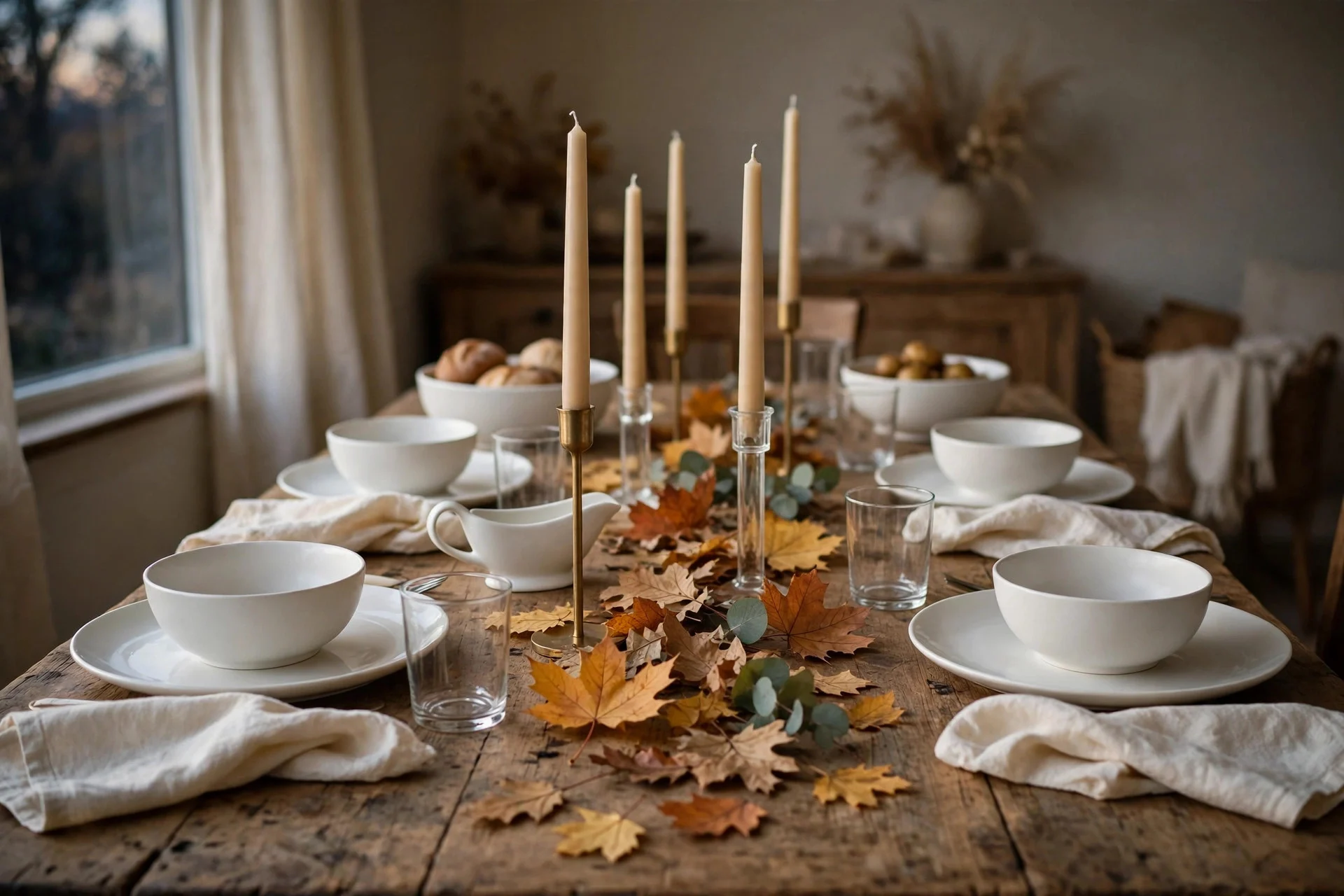
Somewhere along the way, Thanksgiving got a reputation for needing a special set of dishes. The glossy photos show matching china, chargers, and glasses that all came from the same box, and it is easy to look at your own cupboard — a stack of plain white plates, a few bowls that do not quite match, glasses collected over the years — and think you are not ready. You are. In fact, you are better off than the person with the fancy set, because your table already looks like real life, and real life is what makes guests relax.
The secret to setting a beautiful Thanksgiving table with everyday dishes is not buying anything. It is using what you have with a little more intention: layering instead of matching, letting candlelight and something natural do the decorating, and giving each place a small personal touch. If you are still working through Thanksgiving table ideas that cost almost nothing, this guide is the companion piece — the same low-spend spirit, applied to the plates themselves. Work through the steps below in order, and by the end your everyday dishes will look like they were always meant for the holiday.
1. Take Stock Before You Buy Anything
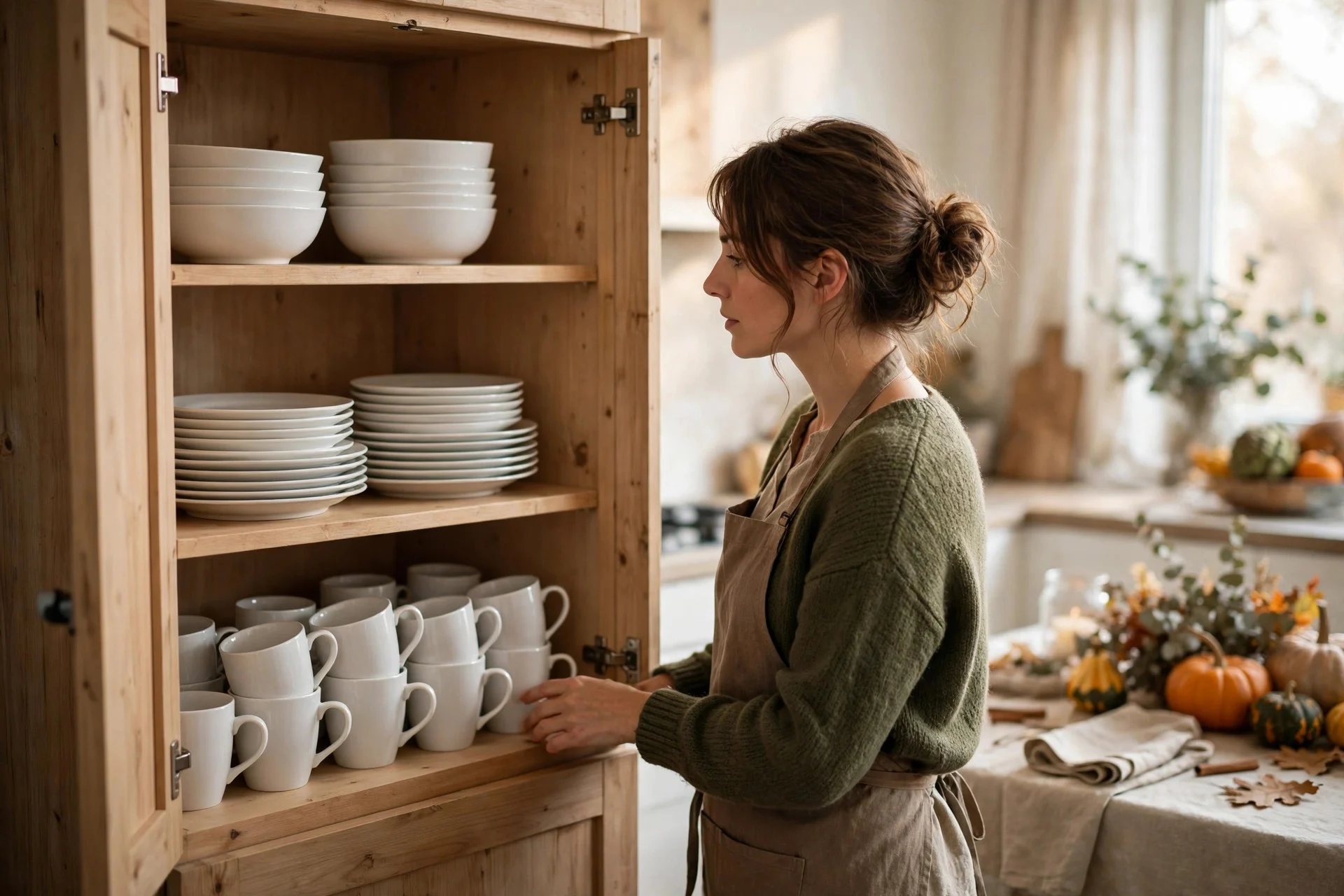
Start by opening every cupboard, not by opening a shopping app. Pull out all your plates, bowls, glasses, and serving pieces and count what you actually have, not what you wish you had. Most households discover they own far more than they thought — a second set of salad plates from a wedding gift, bowls bought for soup that work perfectly for sides, a platter that only comes out at Christmas.
Make three piles as you go: what is definitely going on the table, what could work as a serving piece, and what is chipped or stained enough to sit this one out. Count place settings against your guest list, and if you are two plates short, that is a problem with a simple fix — borrow from a neighbour or mix in a different set for those two places — not a reason to buy a whole new dinner service. This ten-minute inventory is the step most people skip, and it is the reason most people overspend. I once nearly bought a set of chargers before realising I already owned twelve large flat plates that did the exact same job underneath the dinner plates.
2. Let Plain White Plates Be the Star
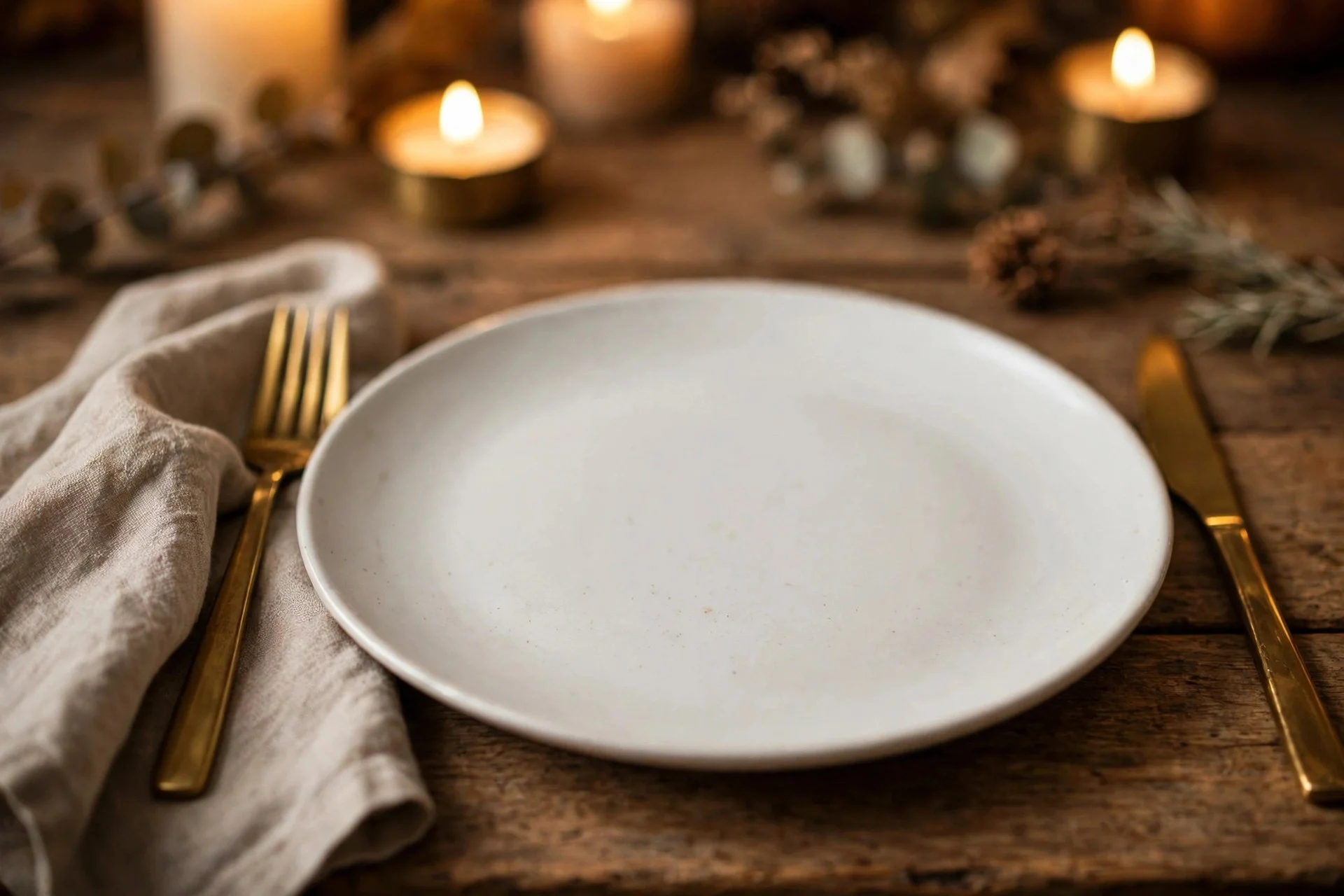
If your everyday plates are plain white, congratulations — you own the single most versatile plate there is. White plates make food look better, they match literally everything, and they never clash with a runner, a centrepiece, or a napkin colour you chose on a whim. Restaurants use white plates for exactly this reason, not because they could not afford anything fancier.
The trick is to stop apologising for them. Do not hide plain plates under fussy placemats or cover them with patterned chargers in the hope that nobody notices. Set them out cleanly, with a bit of space around each one, and let the food, the candles, and the people provide the colour. A white plate with a golden roast, green beans, and cranberry sauce on it needs no help at all. If your plates are cream or a soft off-white rather than bright white, the same rule applies — warm neutrals photograph beautifully and feel more welcoming than stark white anyway.
3. Layer What You Own Instead of Matching a Set
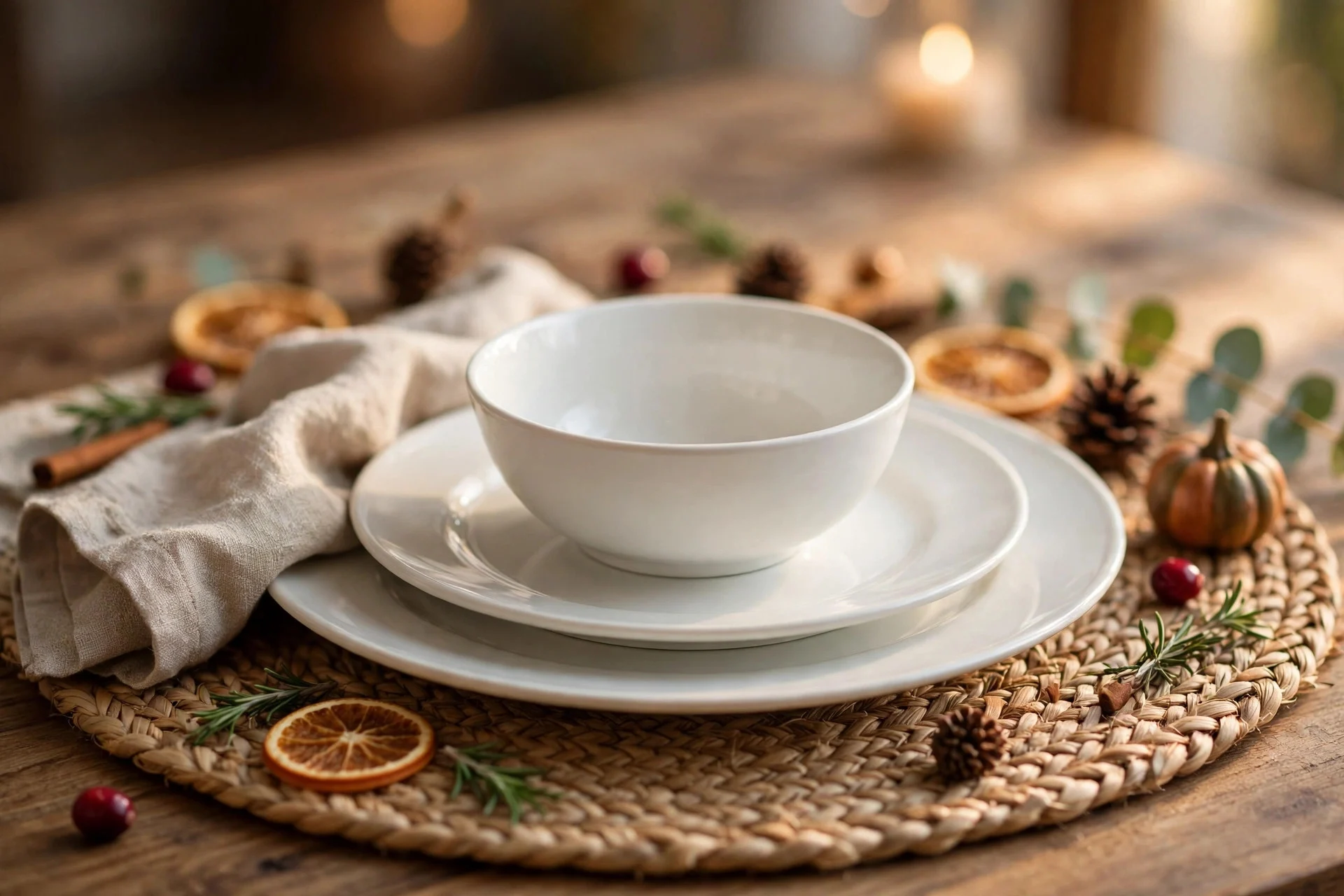
Layering is the one technique that instantly makes everyday dishes look dressed up. Put down a placemat or a large flat plate first, then the dinner plate, then a salad plate or a shallow bowl on top. Three layers give a place setting height and shape, and the eye reads that structure as “special occasion” even when every piece came from your daily cupboard.
You do not need the layers to match. A woven placemat under a white dinner plate under a slightly different white bowl looks gathered and intentional, which is much warmer than a matched set that looks like it came out of a box that morning. The only rule is to keep the stack stable and the top layer small enough that guests can lift it off without a wobble. If you have a few patterned bowls — a blue rim, a speckled glaze — use them as the top layer for a quiet pop of colour, and keep the rest plain so the table does not get busy. This is the same layering idea behind many grown-up table settings, and it works just as well in November as it did in October.
4. One Runner Changes the Whole Table
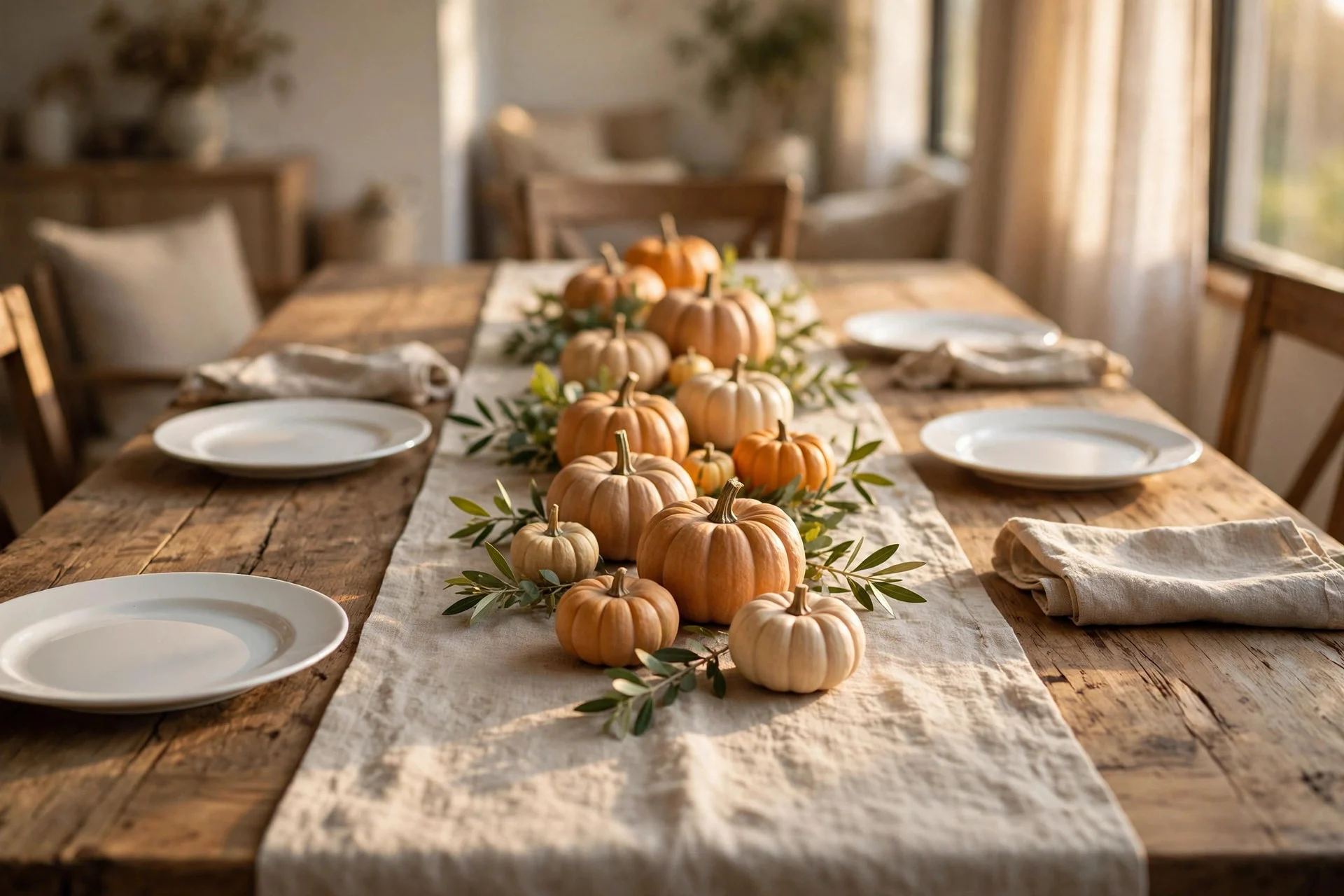
When the plates are plain, the runner does the talking. A length of fabric down the centre of the table — linen, cotton, burlap, or even a folded flat sheet in a warm neutral — instantly frames the whole setting and makes everyday dishes look like they belong at a holiday. You do not need to buy a Thanksgiving runner with a print on it; plain fabric is better, because it does not fight with the food.
Lay the runner so it hangs a little over each end of the table, and iron it the day before, not on Thanksgiving morning when the oven is already doing three jobs. If you do not own a runner, look in the linen cupboard for a long scarf, a tablecloth folded lengthways, or a couple of large tea towels laid end to end. I used a plain cream tablecloth folded into a runner for years before I finally bought an actual runner, and honestly, nobody could tell the difference once the plates and candles were on it.
5. Fold Cloth Napkins Simply — No Fancy Folds Needed
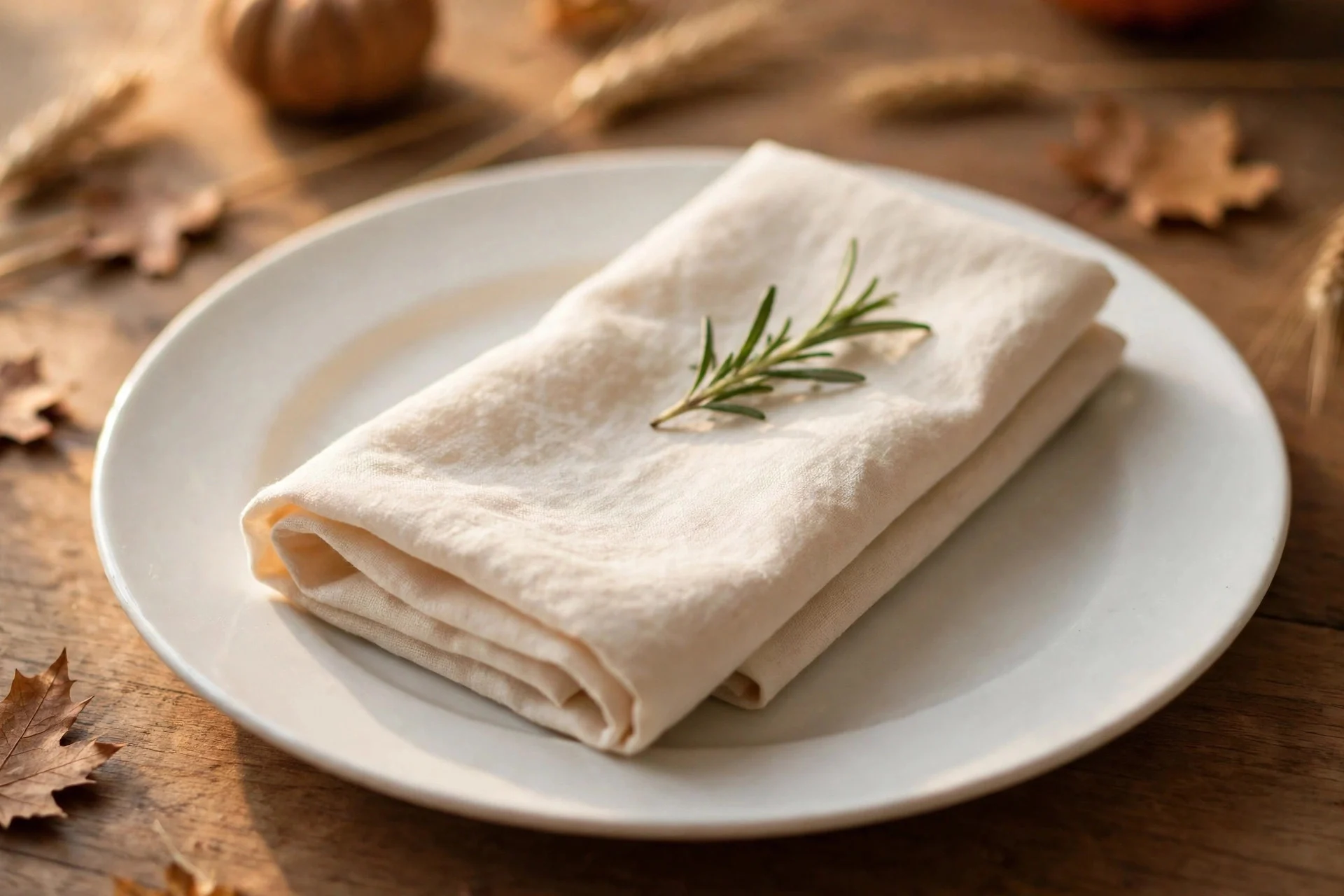
Cloth napkins are the cheapest upgrade on this list, because you probably already own them and they cost nothing to use. Skip the complicated folds you see in videos — nobody at a real Thanksgiving dinner needs a napkin shaped like a swan. Fold each napkin into a simple rectangle, lay it on the plate or to the left of the fork, and tuck a sprig of rosemary or a single dried orange slice into the fold if you want a little extra.
If you do not own cloth napkins, use clean tea towels, cut-up fabric, or even good-quality paper napkins in a plain colour. The point is not the napkin itself; it is the softness it adds against hard plates and glasses. A table with cloth — or cloth-like — napkins feels cared for in a way that paper alone rarely manages, and it is the detail guests actually notice when they sit down.
6. Candles Will Do More Than Any Centrepiece
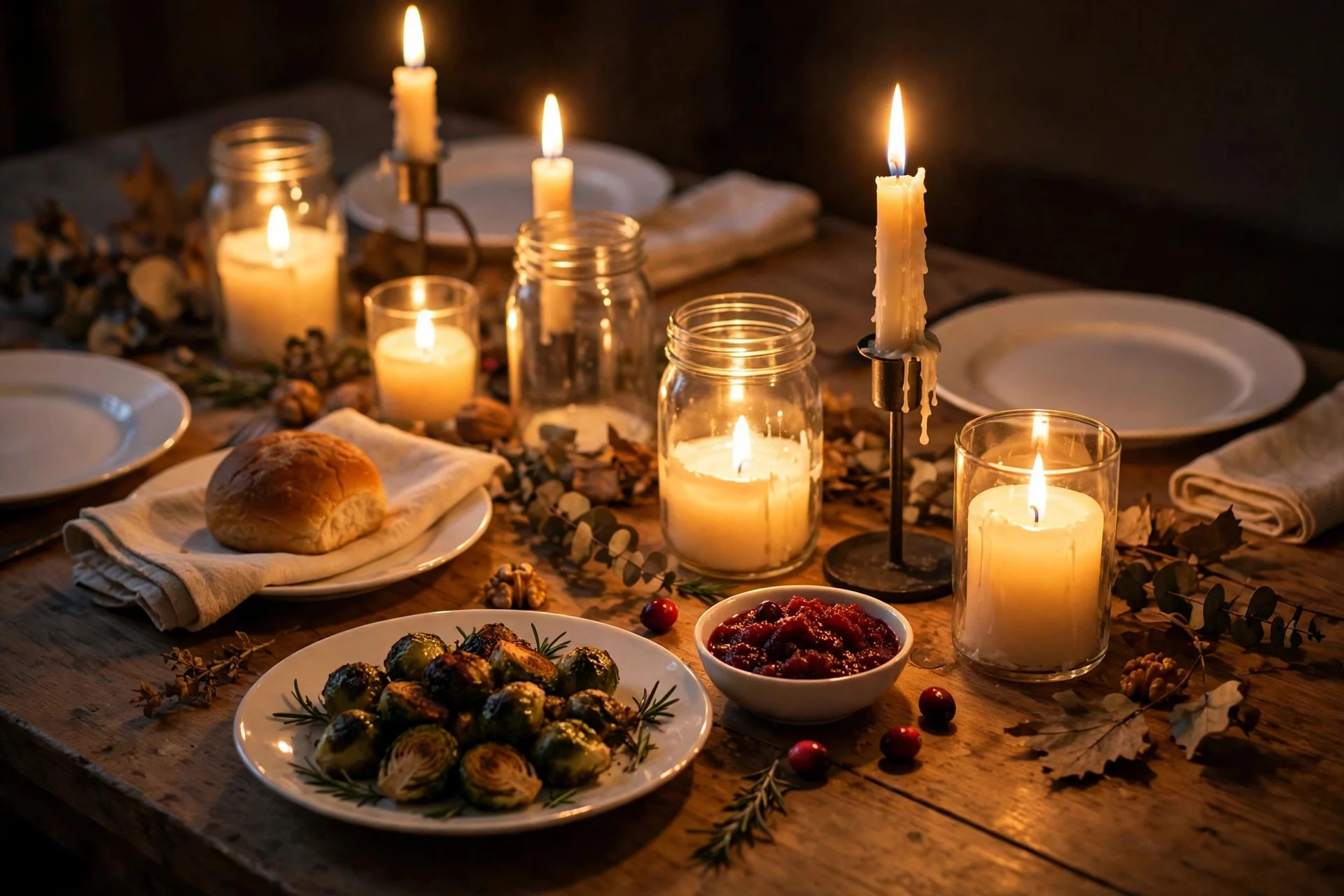
If you only do one thing from this whole guide, light candles. Candlelight flatters plain plates, warms up a room, and makes even a simple table look like an occasion. Put tea lights in jam jars, pillar candles on saucers, or taper candles in whatever holders you already own, and scatter them down the centre of the table, keeping them low enough that people can see each other over them.
The mistake is to buy a centrepiece when candles would have done the job better and cheaper. A few flickering flames beat a tall arrangement that blocks conversation every time, and they cost almost nothing if you already own the candles. Just keep them away from napkins, dried leaves, and anything that could catch, and never leave them burning in an empty room. Battery candles work just as well if you have small children, pets, or a healthy respect for open flames near a tablecloth.
7. Build the Centrepiece From the Kitchen, Not the Shop
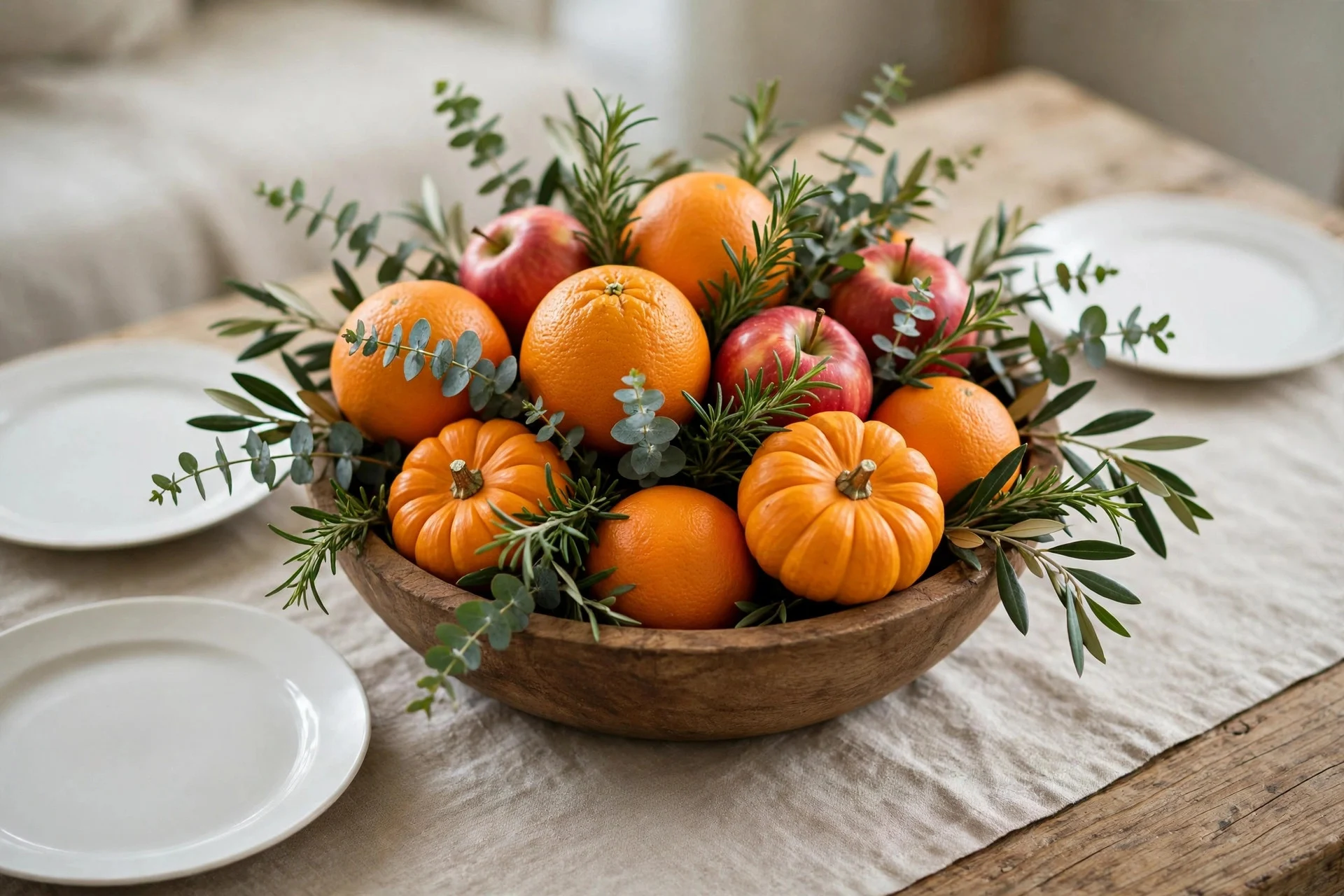
A centrepiece does not need to come from a shop. Walk into your kitchen and look at what is already there: a bowl of fruit, a few sprigs of greenery from the garden, a loaf of bread on a board. Put the fruit in a large bowl or on a cake stand, add a few leaves or herbs around the base, and you have a centrepiece that looks abundant, smells good, and can be eaten later.
The trick is to keep it low and edible, or at least natural. A tall arrangement looks impressive in a photo and terrible in real life, because nobody can talk across it. A low bowl of oranges, apples, and a few small pumpkins, on the other hand, invites people to reach for it, and it will still look good when half of it has been eaten. If you have nothing in the fruit bowl, a few branches from the garden in a jug, or even a row of small pumpkins down the runner, will do the same job.
8. Stop Worrying About Matching Glasses
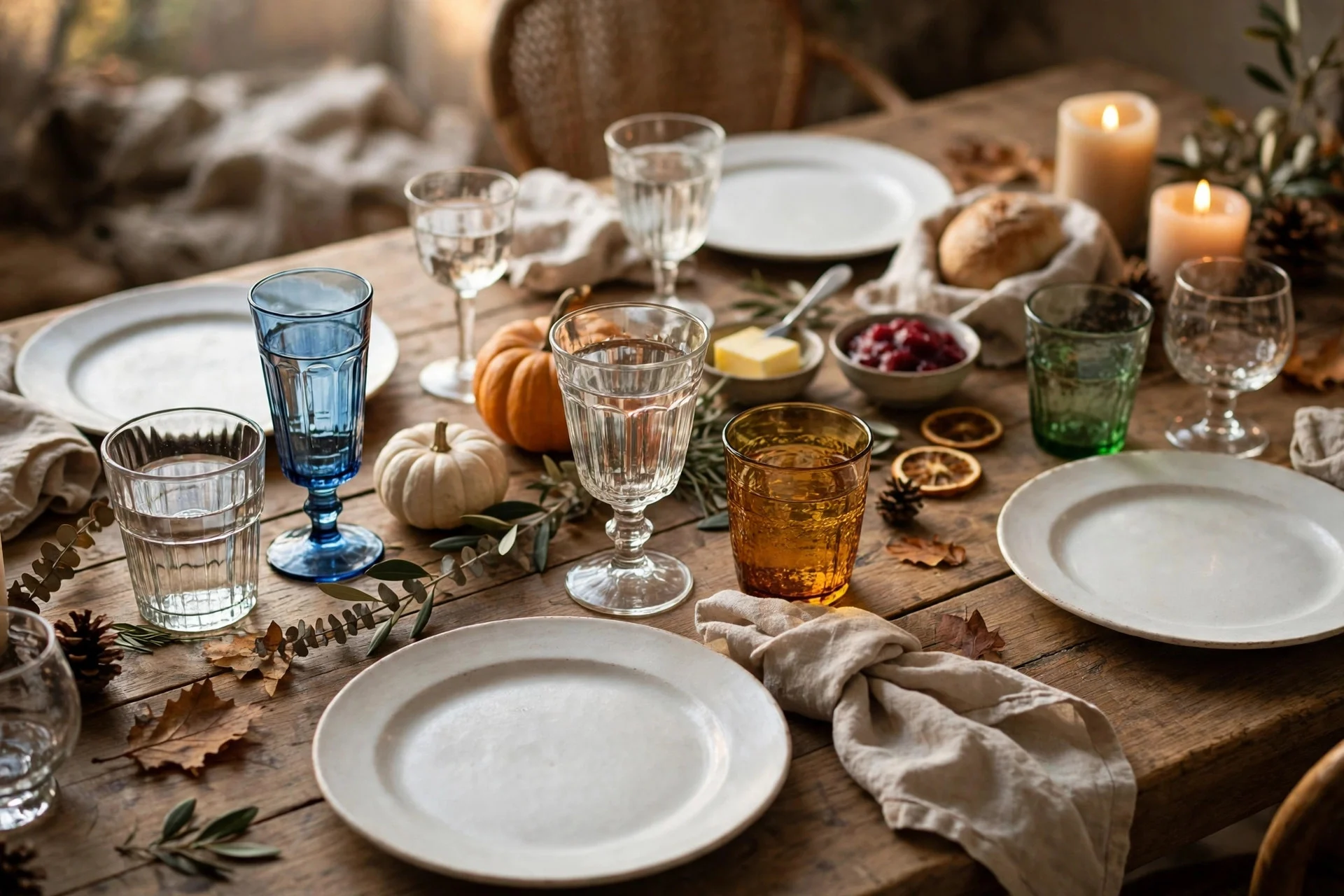
Glasses are the part people worry about most, and the part that matters least. Nobody at Thanksgiving is checking whether your water glasses match your wine glasses, and a table with a mix of glasses looks honest and relaxed rather than careless. Use what you have: water glasses for everyone, wine glasses for those who want them, and a couple of jars or tumblers if you run short.
The only rule is that every place gets a glass for water, and that the glasses are clean and not chipped. Put the water glass above the knife, and the wine glass just to its right if you are using one. That is it. If you have a few different styles, spread them around the table rather than grouping all the matching ones together, so the mix looks deliberate. Guests will be far too busy eating and talking to notice that one glass is taller than the next.
9. Give Every Place a Small Personal Touch
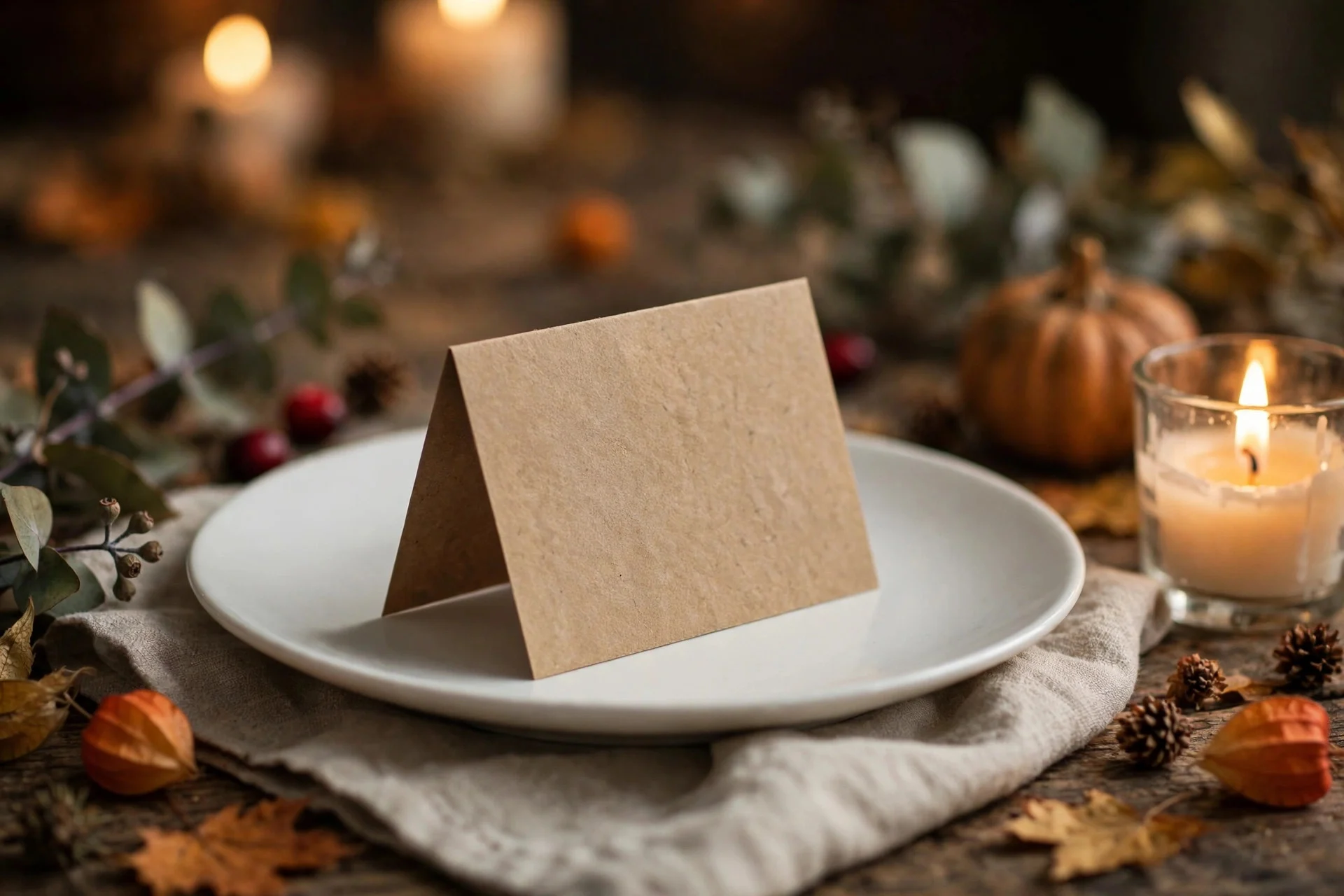
The small personal touch is what turns a table from “set” into “welcoming”. It does not need to be elaborate: a handwritten name card, a sprig of rosemary on each plate, a single dried orange slice, or a small pinecone from the garden. Pick one idea and repeat it at every place, so it looks like a choice rather than an afterthought.
Name cards are the easiest version, and they solve the other Thanksgiving problem at the same time: where everyone sits. Write names on folded card, a leaf, or even a strip of brown paper, and put one at each place. It takes ten minutes, it stops the awkward hovering at the table, and it makes guests feel expected. If you have children coming, let them write the cards — wonky handwriting is part of the charm.
10. Set It the Night Before — Then Stop Fussing
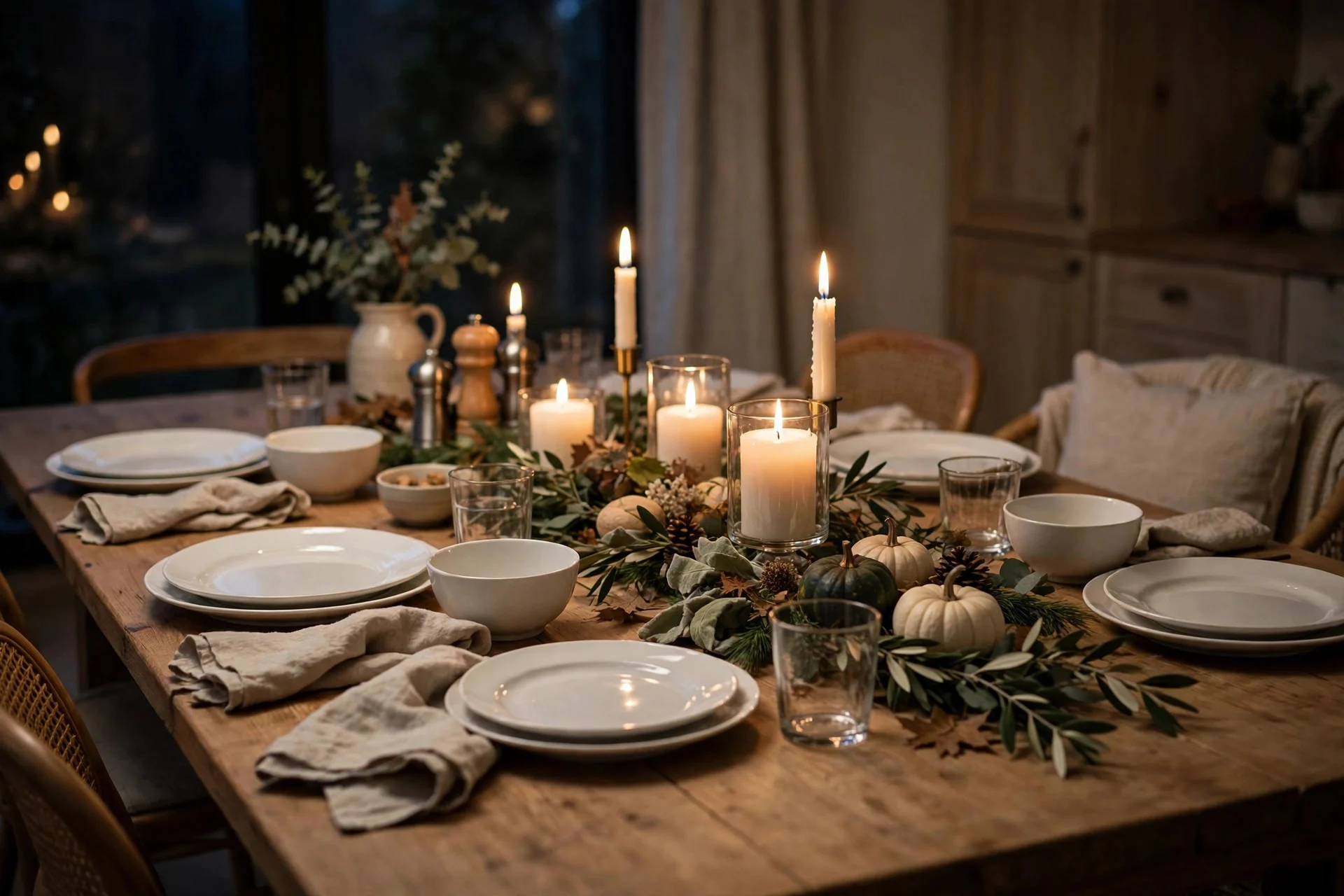
Set the table the night before. Not the morning of, when the turkey is going in and the kitchen is already a mess, but the night before, when you can take your time and fix anything that looks wrong. Lay the runner, stack the plates, fold the napkins, put out the glasses, and light a candle to see how it all looks in the evening light. Then leave it alone.
The point of setting it early is not just to save time; it is to stop fussing. Once the table is set, it is done, and you can spend Thanksgiving morning on the food and the people instead of rearranging plates. If something is not perfect — a plate slightly off-centre, a napkin folded the wrong way — leave it. Nobody will notice, and the table will look better for being a little bit lived-in rather than staged for a photograph.
What Not to Buy for This Table
Do not buy a matching set, a set of chargers, a themed tablecloth, or a centrepiece that will live in a cupboard for eleven months of the year. You do not need any of them, and they will not make your table look any better than the layered everyday dishes you already own. The only things worth buying, if you do not already have them, are a plain runner, a pack of tea lights, and maybe a few cloth napkins — all of which you will use again at Christmas and beyond.
If you are tempted by something in a shop, ask yourself one question: will I use this more than once a year? If the answer is no, put it back. Thanksgiving is one meal, and your everyday dishes are already good enough for it. Spend the money you save on better food, or on nothing at all, and enjoy the holiday instead of shopping for it.
The Night-Before Checklist
The night before, do this and then stop: lay the runner, set out the plates in layers, fold the napkins, put a glass at every place, add one small personal touch, put the low centrepiece in the middle, and scatter the candles. Check that every place has a fork, a knife, and a spoon, and that nothing tall is blocking anyone’s view. Then go to bed.
In the morning, all you need to do is light the candles, put out the water jug, and welcome people in. The table is already done, the food is the main event, and your everyday dishes — the ones you eat from all year — will look exactly like they belong at Thanksgiving. Because they do.
Your everyday dishes are not a compromise. They are the starting point for a table that feels warm, real, and welcoming, and that is what Thanksgiving is actually about.
For more ideas, read how to make your table settings look more grown-up, add cozy fall touches to your living room, avoid common decorating mistakes, and find ideas for switching from Halloween to Thanksgiving.