
Every December, my mantel ended up looking exactly like everyone else’s. Same evergreen garland draped in the same sagging U, same four stockings in a row, same little pinecone cluster I bought in a bag three years ago. It wasn’t ugly. It was just… expected. I’d walk past it a hundred times a day and not really see it anymore.
Last year I took everything off and started with an empty mantel and one rule: no store-bought garland, no matching stocking set. What happened surprised me. The mantel finally looked like ours, not like a display in a shop window, and it cost less than the garland-and-stockings routine ever did, because most of these ideas use things already sitting in a cupboard somewhere. If your mantel has been on autopilot too, here are fourteen Christmas mantel ideas that go beyond garland and stockings.
Before You Start: Three Quick Mantel Rules
Before any of these ideas work, three things matter more than what you put up there. First, scale: one too-small thing on a wide mantel looks lost, and five big things look crowded, so start with one piece that is roughly two-thirds the width of the mantel and build around it. Second, odd numbers. Three candlesticks look intentional, four look like a row. It sounds silly until you try it — group things in threes and fives and the whole shelf suddenly relaxes. Third, leave breathing room. A mantel packed edge to edge reads as clutter, not abundance; a little empty wood between groups is what makes each group visible. Get those three right and almost any of the ideas below will look good. For the bigger picture, my guide on where the Christmas tree goes uses the same thinking — start with the room, then place things, not the other way round.
1. Go Asymmetric With a One-Sided Greenery Swag
A swag that runs the whole mantel and sags in the middle is the look everyone defaults to, and it is also the look that makes a mantel feel heavy. Try hanging your greenery on one side only — a loose bunch of eucalyptus or olive branches, tied at the top, spilling down the left edge and stopping about two-thirds of the way across.
To do it, gather two or three long branches, tie them together with twine at the thick end, and hook them over a small nail or a removable hook at one end of the mantel. Let the thin ends fall naturally, then tuck in a couple of shorter sprigs to fill any gaps. The whole thing takes ten minutes. I tried the full-width swag first — the photo shows that version, a pine garland draped right across the mantel — then took half of it down on a whim, and the one-sided version looked instantly more modern — like someone styled it rather than decorated it. If you need to clear the old stuff off first, my notes on moving from Thanksgiving decor to Christmas cover the fastest way to reset a room.

Photo: @Anastasia Shuraeva via Pexels
2. Line Up Pillar Candles in Hurricane Holders
Nothing warms up a mantel faster than candlelight, and pillar candles in glass hurricane holders are the easiest version of it — no dripping wax on the wood, no open flame near anything dry. Use three holders in different heights, and keep them to one end of the mantel so they read as a group instead of a fence. (The photo shows the same three-hurricane grouping on a wooden table — it works exactly the same way on a mantel.)
Pick up plain white or cream pillars, the chunky kind, and set each one inside its glass. Put the tallest at the back and the shortest at the front, and light them only when you are in the room — a battery pillar works just as well if you have kids or a cat that treats the mantel as a shelf. I put these up on a grey December afternoon and the room changed character in the time it took to strike a match. They are also the cheapest idea on this list if you already own the glass — mine came from a pound-shop clear-out years ago. They pair well with the rest of the living room, which is why I keep coming back to the cozy touches I use after dinner too.
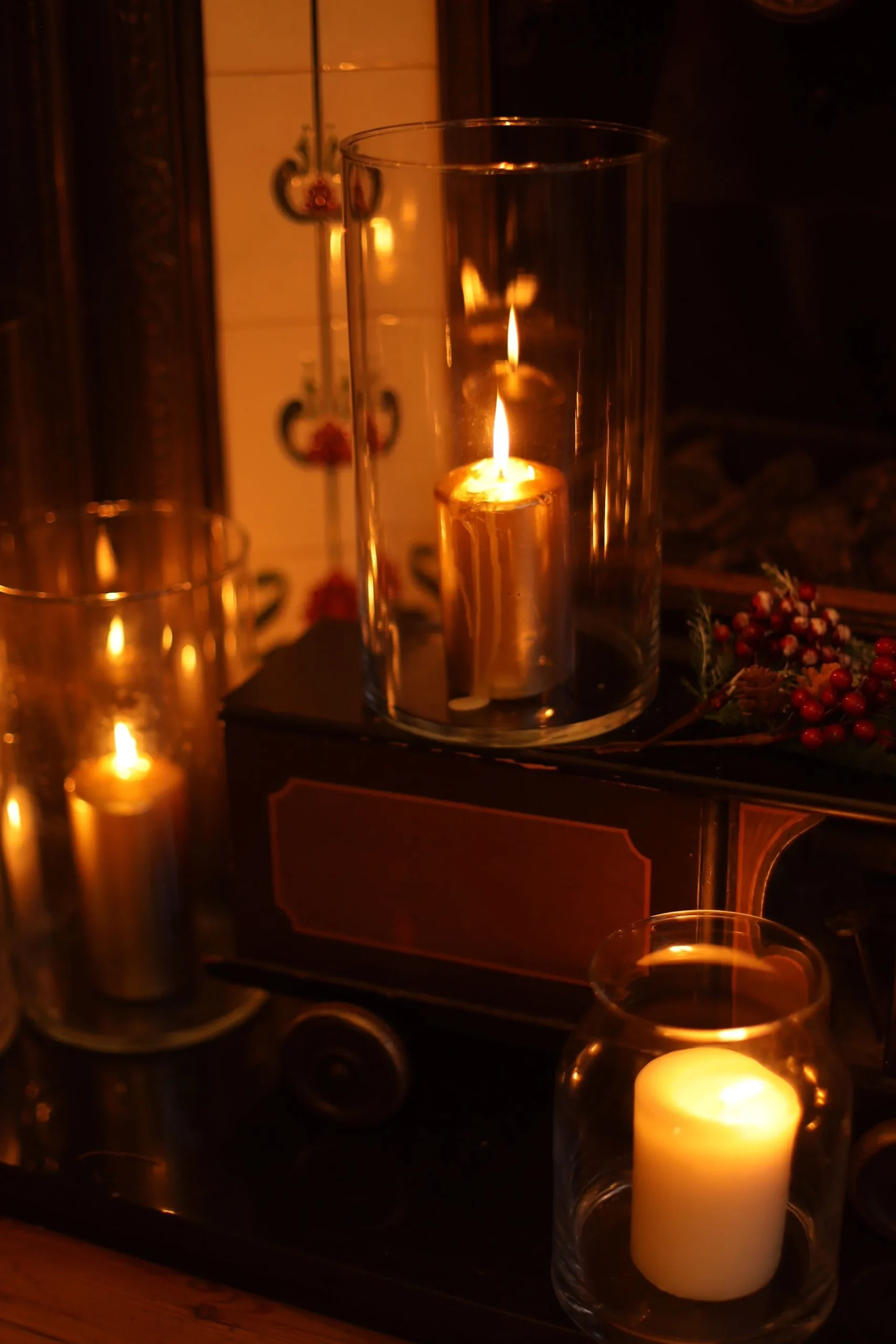
Photo: @Yelena via Pexels
3. Lean a Big Mirror (or Oversized Art) on the Wall
A mantel with nothing above it looks unfinished, and a mirror is the fastest fix there is. A big one, leaned against the wall rather than hung, bounces the tree lights and the candles back into the room, and it makes a small living room feel noticeably larger.
Find a mirror or a framed print that is about two-thirds as wide as the mantel — anything smaller disappears, anything wider fights with the shelf. Lean it so the bottom edge sits just behind the mantel’s back edge, and wedge a small piece of felt behind it so it doesn’t slide. If a mirror feels too formal, a large unframed canvas or even a vintage window frame does the same job. I leaned an old gilt mirror I found at a car boot sale above ours, and for the first time the mantel had a focal point that wasn’t a garland. It also hides a multitude of sins if your wall has a scuff or a nail hole behind it.
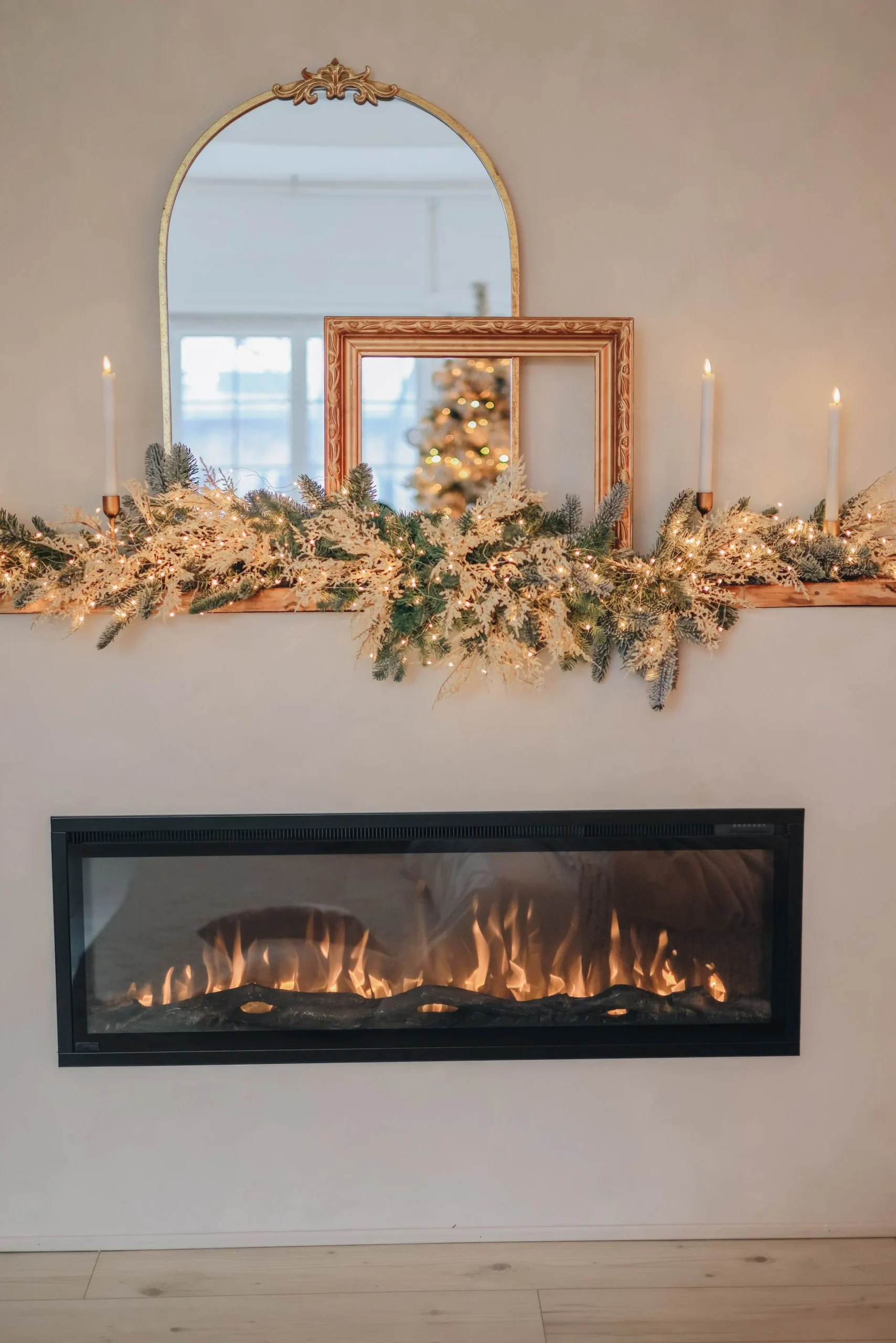
Photo: @Valeria Boltneva via Pexels
4. Cluster Bottle-Brush Trees in Mixed Heights
Bottle-brush trees are one of those decorations that look cheap alone and charming in a group. The trick is buying — or gathering — several in different heights, from a tiny two-inch one up to a foot tall, and clustering them tightly at one end of the mantel like a little forest.
Set the tallest in the middle, the medium ones around it, and the smallest ones at the front edge, almost like steps. (The photo shows the cluster on a tabletop, mixed with paper trees — the same grouping works on a mantel.) A dusting of fake snow on the tips, or a pinch of salt if you are feeling thrifty, makes them look like they belong outside. I made the mistake of spacing mine out evenly the first year, and they looked like a row of soldiers; pushed together, they suddenly looked like something you’d see in a shop window. Keep them away from the candles in idea two, though — those little bristles catch a spark faster than you’d think.

Photo: @Jilly Noble via Pexels
5. String Dried Oranges and Cinnamon
If you want a garland that isn’t a garland, this is it: dried orange slices and cinnamon sticks strung on twine. It smells like Christmas in a way plastic greenery never will, and it costs almost nothing if you have an oven and a few oranges going soft in the fruit bowl.
Slice the oranges thin, about half a centimetre, lay them on a baking tray, and bake them low — around 100 degrees — for two to three hours, flipping once, until they are dry and stiff. Then thread them onto twine with a needle, alternating orange, cinnamon stick, orange, and hang the string in a loose swag or drape it along the mantel’s front edge. (The photo shows the slices fresh out of the oven, on a tray — string them once they’re fully dry.) My first batch came out too thick and went brown in the middle, so slice them thinner than you think you need to. The smell alone is worth it — the whole room picks it up within an hour. This is also the most forgiving decoration I know: if a slice cracks, thread it anyway, because the uneven ones look the most handmade.
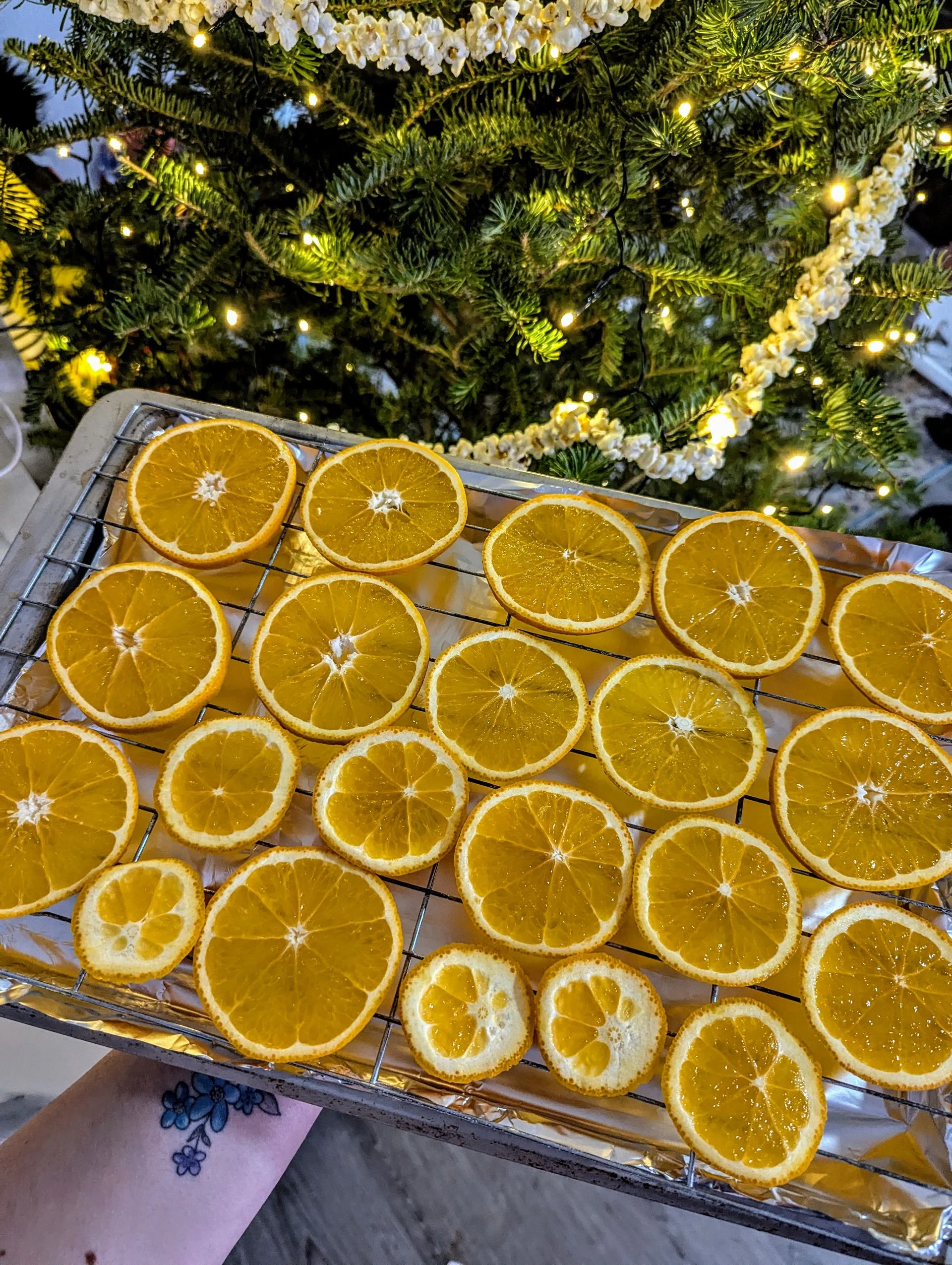
Photo: @J. L. Fizzell via Pexels
6. Stack Old Books and Top Them With Something Small
A stack of old hardbacks is the easiest way to add height to a mantel without buying anything new. Pull three or four books off a shelf — old hardbacks look best, but the paperbacks in the photo work just as well — stack them with the biggest at the bottom, and put one small thing on top: a tiny tree, a single candle, a pinecone, or a glass tealight holder like the one in the photo.
Take the dust jackets off so the spines show; a mix of red, green, and cream spines looks like you planned it even when you didn’t. Tie the stack with twine if it feels wobbly, and set the whole thing at one end of the mantel, not the centre. I used my grandmother’s old cookbooks for this, and the stack has stayed up long after Christmas some years because it just looks right there. It is a good reminder that a mantel doesn’t need Christmas-specific objects at all — it needs objects with some history to them. The same thinking runs through the mantel formulas I wrote about for Halloween, where a stack of books did the same job in October.
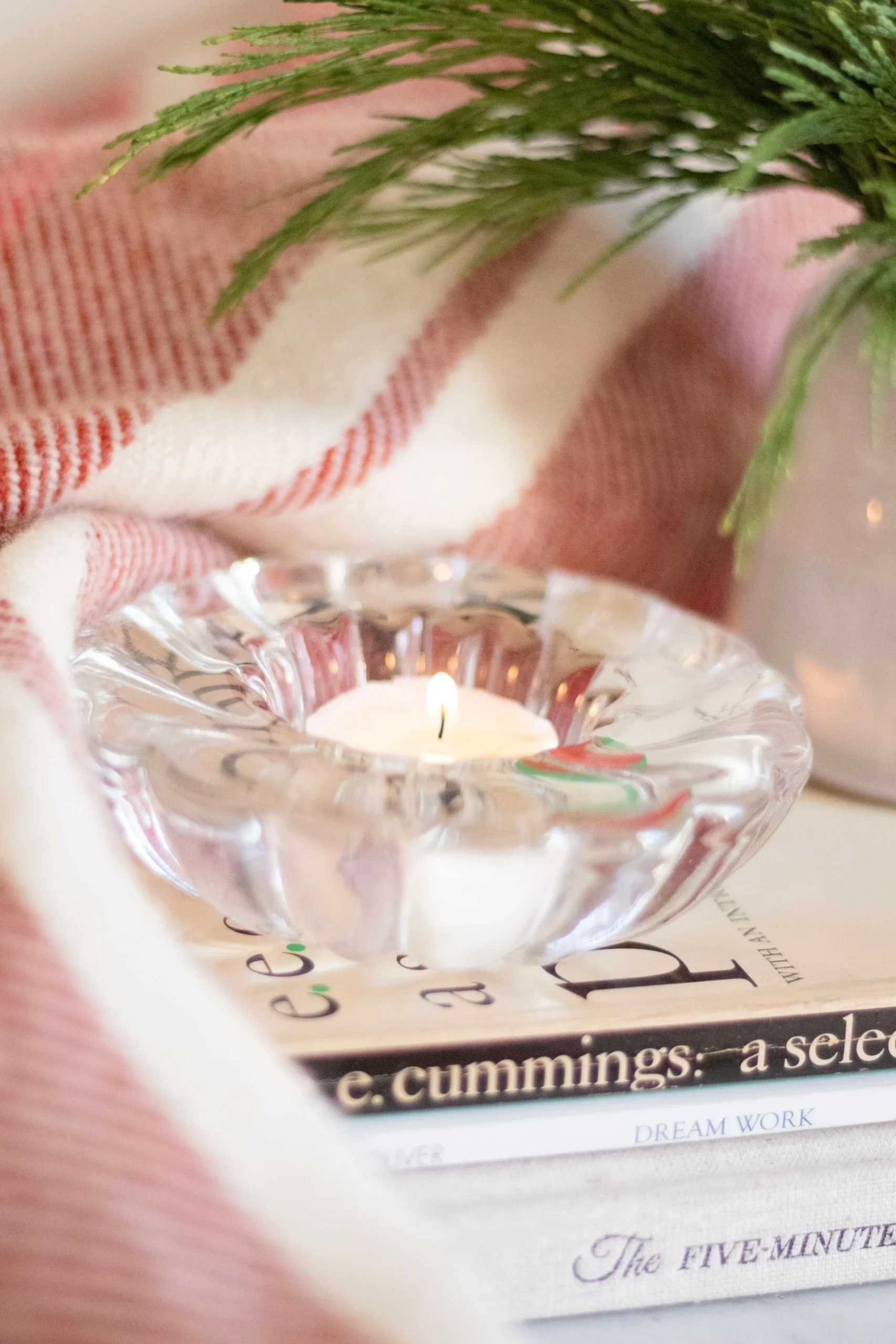
Photo: @Fiona Murray via Pexels
7. Fill Glass Cloches With Fairy Lights
A glass cloche — one of those bell-shaped covers — with a tangle of fairy lights inside is a small glowing dome on your mantel, and it looks far more expensive than it is. The glass softens the light, the dome shape gives it structure, and it works even in daylight, when the lights are off and it just looks like a pretty object. No cloche? A mason jar does the same job — the photo shows fairy lights glowing in a plain jar, and it looks just as good.
Coil a short string of battery fairy lights inside the cloche, tuck the battery pack underneath, and set it on a small stack of books or a wooden slice so it sits at a different height from everything else. Two cloches in different sizes, one at each end, balance each other nicely. I bought my cloches at a charity shop for next to nothing, and they are the one thing guests always ask about. One warning: measure your mantel depth first. A cloche that overhangs the front edge is one elbow away from a disaster.

Photo: @Rahul via Pexels
8. Pinecones in a Dough Bowl
Pinecones on their own look a bit craft-fair, but pinecones piled into a long wooden dough bowl look like a deliberate centrepiece. The bowl gives them a shape and a boundary, and the wood warms up the whole arrangement.
Find a dough bowl, a bread trough, or any long shallow wooden bowl, and fill it loosely with pinecones — different sizes, some open, some closed. Tuck in a few sprigs of greenery or a handful of cinnamon sticks between them, and set the bowl in the middle of the mantel. The photo’s bowl has cotton stems and silver ornaments mixed in with the pinecones — the same idea, dressed up a little. Pinecones left over from autumn do the same job — I keep a box of fall bits for exactly this, and my notes on reusing fall decor show how those leftovers earn their keep twice. If you collected the pinecones yourself, bake them at a low heat for half an hour first; it kills anything living in them and opens them up nicely. I gathered mine on a walk with my daughter, which is probably why I like this one more than it deserves — but the bowl itself does the heavy lifting, and a bowl of pinecones costs nothing at all.
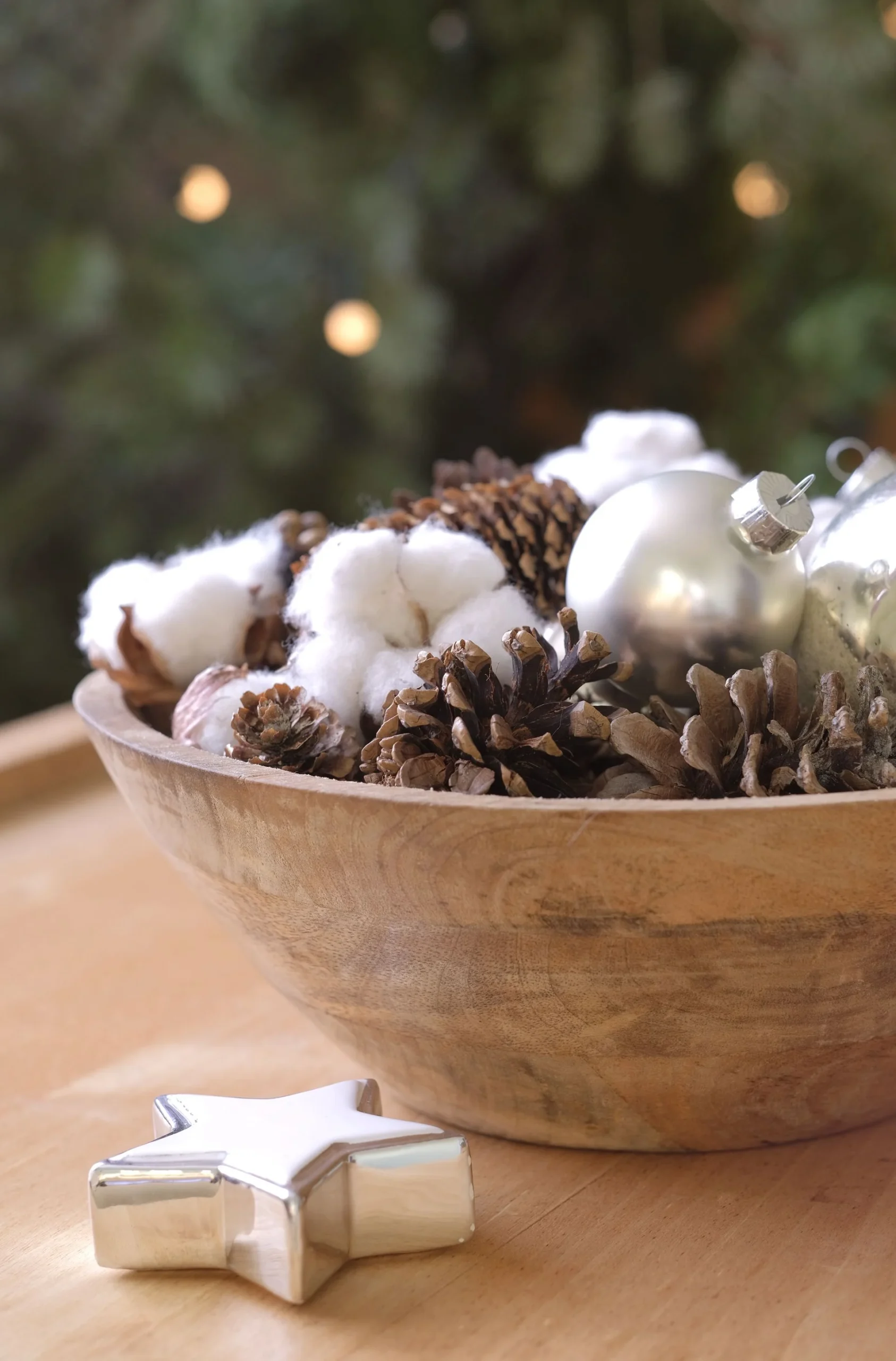
Photo: @Valerie Flowers via Pexels
9. Hang a Letter Board With a Short Message
A letter board is the mantel equivalent of a conversation starter. Lean a small felt letter board — or a framed chalkboard, like the one in the photo — against the wall or hang it above the mantel, and spell out something short — a lyric, a family joke, the countdown to Christmas Day.
Keep it to a few words; a crowded board is hard to read from the sofa. “Merry and bright” is the classic, but the boards that get the most reaction are the personal ones — ours once said “no peeking until the 25th” and stayed up for three weeks. Change the message halfway through December and the mantel feels new again without moving a single object. I made the mistake of using tiny letters the first year, and nobody could read them from across the room, so go bigger than you think. It is the one idea on this list that works just as well in January if you swap the message for something plain.
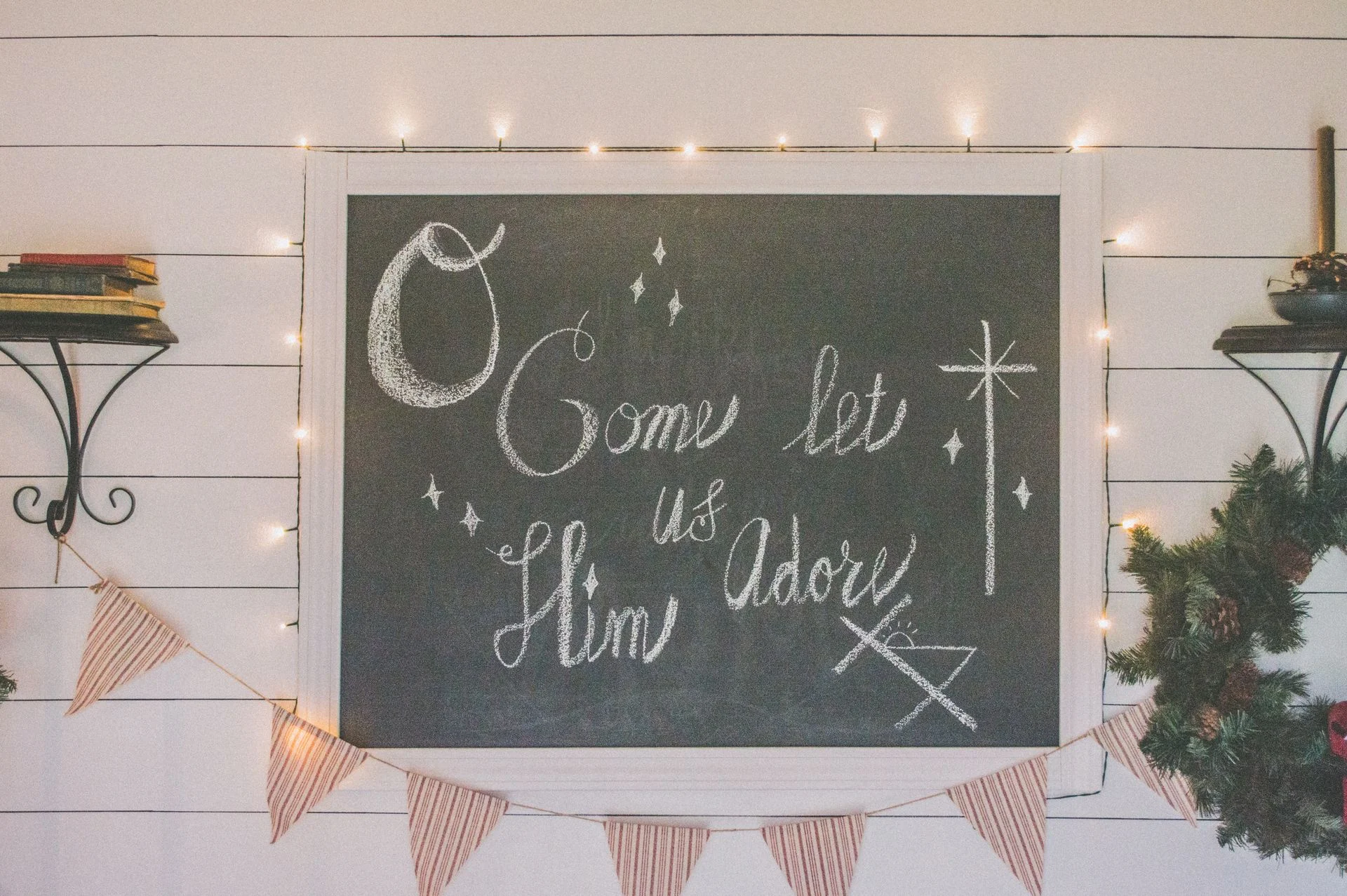
Photo: @Jessica Lewis via Pexels
10. Fresh-Cut Branches in Tall Vases
If real greenery feels wasteful but you still want something alive on the mantel, cut a few branches and put them in water. Cedar, pine, magnolia, even a branch from a garden shrub — anything with interesting shape — looks sculptural in a tall vase, and it lasts two or three weeks with fresh water.
Cut the branches at different lengths, strip the lower leaves, and arrange them so they fan out rather than bunching up. A tall, narrow vase keeps them upright; a wide one lets them flop. Put one vase at each end of the mantel, or a single big one off to one side, and let the branches lean a little — perfectly straight looks stiff. The photo shows pine branches in a white vase with two tiny knitted hats hung from them — the hats are optional, the branches are the point. I cut ours from a neighbour’s overgrown cedar (with permission) and they outlasted every other decoration in the house. The trick is changing the water every few days, like flowers. When they finally dry out, they still look good for another week as dried branches.

Photo: @Beyza Efe via Pexels
11. Set Out a Ceramic Village (or Nativity)
A ceramic Christmas village — those little lit-up houses — turns a mantel into a scene instead of a shelf. You don’t need a whole town; three or four houses, clustered with a little fake snow or a cotton-wool drift underneath, is enough.
Arrange the tallest house at the back, the smaller ones in front, and leave a gap of bare mantel between the village and whatever is next to it, so it reads as one scene. Battery tea lights inside the houses make the windows glow in the evening. The photo shows the houses nestled in soft fur — cotton wool does the same job. If a village feels too much, a simple nativity set does the same thing in a smaller footprint. My mother-in-law gave us our first house one Christmas, and the village has grown by one building a year since — which is either charming or a slow takeover, depending on who you ask. Either way, it is the decoration my kids check first every morning.
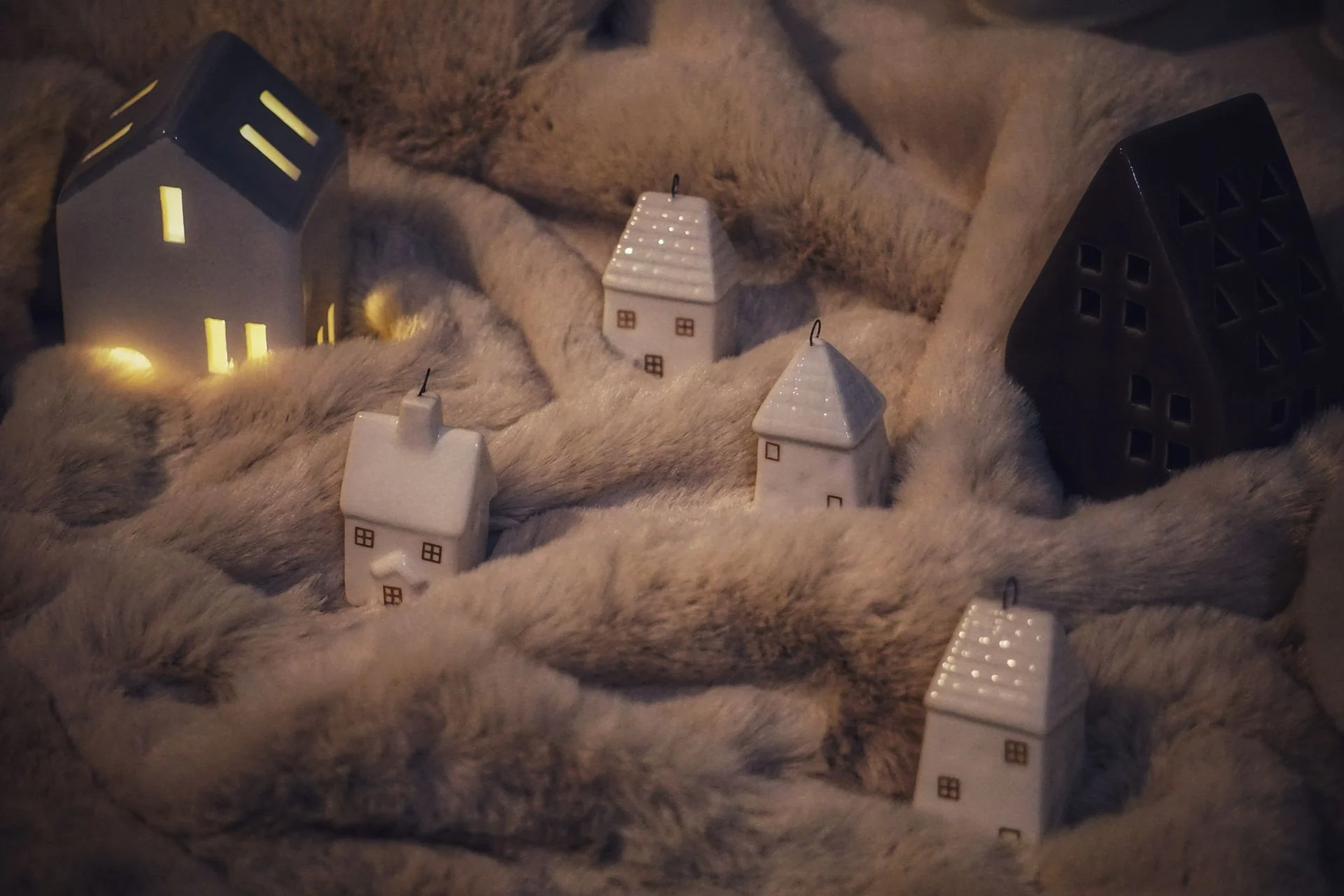
Photo: @Demetra Ioannidou via Pexels
12. Brass Taper Candlesticks for a Metallic Glow
Brass is having a moment, and a row of brass candlesticks with cream taper candles is the most grown-up look on this list. The metal catches the tree lights and the candlelight at the same time, and it works with every colour scheme because brass isn’t really a colour — it is a warm neutral.
Use three candlesticks in graduated heights, or five if your mantel is wide, and keep them together at one end so the brass reads as one metallic block rather than scattered bits. Plain cream tapers look better than coloured ones here; the brass is the colour. I found my candlesticks in three different charity shops over two years, and the mismatched set looks better than a matching one ever would — same metal, different shapes. Just keep them well away from anything flammable above the mantel, and trim the wicks short so they don’t smoke.
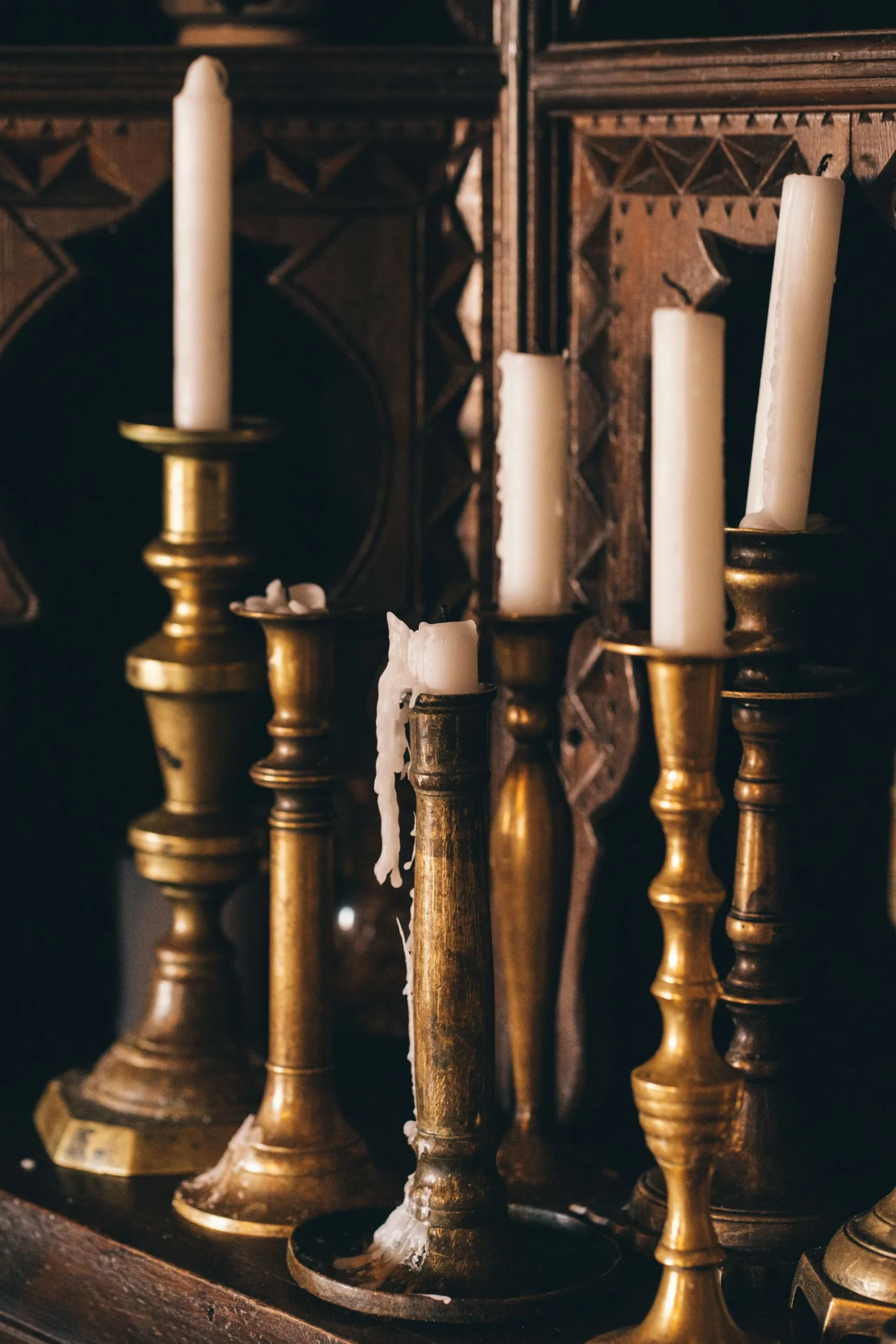
Photo: @Gizem Çelebi via Pexels
13. Paper Stars on Twine
Paper stars are the lightest, cheapest idea here, and they have a handmade quality that shop-bought decorations can’t copy. Fold a few stars from brown parcel paper, gold card, or old sheet music, string them on twine, and hang the string across the front of the mantel or from the mirror above it.
There are simple folding tutorials everywhere, and the first star always looks terrible — the third one looks like you meant it. Make them in two sizes, and space them unevenly on the twine so they don’t look like bunting from a school fair. I made a batch with my kids one rainy afternoon, and the wonky stars are the ones we kept; the perfect ones looked store-bought and went in the recycling. They weigh nothing, so they hang from a single small nail or even a bit of tape, and they pack flat in January, which is more than I can say for the ceramic village.

Photo: @Julia Filirovska via Pexels
14. One Oversized Statement Piece
If all of this sounds like too much fuss, do the opposite: one enormous thing, and nothing else. A giant paper star, a huge lantern, a sculptural bare branch in a heavy vase, a single oversized wreath made of something unexpected — or one strong pairing, like the tall nutcracker standing next to a single oversized lantern in the photo — centred, with bare mantel on either side.
The rule is simple: it has to be big enough to look deliberate. Anything smaller than half the mantel’s width will look like you forgot the rest. Put it in the middle, step back, and resist the urge to add “just one more thing” — the empty space is doing half the work. I tried this the year I was too tired to decorate properly, and it was the mantel that got the most compliments. Sometimes the bravest decorating choice is stopping. A single statement piece also makes the mantel easy to dust, which, honestly, is a feature by February.
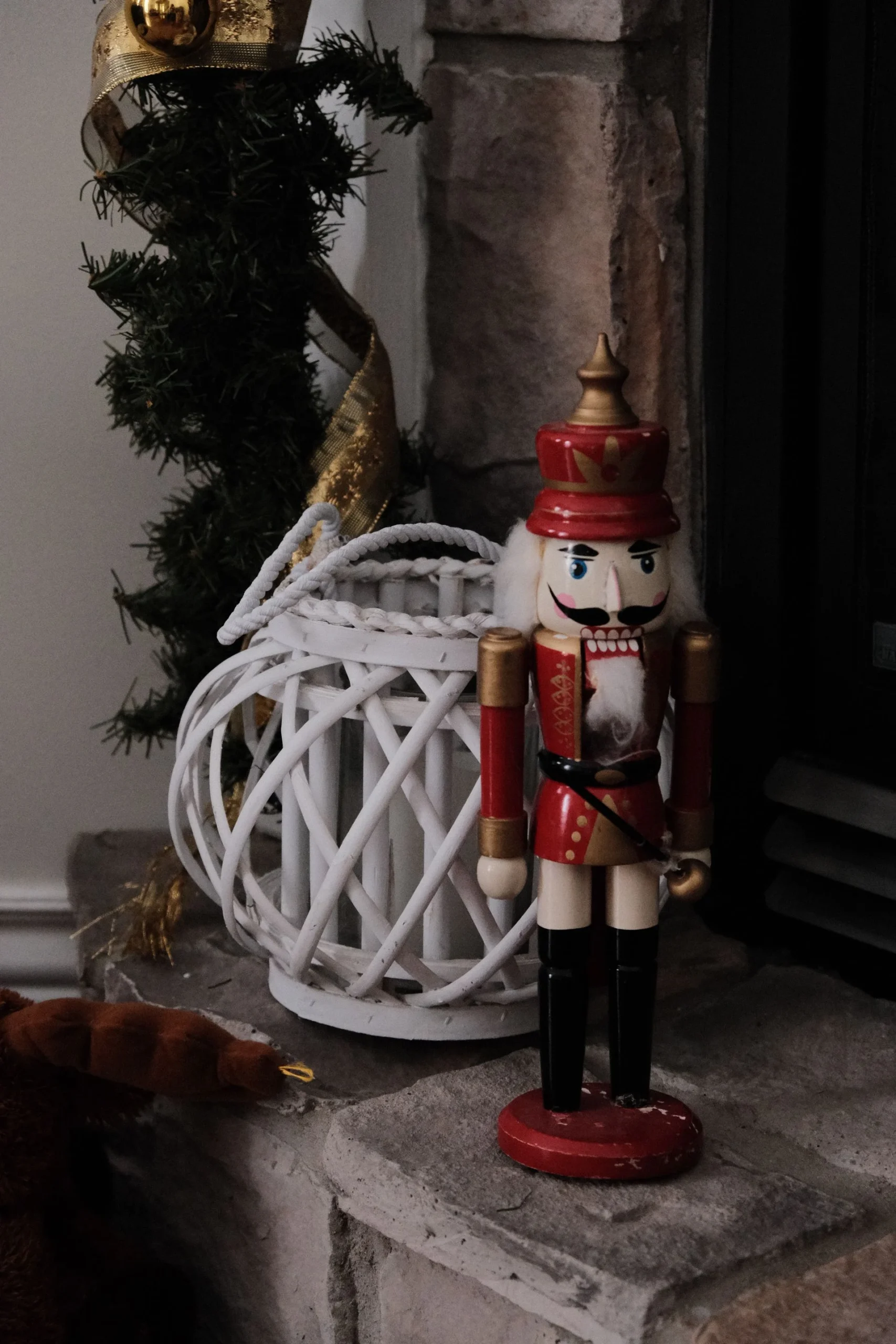
Photo: @Aymerik Grenier via Pexels
A 10-Minute Mantel Refresh Checklist
If you are short on time, run through this before guests arrive: clear everything off and wipe the mantel down, then put back only the pieces you actually love. Check the scale — is there one piece roughly two-thirds the mantel’s width? Group things in threes and fives. Leave a gap of bare wood between groups. Step back to the sofa and look at it from where you will actually sit, not from two feet away. Light the candles or switch the fairy lights on, and see if the glow reaches the wall behind. That last check matters most: a mantel that looks good in daylight and disappears at night is only half decorated.
The garland-and-stockings routine isn’t wrong — it is just the default, and defaults are easy to outgrow. Pick one idea from this list, the one that made you think “I could do that this weekend,” and try it before you buy anything new. A mantel that looks like the people who live under it will always beat a mantel that looks like a catalogue page, and most of the time it costs less too.