Intro
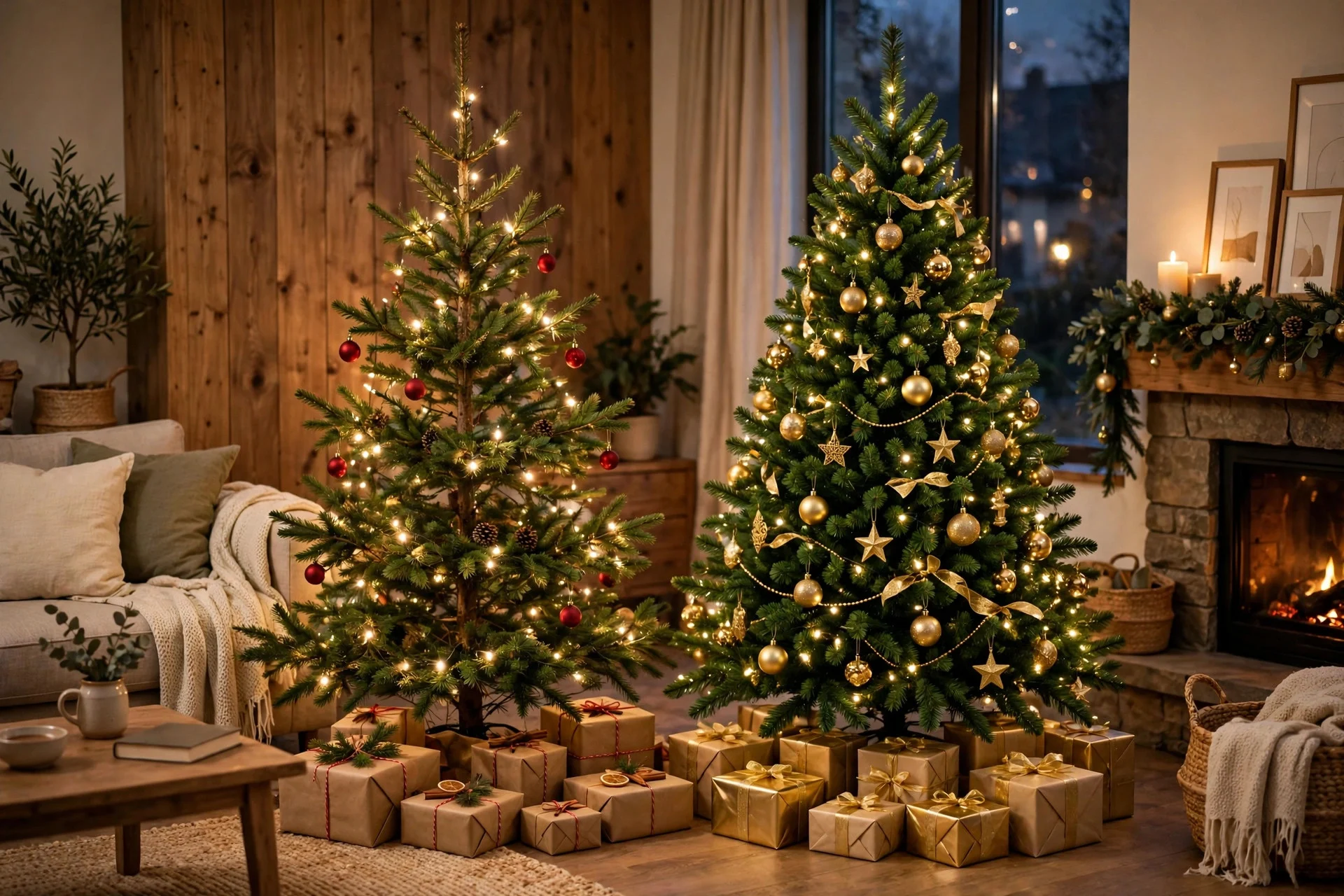
Every year, usually somewhere in the second week of November, I have the same argument with myself. Real tree or fake tree? I have owned both, loved both, and been annoyed by both in completely different ways, which is probably why I can never settle the question in advance. The real tree smells like Christmas walked into the room. The fake tree is already in the attic, waiting, and costs nothing this year. Both statements are true, and neither one settles anything.
Here is the honest version of the real vs fake christmas tree debate: it is not really about which tree is better. It is about which kind of hassle you would rather live with for five weeks, and which kind of bill you would rather pay. A real tree is cheap to buy and expensive in time. A fake tree is expensive to buy and cheap in time — after the first year, anyway. Everything else — the smell, the needles, the storage, the way the tree looks in photographs — is a detail that matters enormously to some households and not at all to others.
So this is not a verdict. It is the full breakdown, the way I wish someone had laid it out for me the first year I had to choose: what each tree costs, what each one asks of you, and the five-year maths that finally made the decision obvious for my house.
1. The Upfront Cost: What Each Tree Really Costs You
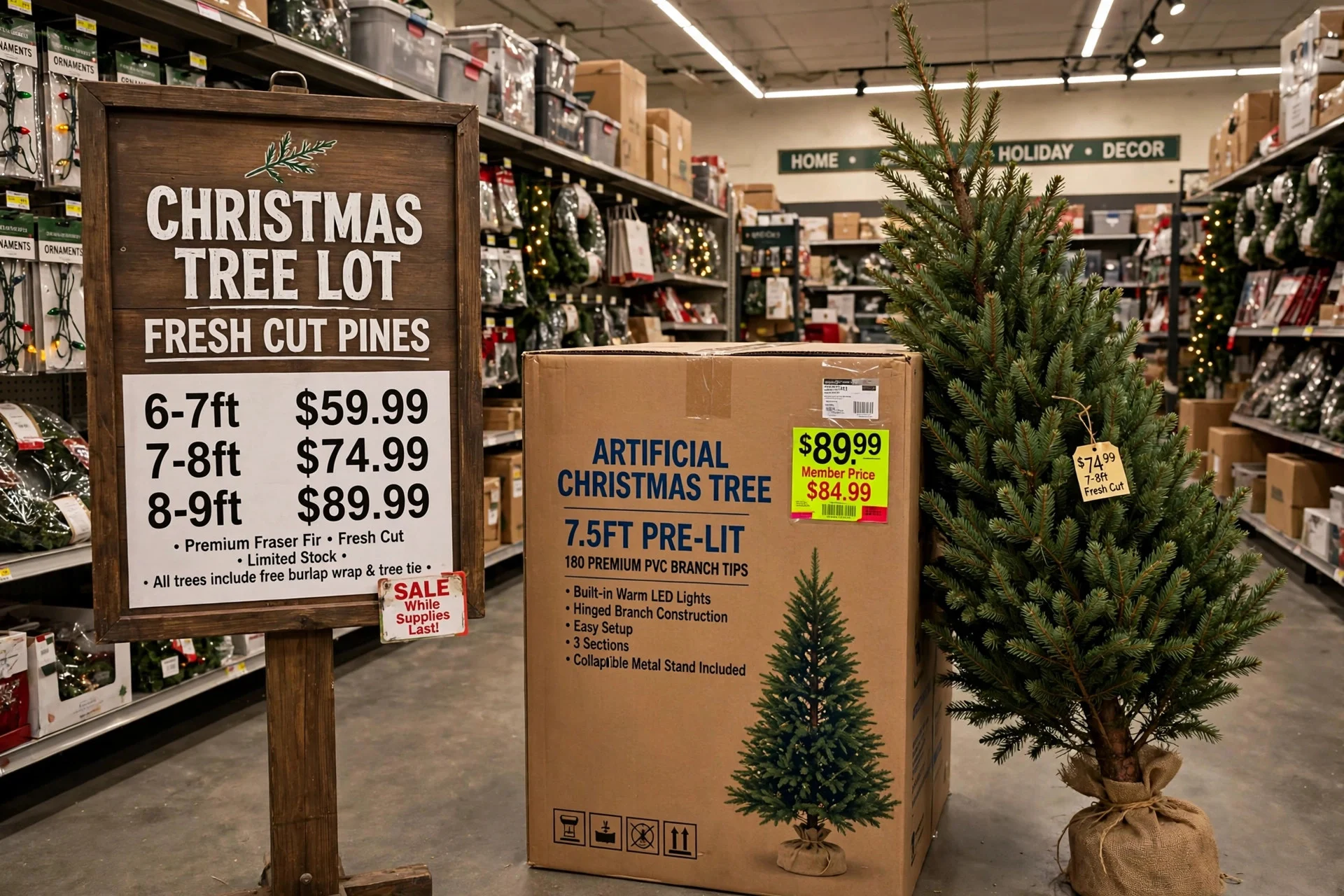
A real tree is the cheapest way to have a Christmas tree this year, and there is no real contest about it. A decent six-foot fir from a lot or a farm usually runs somewhere between forty and eighty dollars, depending on where you live and how tall you go. A small tabletop tree can be twenty. You pay, you tie it to the roof of the car, you are done. The sting, if there is one, is that you pay it again next year, and the year after that, forever.
A fake tree is the opposite shape of expense. A good one — and the word good is doing a lot of work here — costs somewhere between two hundred and five hundred dollars for a six- or seven-foot tree that actually looks like a tree rather than a green traffic cone. The cheap ones, the eighty-dollar ones, are cheap for a reason: sparse branches, visible pole, plastic that shines under the lights. I bought one of those once, in a hurry, and spent three Decembers apologising for it before I admitted the mistake and replaced it.
The honest way to compare them is not this year’s price. It is the price per December, which is where the table below starts to matter.
| Real tree (6–7 ft) | Faux tree (6–7 ft, good quality) | |
|---|---|---|
| Year 1 | $40–$80 | $200–$500 |
| Years 2–5 | $40–$80 each year | $0 |
| 5-year total | $200–$400 | $200–$500 |
| Extras | Tree stand ($20–$40, once), disposal bag | Storage bag ($20–$40, once), replacement lights if pre-lit ones fail |
The two totals land in almost exactly the same place over five years, which is the part nobody tells you. The real question is not which is cheaper. It is whether you would rather pay a little every year or a lot once — and whether you trust yourself to keep the same fake tree for five years, because a fake tree replaced after two years is the most expensive tree of all.
2. Setup Day: The Hour Nobody Budgets For
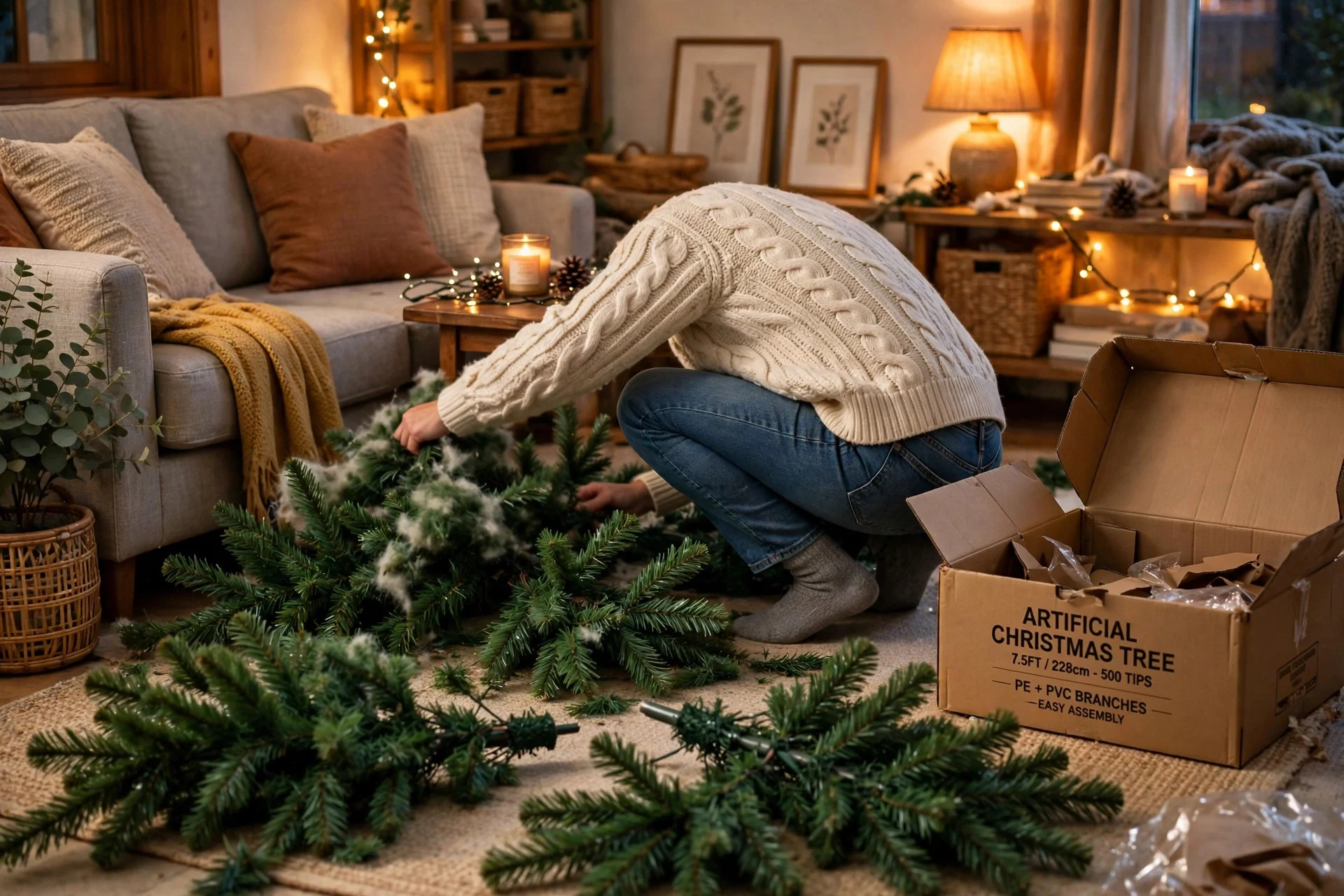
Setup day is where the two trees diverge most sharply, and it is the part I always forget until I am in the middle of it. A real tree’s setup starts at the lot: choosing the tree, watching someone net it, wrestling it onto the car, dragging it through the front door while it sheds needles on the hallway rug. Then the stand, which never fits on the first try, and the sawing of half an inch off the trunk, and the first watering, and the wait while the branches drop into shape overnight. Call it two hours, and half of that is outside in the cold.
A fake tree’s setup starts in the attic, which is its own kind of adventure, and then it is a different job entirely: slot the sections together, then fluff. Fluffing is the word the box uses, and it is a polite word for spending forty-five minutes pulling every single branch tip outward, one by one, until the tree stops looking like a green bottle brush. It is fiddly, it is boring, and your arms ache by the end of it, but it happens indoors, in the warm, with a cup of tea nearby. If your tree is pre-lit, you also get to discover whether last year’s lights still work, which is a small annual lottery I have lost more than once.
I have timed both, roughly, over the years. Real tree: about two hours from lot to standing, plus a day of waiting for the branches to settle. Fake tree: about an hour from attic to standing, most of it fluffing. The fake tree wins on time, but only just, and only if you count honestly — the trip to the lot, the drive home, the vacuuming afterwards all count for the real tree, and they are easy to forget when you are remembering the smell.
If you are still deciding where the tree should go before any of this starts, make that decision first. Moving a real tree once it is watered and decorated is a two-person job and a minor disaster; moving a fake tree is merely annoying.
3. The Look and the Smell: Where Real Wins (and Where It Doesn’t)
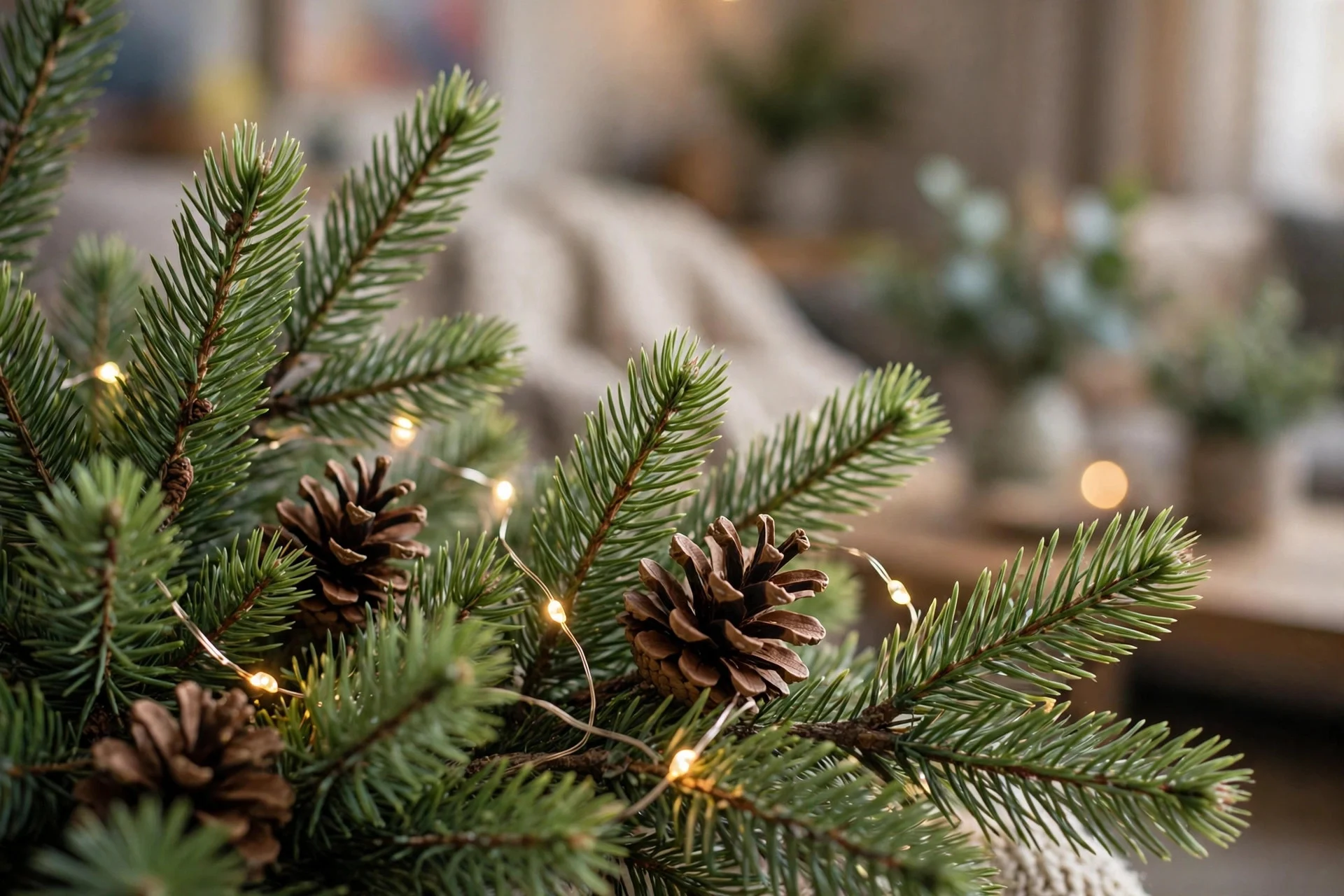
Let us be honest about the smell first, because it is the real tree’s strongest card and everyone knows it. A fresh fir smells like cold air and pine resin, and it fills the room in a way no candle has ever quite managed. I have tried the candles, the sprays, the little sachets hung on the branches. They smell like a shop that sells pine-scented things. The tree smells like a forest that wandered indoors. For the first week, at least, there is nothing like it.
The look is more complicated. A real tree is never symmetrical. It leans a little. One side is fuller than the other. There is usually a gap somewhere that you spend the decorating session trying to hide. And that is precisely the charm, or precisely the problem, depending on your eye. In photographs, a real tree looks alive — the branches have depth, the needles catch the light unevenly, and the whole thing looks like it grew. A fake tree looks, in photographs, like a very good fake tree. The best ones are genuinely hard to tell from real at a glance, especially once they are dressed, but up close there is a sameness to the branches, a repeated pattern your eye catches after a minute.
The smell fades, though, and this is the part the real-tree romantics leave out. By the third week, a real tree in a heated room has mostly stopped smelling of anything, and what it smells of instead is dry needles and warm dust. The fake tree never smelled of anything, which is a loss in week one and a relief by week three. If the smell is the reason you buy real, buy real — but know you are paying for about ten days of it.
4. The Perfect Shape Problem
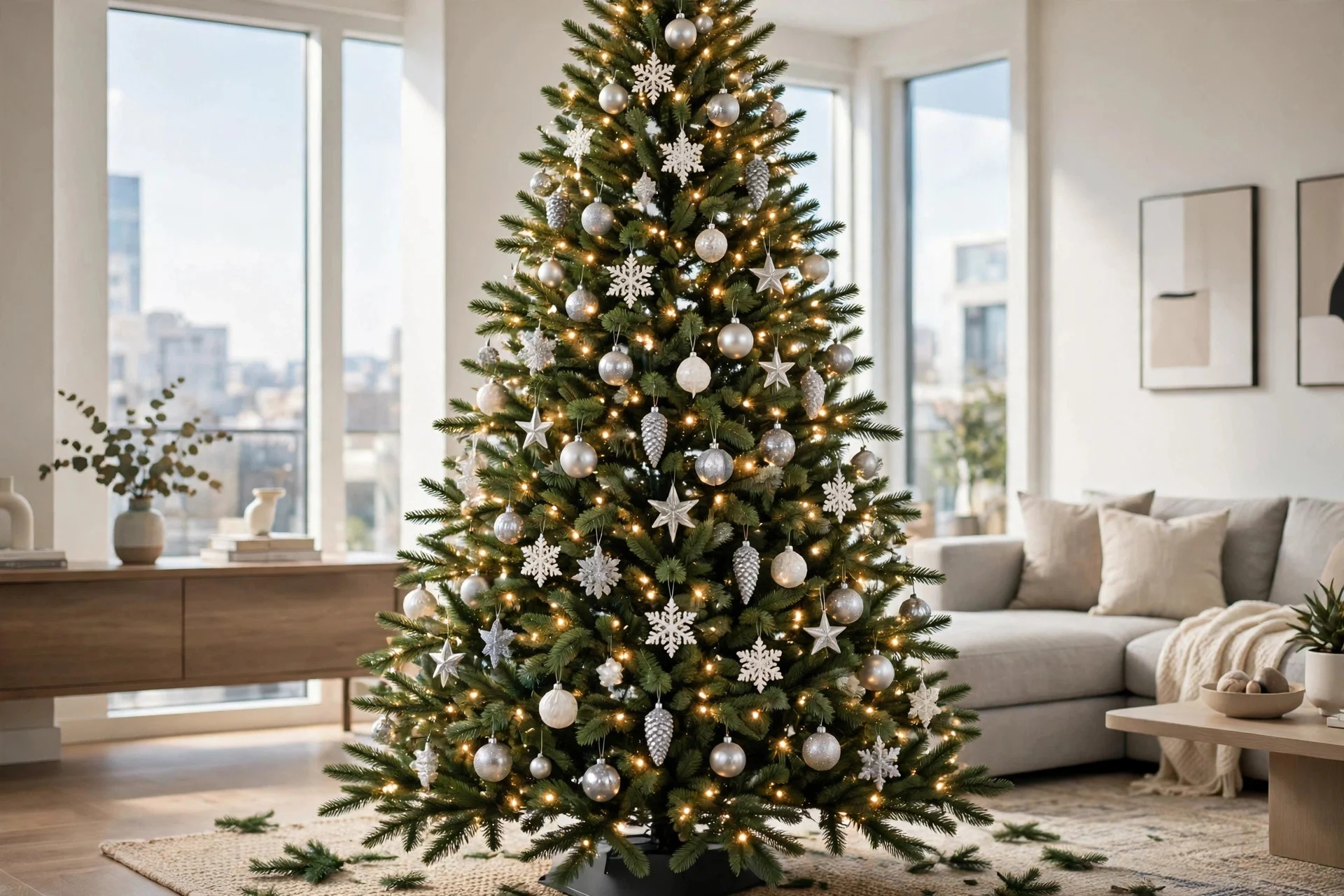
The fake tree’s great advantage is also its great weakness: it is perfect. Every branch is the same length as its neighbours. The silhouette is a geometry exercise. Dressed with ornaments, it looks like the tree on the box, and the tree on the box looks wonderful. But perfection has a way of looking staged in a lived-in room, and after a few years I started to notice that my fake tree photographs beautifully and looks slightly unreal in person, like a showroom display that someone forgot to take home.
The fix, if you go fake, is to choose your tree the way you would choose a real one: look for varied branch lengths, mixed needle types, and tips that are not all identical. The newer ‘realistic’ trees mix two or three kinds of foliage, and the difference is enormous — they cost more, but they are the ones that stop looking like plastic after the first week. And whatever tree you choose, how many ornaments it actually needs matters more than the tree itself. A sparse fake tree overloaded with baubles looks worse than a sparse real tree, because the perfection of the shape makes the clutter obvious.
There is also the colour question. A real tree is green, full stop, in whatever shade of green that particular tree grew. A fake tree can be green, white, flocked, pink, or black, and the colour schemes that suit it are not always the ones that suit a real tree. If you already have a palette in mind, the six colour schemes designers keep repeating work on either tree — but they look most natural on the tree whose green is closest to the one in your head.
5. Living With It Through December: Needles vs. Dust
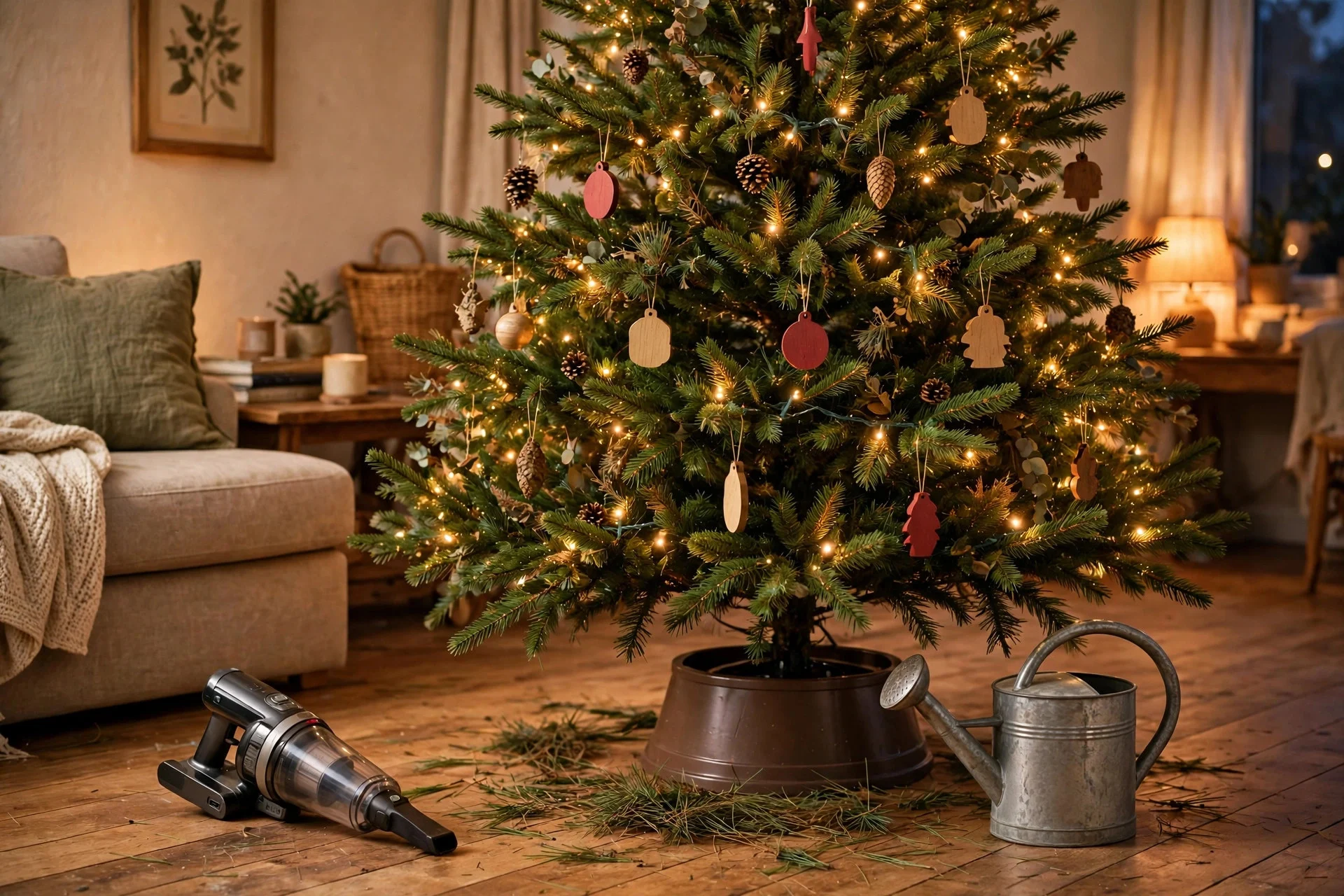
Here is the daily reality of a real tree, and it is not dramatic, just persistent. It drinks water — a lot of it at first, a litre or more a day for the first week, then less — and if you forget to water it, it tells you by dropping needles. Needles get everywhere: in the carpet, on the sofa, in the dog’s bed, in your shoes. You will be finding them in February. I vacuum around the tree every other day, and I have made my peace with that, but it is a chore, and it is every year.
A fake tree’s daily reality is quieter. It does not drink, it does not drop, and the only maintenance is the occasional wipe of dust off the branches you can see. The chore it replaces is a different one: once a year, when it comes out of storage, it smells faintly of the attic, and the branches need a shake and a wipe before they look their best. If anyone in the house has allergies, this is where the comparison tilts hard. Real trees bring pollen, mould spores, and whatever was living in the bark into a heated, closed-up house. Fake trees bring dust, which is at least a known quantity.
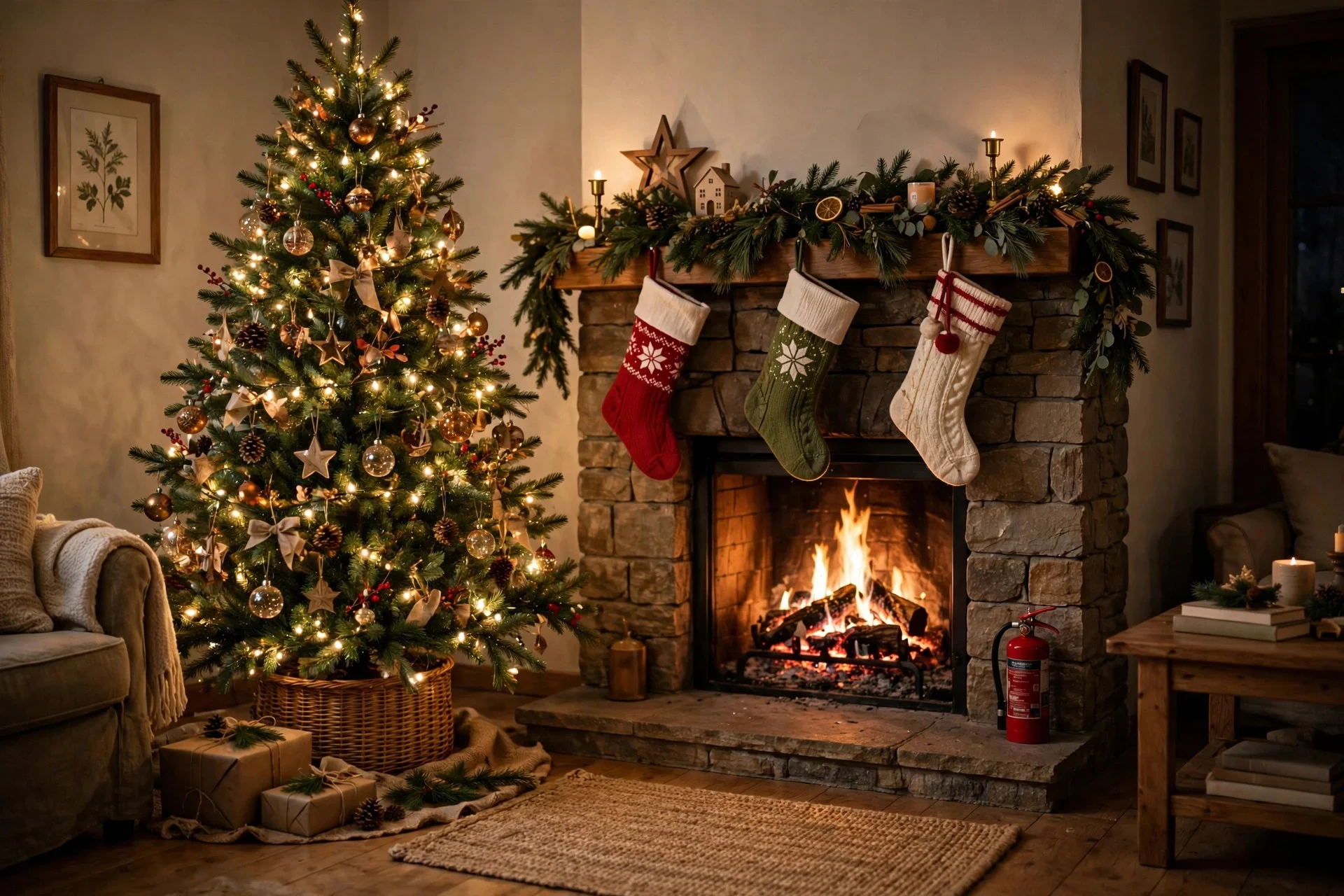
The other December difference is fire safety, which deserves its own section because it is the one place where the choice has real consequences. A dry real tree is flammable in a way that surprises people who have never seen it demonstrated — a tree that has not been watered for two weeks can go up in seconds. A fake tree is not fireproof either, but it does not dry out, and it does not get more dangerous as December goes on. Whichever tree you have, keep it away from the fireplace and the radiators, water the real one every day, and check the lights. The ten decorating mistakes that cause the most rework include a few that are really about this — lights left on overnight, trees too close to heat — and they are worth a read before the tree goes up, not after.
6. Safety: Fire, Lights, and Pets
I have had both kinds of tree with a dog in the house, and the dog has been equally unimpressed by both, but the risks are different. A real tree’s water reservoir is a quiet hazard for pets — the water in the stand picks up sap and preservatives, and dogs will drink it if they can reach it. The needles are mildly toxic if eaten, and they are sharp enough to be unpleasant. A fake tree’s risk is the small plastic needles and the wire branches, which a determined cat can chew and a puppy can swallow, plus the tinsel and ornament hooks, which are a hazard on either tree.
For children, the difference is smaller than people think. Both trees fall over if climbed or pulled, and both need a sturdy stand and, if you have toddlers, a tree that is either behind furniture or tied to the wall with fishing line. I tie mine. It looks paranoid until the first time a toddler grabs a low branch, and then it looks like foresight.
The lights deserve a word on their own. Pre-lit fake trees are convenient until a section of lights fails, and then you are either living with a dark patch or cutting the whole string out and replacing it, which is a job nobody enjoys. Real trees take whatever lights you put on them, and a failed string is a ten-minute swap. On balance, I prefer lights I can replace. It is a small thing, but it is the kind of small thing that decides whether the tree looks right on Christmas Eve or merely looks finished.
7. The After-Christmas Job: Disposal vs. Storage
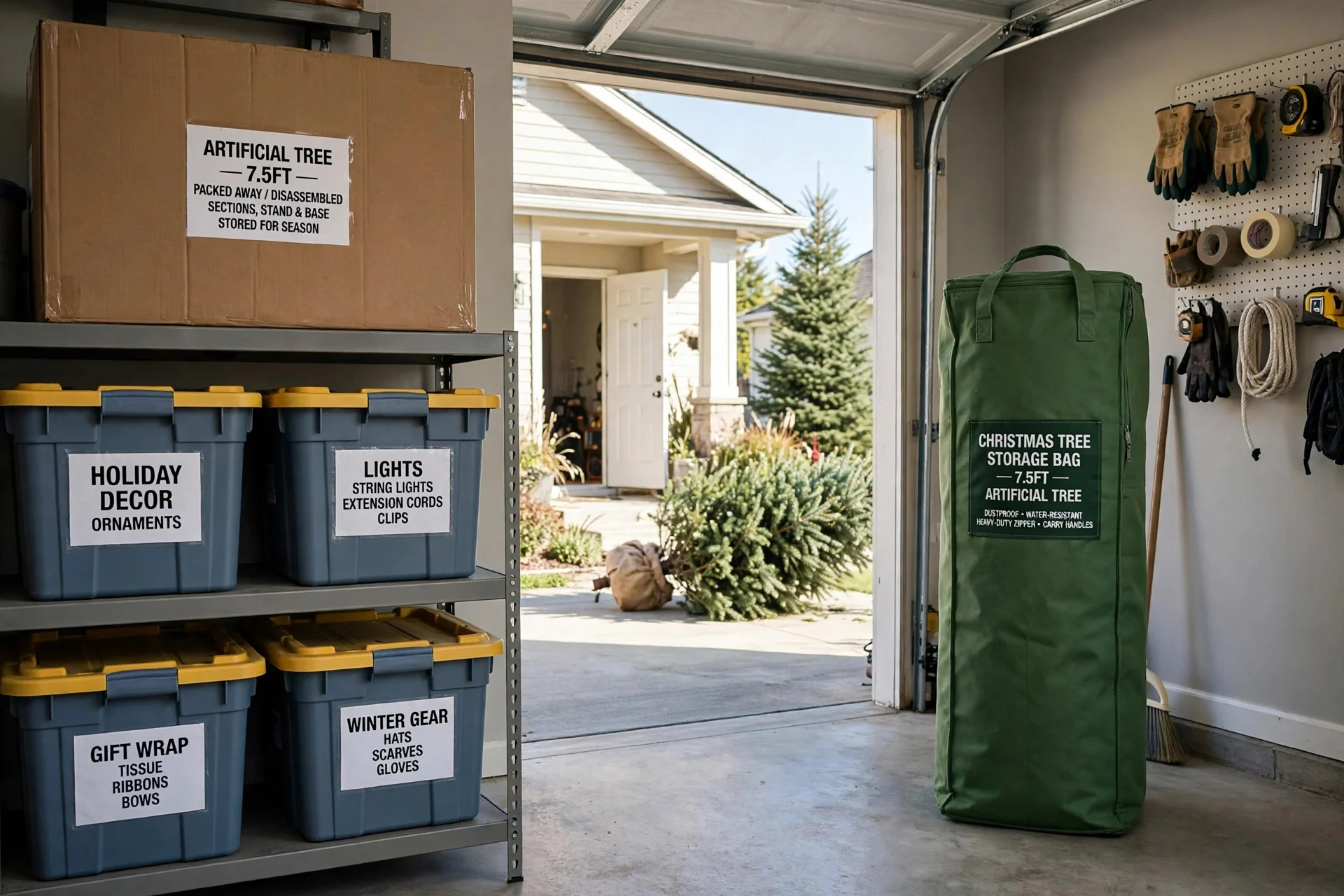
The after-Christmas job is the mirror image of setup day, and it is where the real tree finally wins back some ground. Taking a real tree down is sad but simple: ornaments off, lights off, drag it out the door, and leave it for the council collection or the chipper. It takes half an hour, and the tree is gone. The needles you will be finding until February are the only souvenir.
Taking a fake tree down is a project. Every branch has to be folded back in, section by section, in reverse order, and the whole thing has to fit back into its box — which, in my experience, it never quite does, because the box was packed by a machine and I am not one. The tree then needs a home for eleven months: an attic, a garage, a cupboard under the stairs. If you live in a flat with no storage, this is not a minor detail. It is the deciding factor. A seven-foot tree in a box is roughly the size of a wardrobe laid on its side, and it has to live somewhere.
Do the storage maths honestly before you buy fake. Measure the box. Measure the cupboard. If the tree will not fit, or if it will live in a damp garage and come out smelling of mildew next year, the fake tree’s five-year savings evaporate. This is the question that actually decides it for most small homes, and it has nothing to do with cost or smell.
The 5-Year Math
Here is the whole comparison in one place, for the household that keeps a tree up for five weeks a year and wants the honest total:
| Real tree | Faux tree | |
|---|---|---|
| 5-year cost | $200–$400 | $200–$500 |
| Setup time each year | ~2 hours + a trip to the lot | ~1 hour, indoors |
| Daily chores | Watering + vacuuming needles | Almost none |
| Smell | Wonderful for ~10 days, then nothing | Nothing, ever |
| Look | Natural, uneven, alive | Perfect, symmetrical, sometimes staged |
| Safety trend | Gets drier and riskier through December | Stays the same |
| After Christmas | 30 minutes, tree is gone | 1 hour + 11 months of storage |
| Environmental note | Grown, cut, composted or chipped; one tree a year | Plastic + metal, shipped once, used for years — only wins if kept 5+ years |
The environmental row is the one people ask about most, and the answer is less tidy than either side claims. A real tree is a crop: grown for seven or eight years, cut, and then chipped or composted, and a new one is planted in its place. A fake tree is plastic and steel, usually made overseas and shipped halfway around the world, and it only beats the real tree on carbon if you actually keep it for five years or more. Kept for ten, it wins comfortably. Replaced after two because you got bored of it, it loses badly. The greenest tree, in the end, is the one you keep.
Which Tree Suits Your Home?
If you are still torn, here is the short version. Choose real if you love the ritual — the trip to the lot, the smell, the slightly imperfect shape — and you do not mind watering and vacuuming, and you have somewhere for the council to collect it in January. Choose fake if you want the same tree every year with no annual bill, you have somewhere dry to store a big box, and you are the kind of person who will keep it for five years rather than replacing it when a new style catches your eye.
Choose real if anyone in the house has no allergies and the tree will sit far from the fireplace. Choose fake if someone has allergies, if you have a cat that eats needles, or if the tree has to survive a toddler and a dog at the same time. Choose real if your December is already full and you would rather pay forty dollars than spend an hour fluffing branches. Choose fake if your December is already full and you would rather spend an hour once than make a trip to the lot every single year.
And if you truly cannot decide, there is a third option nobody mentions: buy the real tree this year, and see how you feel on the 2nd of January. The tree you miss is the one you want.
Closer
I have the fake tree now, and I miss the real one every year for about ten days, which is exactly how long the smell would have lasted anyway. My neighbour has the real tree, and she envies my storage-free January for about a day, which is exactly how long it takes her to drag hers to the kerb. We are both right, and we both know it, which is the most honest ending this argument has.
The tree is not the point. The point is the room it stands in, and the people who gather around it, and the fact that you chose the kind of December you actually want to live in rather than the kind the box promises. Pick the hassle you prefer, pay the bill you prefer, and then get on with the decorating — the mantel is still bare, the lights are still in the box, and Christmas is coming either way.