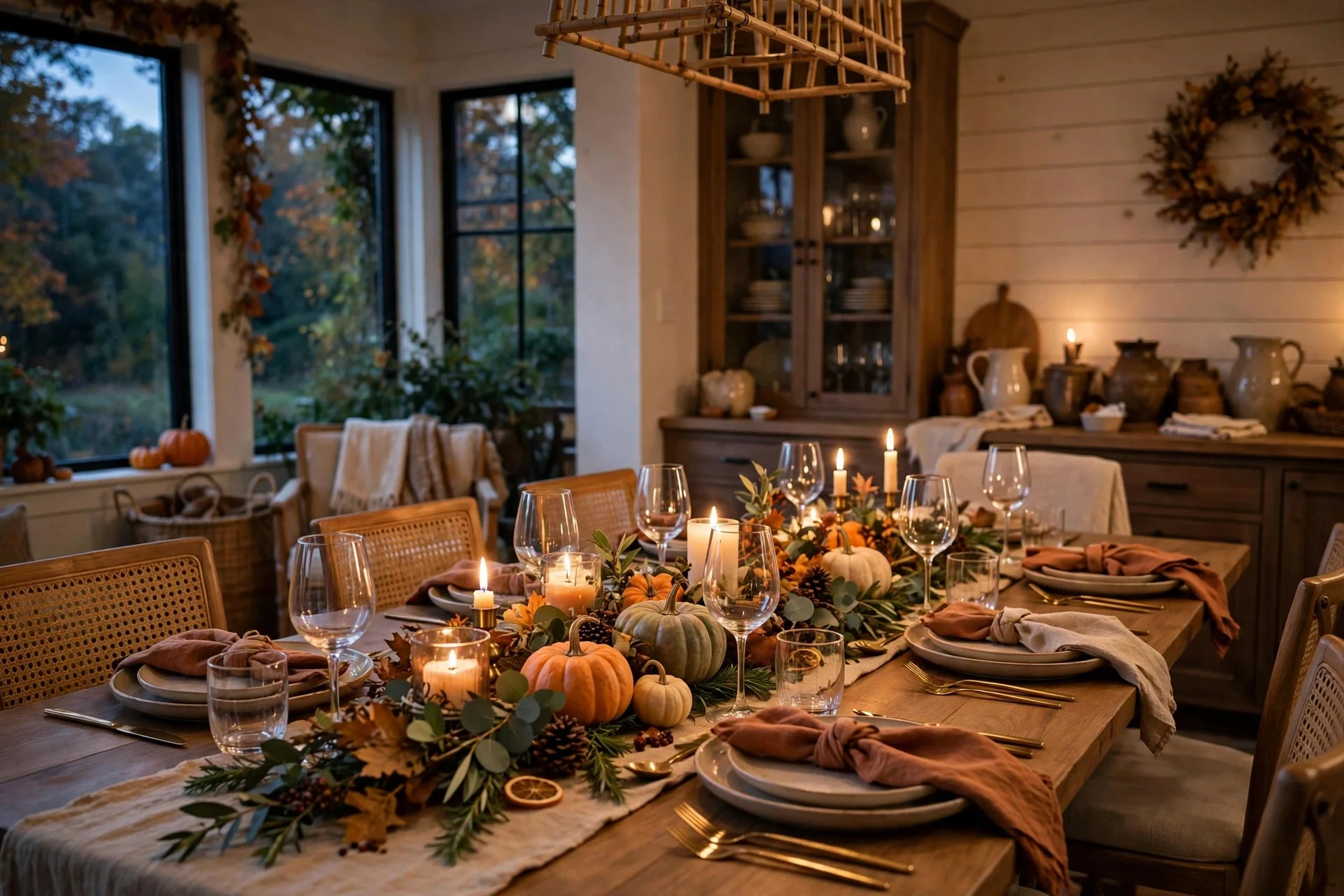
The first Thanksgiving I hosted on my own, I spent three days decorating. I bought a matching set of everything, scattered leaves across every flat surface, lit every candle I owned, and built a centrepiece so tall you could barely see the person across the table. When my guests arrived, they were polite about it, of course. But later that evening, my sister pulled me aside and said, very gently, “It looks beautiful, but I couldn’t actually reach my plate.” That was the year I learned the most important lesson about holiday decorating: guests notice the mistakes far more than they notice the successes. A beautiful table is wonderful, but a table you can’t eat at is the thing people remember. These are the five thanksgiving decor mistakes I see most often — including the ones I have made myself — and the simple fixes that keep your home feeling warm instead of staged.
Here is the reassuring part: none of these mistakes costs money to fix. Most of them are fixed by removing something, not buying something. If you are starting from scratch this year and want proof that a lovely table does not need a big budget, these Thanksgiving table ideas that cost almost nothing are the best place to begin. But if you have already decorated and something feels off, read on — the problem is probably one of these five, and it is probably a ten-minute fix.
1. The Table Is So Crowded Nobody Can Actually Eat
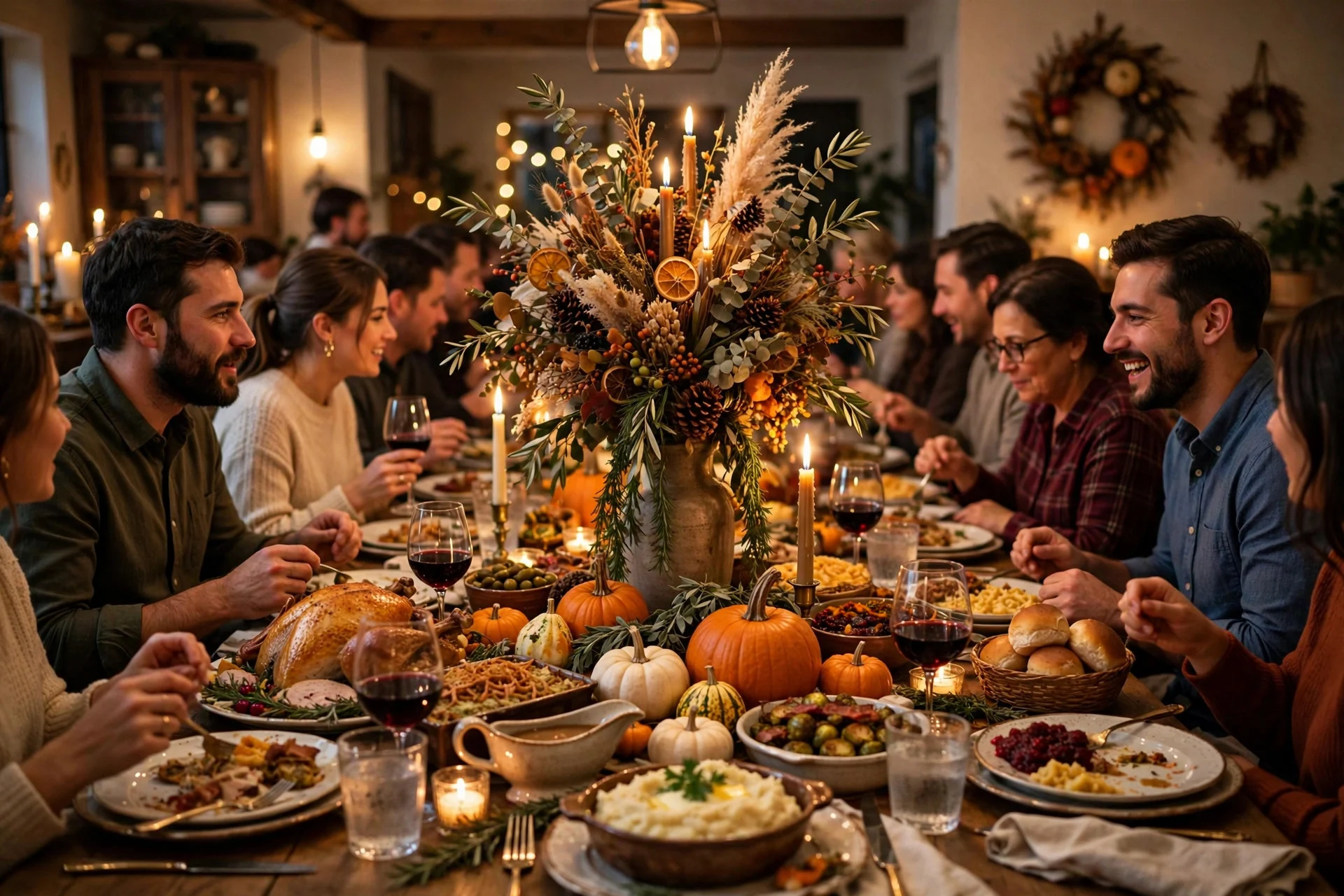
This is the mistake I made that first year, and it is still the one I see most often in other people’s homes. The table looks incredible in a photo — pumpkins down the middle, candles everywhere, a garland running the full length, a pile of pinecones at each end. Then everyone sits down, and there is nowhere to put the serving dishes. Elbows knock into glasses. Someone has to move the centrepiece to make room for the turkey. The salt is trapped behind a vase. I have watched a guest try to pass the gravy boat over a pile of decorative gourds like it was an obstacle course, and I have been the guest doing it too.
The fix is gloriously simple, and it starts with taking things off the table, not adding more. Before you set a single plate, put the turkey, the serving bowls and the platter on the table first, exactly where they will sit during the meal, and then decorate around them. If the centrepiece has to move for the food to fit, the centrepiece is too big. Keep it low — nothing taller than about eight inches — and keep it narrow, so it sits in a strip down the middle and leaves real space on either side. I moved my serving dishes to a sideboard that year after the gravy incident, and honestly, it changed everything: people could reach their food, the table breathed, and the decorations finally had room to be noticed instead of tripping everyone up. If you want a centrepiece that earns its place without taking over the table, these Thanksgiving centerpieces you can make in under an hour are all built low and narrow for exactly this reason. And here is the test I use now, every single year: sit down at the table yourself, put your elbows where they will be while you eat, and ask whether you could pass a dish to the person next to you without moving anything. If the answer is no, something on that table needs to go.
2. Everything Matches a Little Too Perfectly
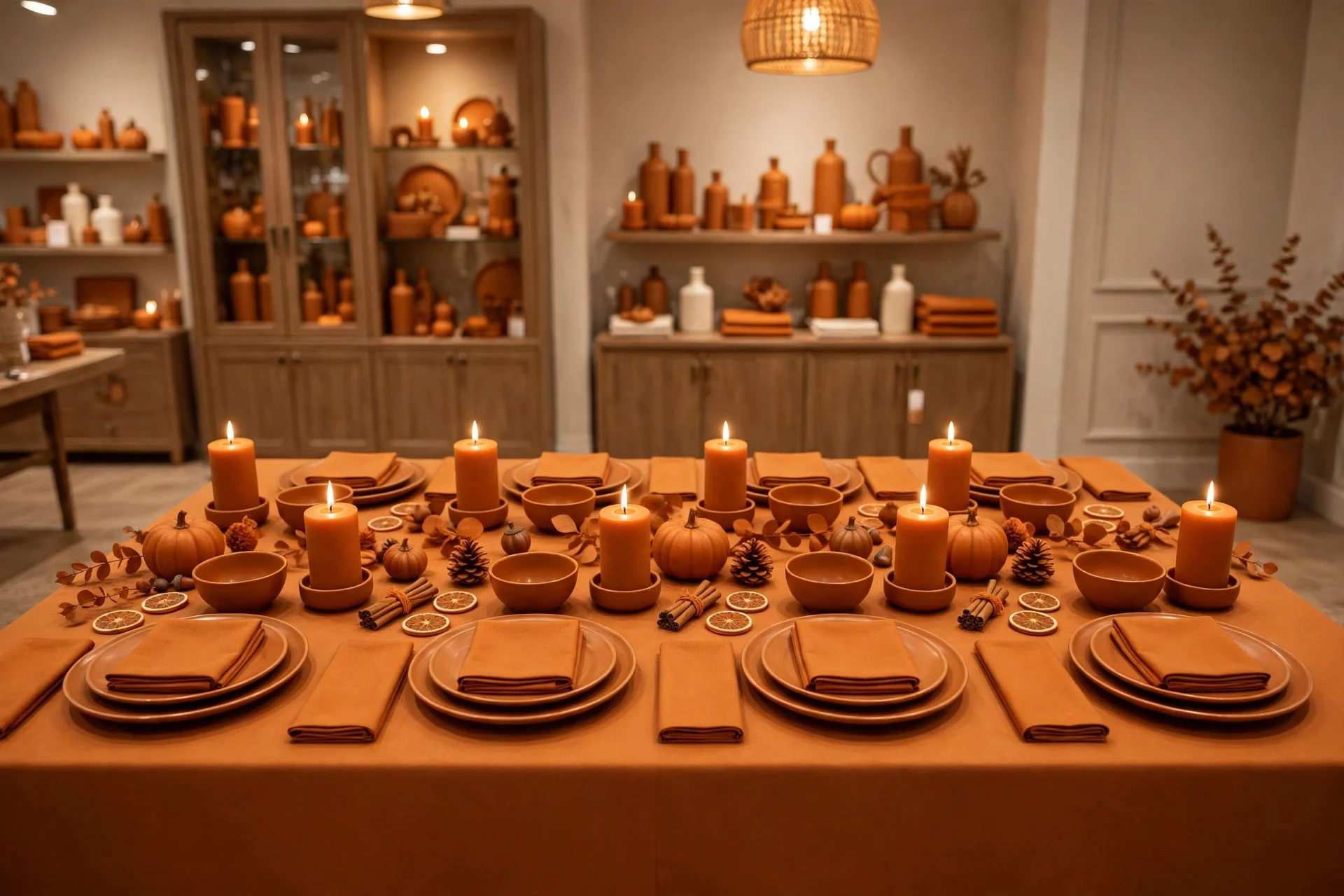
There is a particular look I call the “bought the whole aisle” table. The napkins are orange, the plates are orange, the candles are orange, the runner is orange, and even the wine glasses have little orange leaves tied around the stems. Every item came from the same store display, and it shows. It does not look warm — it looks like a catalogue photo, and guests can feel the difference even if they cannot name it. A table where everything matches perfectly feels like a showroom. A table where things are collected over time, in a few colours that sit well together, feels like a home.
The fix is to pick two colours and let everything else be neutral. I use a warm rust and a deep green, and then I let the plates be cream, the glasses be clear, and the napkins be plain linen. The moment I stopped trying to match everything, the table got better — and cheaper, too, because I stopped buying a new matching set every November. Mixing textures matters just as much as mixing colours. A linen napkin next to a wooden charger, a ceramic pumpkin next to a real one, a brass candlestick next to a plain glass vase — that contrast is what makes a table feel layered and lived in, instead of flat and store-bought. If you are not sure which colours belong together, I wrote about the palettes that actually work in these Thanksgiving colour schemes compared side by side, and the rule I keep coming back to is simple: if you bought it all in one trip, from one display, take at least a third of it away and replace it with something you already own. The table will look less perfect and far more inviting, and that is the whole point.
3. Fake Leaves and Plastic Pumpkins Everywhere
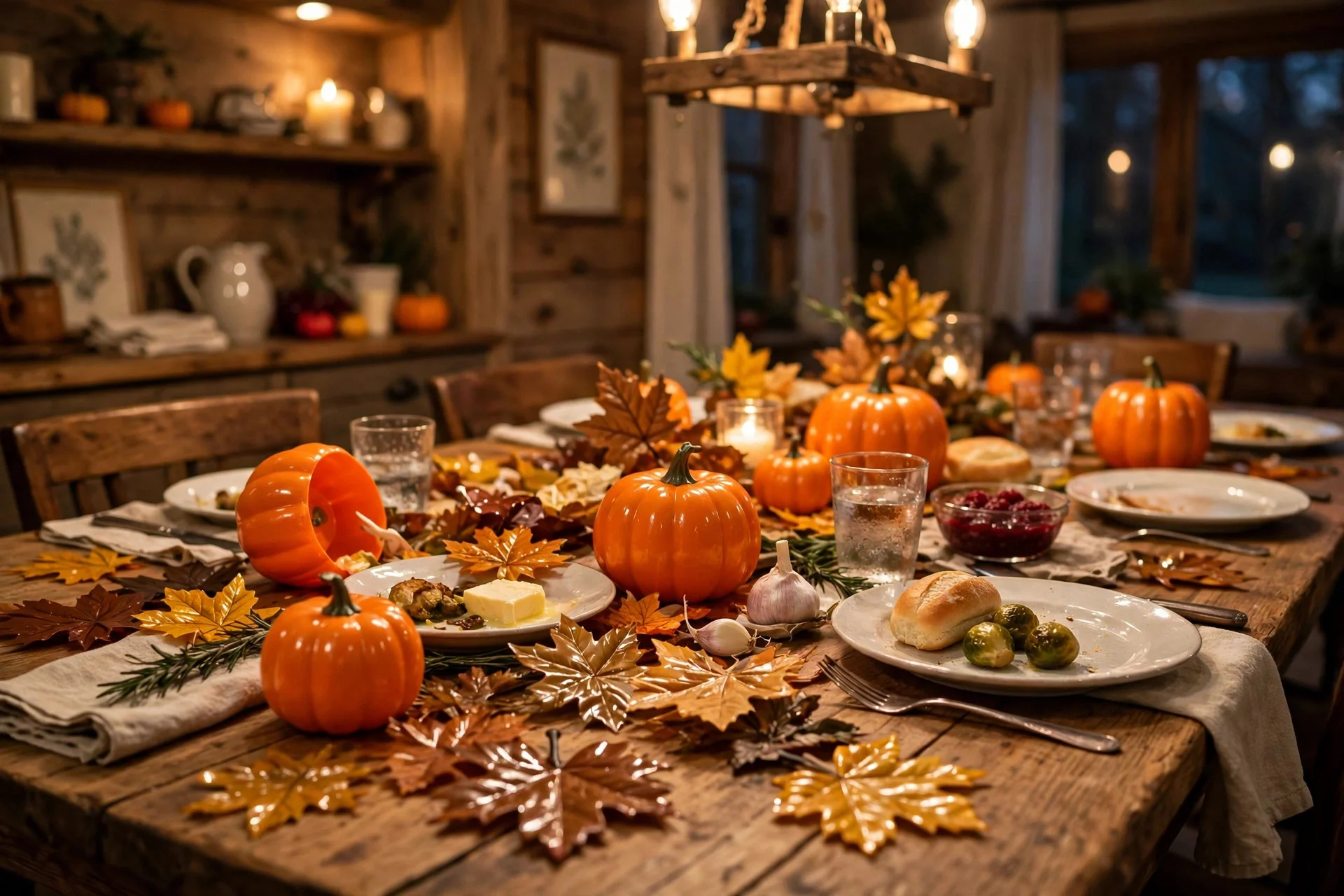
I am going to be honest about this one, because I have a bag of fake leaves in a cupboard somewhere that I am too embarrassed to throw away. The shiny plastic leaves, the glitter pumpkins, the foam gourds in colours that no gourd has ever been in nature — they look fine in the store, under bright lights, from three feet away. Up close, on your table, next to real food and real candlelight, they look exactly like what they are: plastic. Guests notice, even if they would never say so. The leaves curl at the edges in a way real leaves never do. The pumpkins are too shiny. The whole thing reads as trying too hard, and it drags down the real, beautiful things on the table with it.
The fix is to use fewer fake things and more real ones, and the real ones are often free. A handful of real leaves from the garden, pressed flat under a book overnight, looks a hundred times better than a bag of plastic ones. Three real mini pumpkins from the grocery store cost less than one glitter pumpkin and look better in every photograph. A few sprigs of rosemary or eucalyptus from the garden, laid across the napkins or tucked into the centrepiece, add colour and a lovely smell at the same time. I am not saying you have to throw away every artificial decoration you own — I still use a couple of good-quality faux pumpkins on a high shelf where nobody looks closely. But on the table, where everything is within arm’s reach and under close inspection, real wins every time. One year I replaced my whole scattering of plastic leaves with a single bowl of real apples and a few sprigs of greenery, and two different guests asked me where I had bought the “gorgeous autumn arrangement.” It was apples. From the kitchen. That is the whole secret.
4. The House Smells Like a Candle Shop, Not Dinner
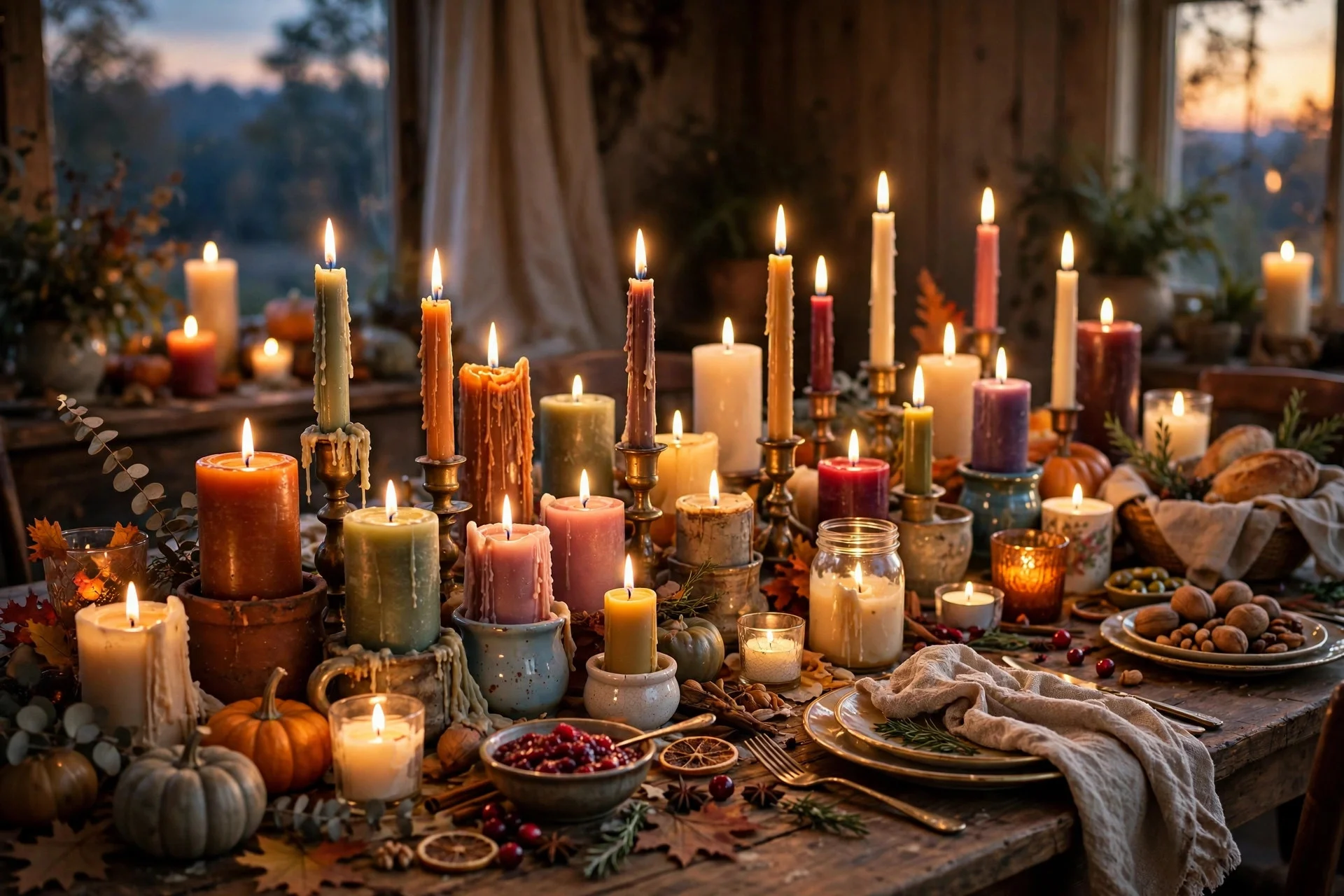
This is the mistake that nobody talks about, because it feels rude to mention a smell. But I have walked into houses on Thanksgiving where the first thing that hit me was not the turkey — it was six different scented candles, a plug-in air freshener, and a pot of potpourri on the sideboard, all fighting each other. Pumpkin spice, cinnamon apple, vanilla, “autumn harvest” — by the time dinner is served, the air tastes like a candle shop, and the actual food, which someone spent all day cooking, smells like nothing at all. Your guests will not complain. They will just quietly enjoy the food a little less, and they will not know why.
The fix is to let the food be the smell. Use unscented candles on the table — always. I keep the scented ones for the bathroom, or for an evening when there is no cooking happening, and the difference is remarkable. If you want the house to smell like autumn when people walk in, simmer a small pot on the stove an hour before guests arrive: water, a few orange peels, a cinnamon stick, a couple of cloves. It smells like a home that is cooking, not a store that is selling something, and you can turn it off the moment dinner is served. Open a window in the kitchen for ten minutes while the turkey rests, too — fresh air does more for a house than any plug-in ever will. I learned this the hard way the year I lit a cinnamon candle right next to the gravy boat and spent the whole meal wondering why everything tasted faintly of candle wax. Nobody tells you about that at the store when you are buying the candle. So I am telling you now: save the scented candles for another night, and let the turkey do the talking.
5. You Decorated the Table and Forgot the Rest of the House
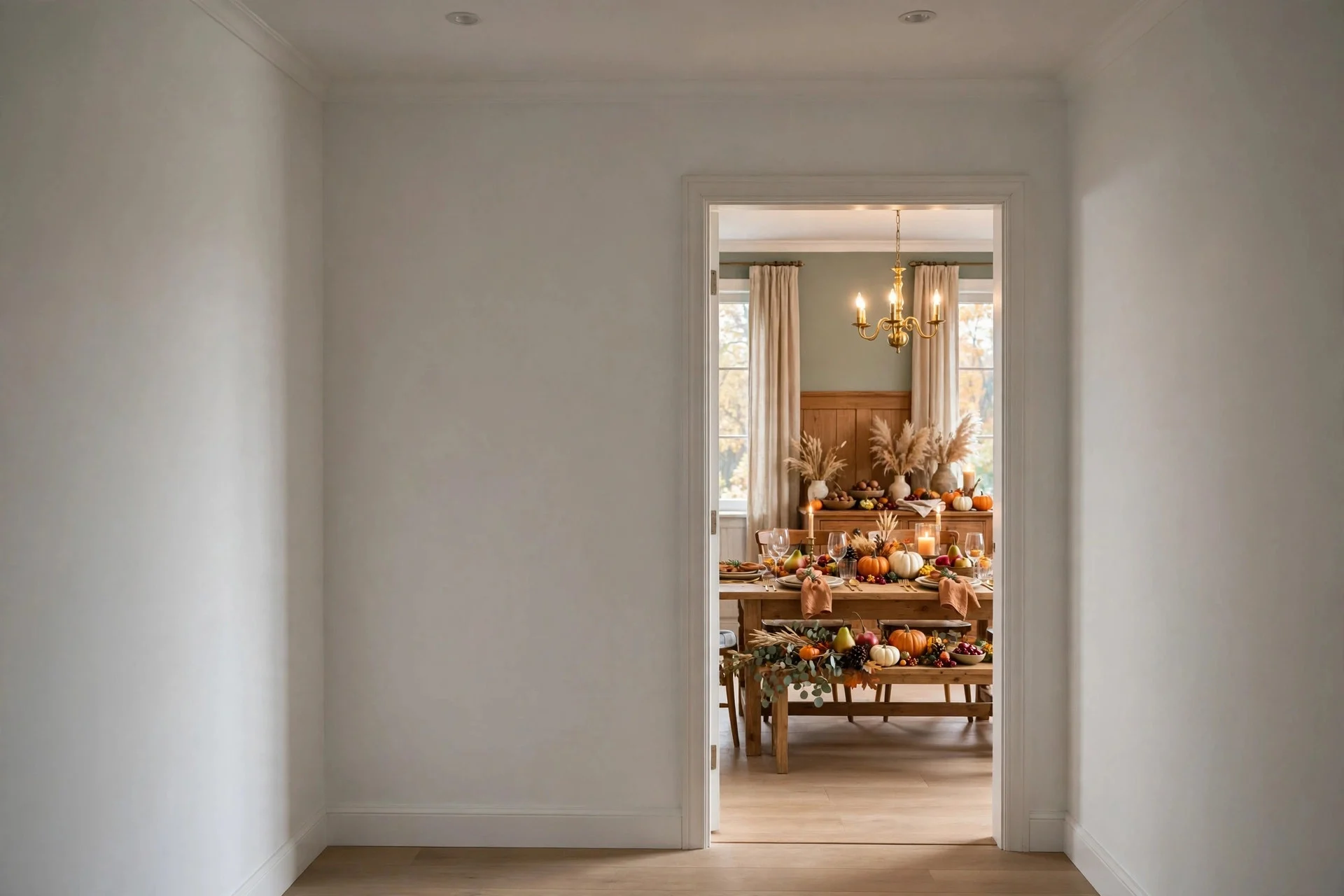
Here is the scene I have seen more times than I can count: a gorgeous, glowing dining table — and then you look around, and the entryway is bare, the living room looks like any other Thursday, and the bathroom has a hand towel with a cartoon turkey on it and nothing else. Guests do not spend the whole evening staring at the table. They arrive through the front door, they hang their coats somewhere, they sit in the living room before dinner, they use the bathroom. When only the table is decorated, the rest of the house feels unfinished by comparison, and the table starts to feel like a stage set in an otherwise ordinary room.
The fix is to spread the decoration into three spots, and you do not need to decorate any of them heavily. The entryway gets one thing — a small pumpkin on the console table, or a simple wreath on the door, or a bowl of apples where people put their keys. The living room gets one thing — a folded blanket in a warm colour over the arm of the sofa, or two candles on the coffee table, or the same greenery from the centrepiece tucked into a vase. The bathroom gets one thing — a clean hand towel in a warm tone and a tiny vase with a sprig of greenery, if you have one. That is it. Three small touches, five minutes, and the whole house feels like Thanksgiving instead of just one table feeling like Thanksgiving. I keep a small basket in the cupboard now with a few of these pieces — a spare pumpkin, a folded throw, a couple of candle holders — and every year I pull it out, scatter the pieces through the house, and the whole place feels finished. Your guests will not be able to tell you what changed. They will just feel like they walked into a home that was ready for them, and that feeling is worth more than any centrepiece.
The 10-Minute Fix-It Check Before Guests Arrive
Here is the routine I run through in the last ten minutes before the doorbell rings, and it catches almost every mistake on this list. First, sit down at the table and check you can reach the salt, pass a dish, and see the person across from you — if you can’t, move something. Second, step back and count the colours: if more than two are fighting for attention, take one away. Third, pick up anything plastic on the table and ask whether a real version is sitting in your kitchen right now — if it is, swap it. Fourth, blow out every scented candle near the food and light an unscented one instead. And fifth, walk in through your own front door like a guest would, and look at what you see: the entryway, the living room, the bathroom. If any of them looks forgotten, put one small thing there. Ten minutes, five checks, and every one of the mistakes above is either caught or fixed before a single guest arrives.
The truth is, guests do not come to Thanksgiving to judge your decorating. They come for the food, the company, and the feeling of being welcome in your home. But the decorating is part of how that welcome feels — and the mistakes on this list are the things that quietly get in the way of it. A table you can actually eat at, colours that feel collected rather than purchased, real leaves instead of plastic ones, air that smells like dinner, and a house that feels ready from the front door to the bathroom. None of that needs a bigger budget. It just needs you to look at the room the way a guest will see it, and fix the five things that jump out. I fixed mine one mistake at a time over a few years, and the Thanksgivings since have been the best ones yet. I hope yours is too.