Intro
Every December I make the same promise to myself: this year the porch will still look good on Christmas morning. And every year, the first real storm teaches me something new about what "outdoor-safe" actually means. The garland I draped so carefully slides down the railing overnight. A pretty glass ornament shatters on the steps. The wreath ends up two doors down, wedged against my neighbour's fence. By the third week of December, the porch that looked like a magazine cover on day one looks like a yard sale after a windstorm.
The problem is not effort. Most christmas porch decor is designed to be looked at, not to live outside. It is made for a sheltered doorway in a catalogue photo, not for a north-facing porch that takes the full wind off the street and a drift of wet snow every time the plough goes past. The fix is not buying more decorations. Good christmas porch decor is chosen for the weather it will actually face, not for the photo it will appear in.
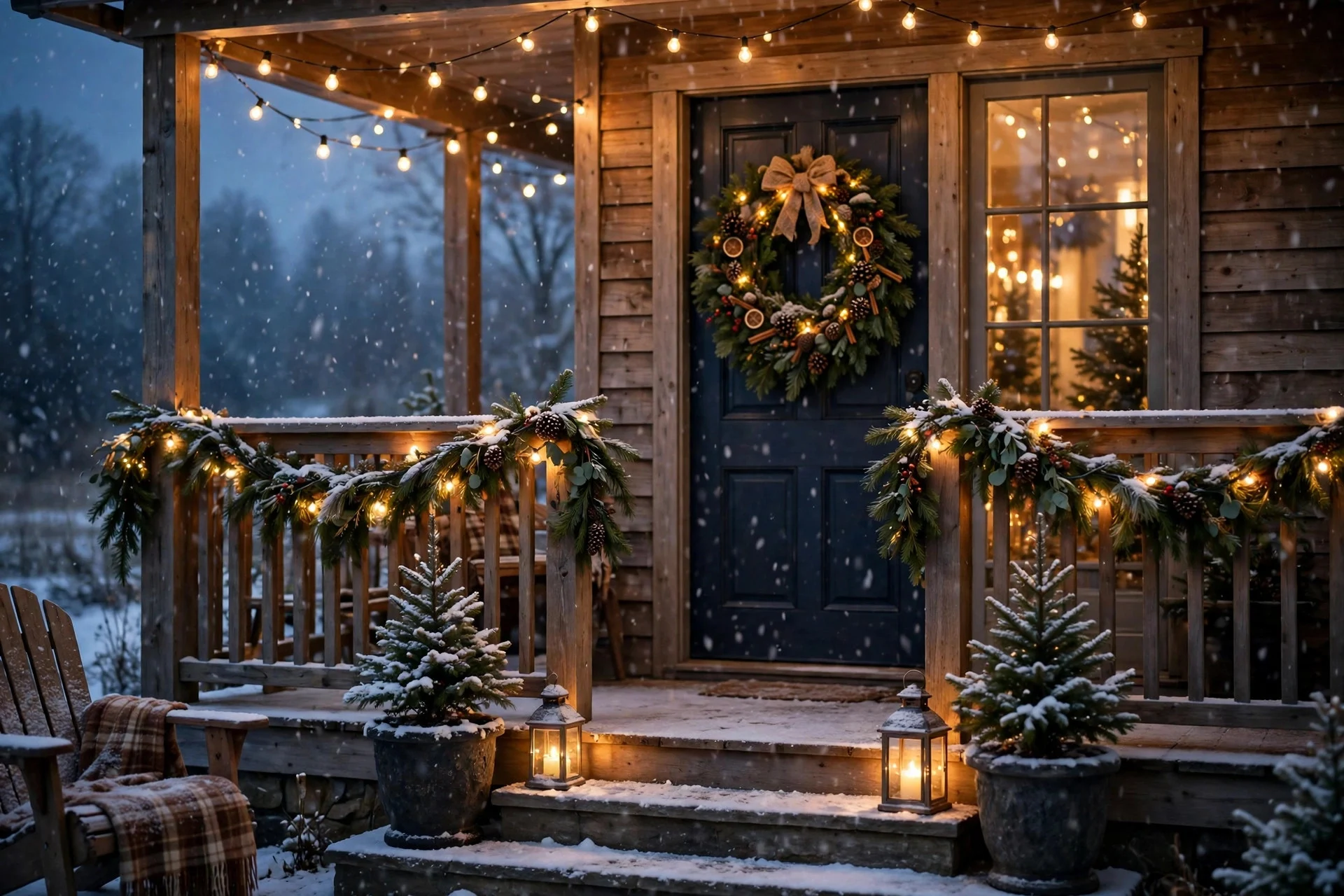
So this year I changed my approach completely. Everything on my porch is now wired, weighted, clipped, or screwed in place, and every material can get wet, freeze, thaw, and get wet again without falling apart. The porch still looks like Christmas. It just also looks like Christmas on the 24th, after three storms, which is the part that matters. Here are the twelve ideas that held up.
1. Weight the Planters Before You Decorate Them
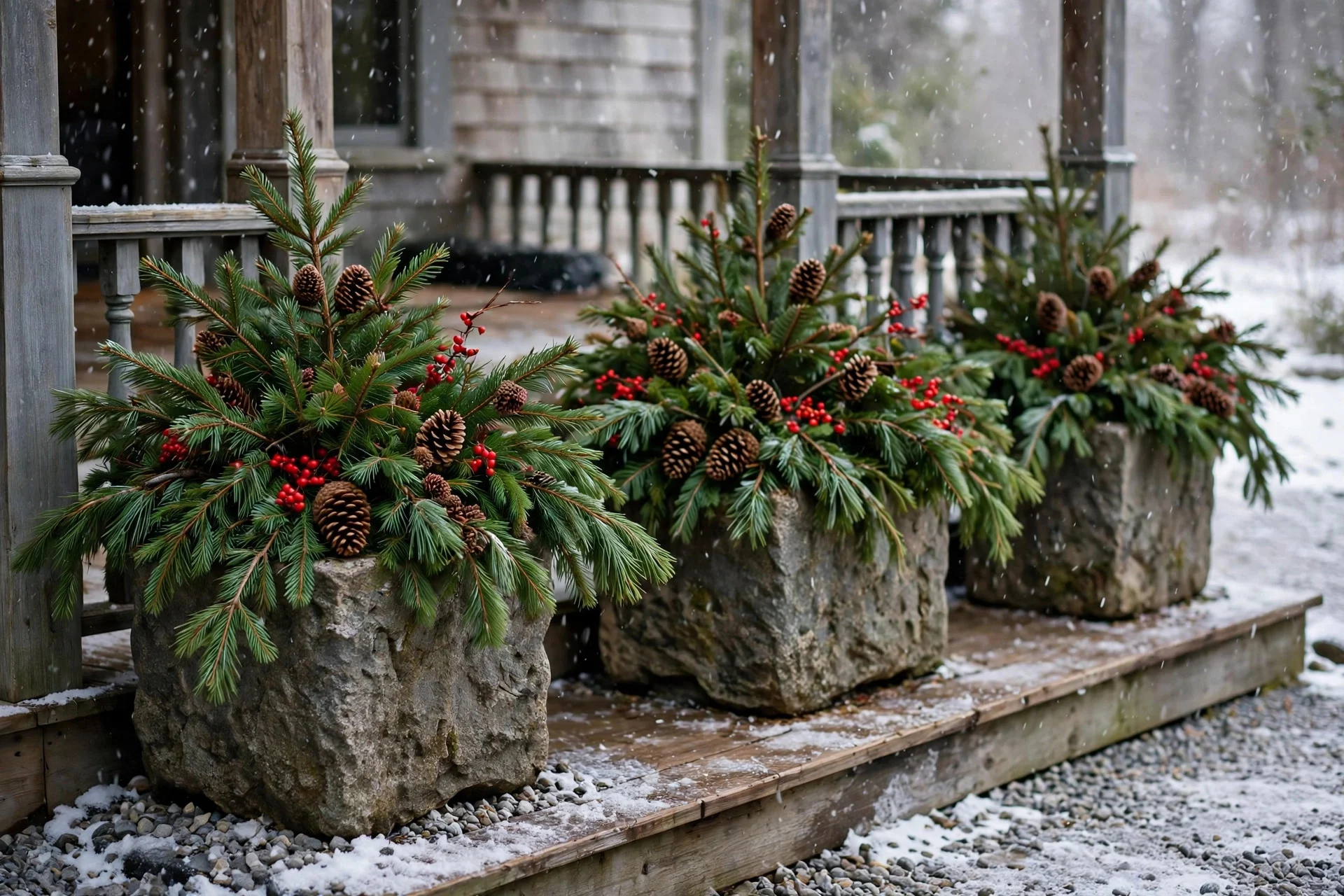
A beautiful arrangement in a lightweight pot is a sail waiting for a gust. The first year I filled two slim fibreglass planters with evergreen branches and pinecones, a December wind tipped them both onto the steps, soil everywhere, branches snapped. The fix costs almost nothing: fill the bottom third of each planter with gravel or a few bricks before you add soil or foam. The weight sits low, where it does the most good, and the planter stops acting like a kite.
Then push your branches into floral foam or packed soil so they cannot wobble, and finish with a layer of moss or bark to hide the mechanics. I use the same heavy planters every year now, swapping only the branches and ornaments inside them. One honest warning: a weighted planter is genuinely heavy, so place it where it will live for the season before you fill it. Dragging a gravel-filled pot across a frozen porch is a miserable job, and I have the scratched deck boards to prove it.
2. Wire the Garland to the Railings, Don't Just Drape It
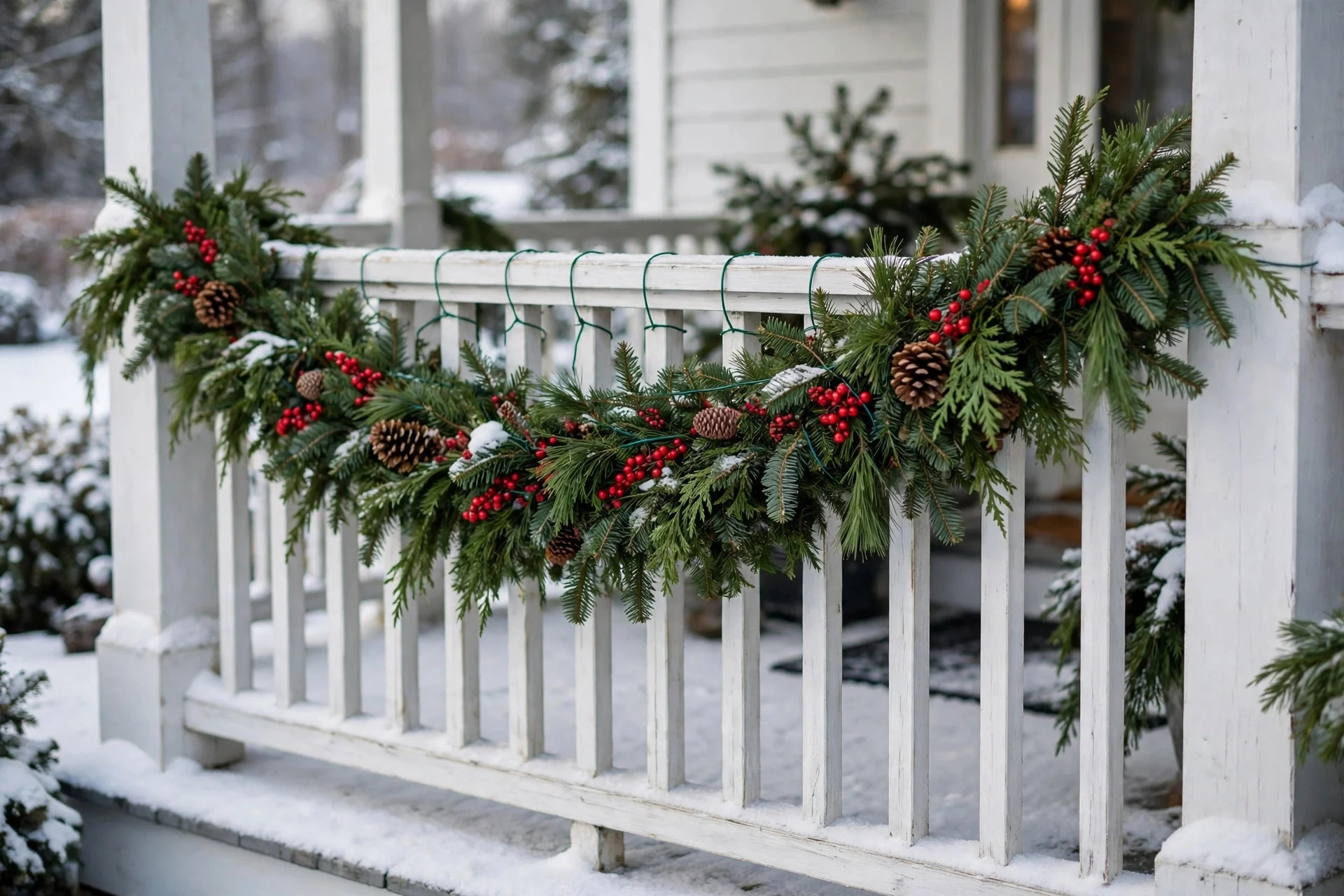
Draped garland looks effortless in photos and behaves like a loose scarf in real wind. It slips, sags, and eventually ends up in a heap on the steps. The trick is to treat garland like something you are installing, not something you are arranging. Start with a good faux garland, one with a wire core rather than a flimsy plastic spine, and fasten it to the railing every eighteen inches or so with green floral wire or zip ties.
Twist the wire snugly around the railing and the garland core, then tuck the ends back into the greenery so nothing shows. Leave a little slack between fastening points so the garland hangs in a soft swag instead of a tight straight line, but never leave a span longer than your forearm unfastened. I made that mistake once on the far side of the porch and found the whole swag hanging by one zip tie after a storm. If you want the same trick inside, the garland ideas I use on my mantel follow the same rule: fasten first, fluff second.
3. Use Shatterproof Ornaments Outside, Always

Glass ornaments have no business on a porch. I learned this the expensive way, or rather the painful way, stepping onto the porch in socks on Christmas morning and finding glittering shards where a bauble had blown off the garland. Outdoor ornaments need to be plastic, wood, metal, or fabric. Modern shatterproof baubles look surprisingly good now, and from the street nobody can tell the difference.
Hang them with short lengths of wire or sturdy ornament hooks, not the flimsy string loops they come with, and wire each one directly to the garland core or a branch. That way, when the wind tugs at them, they swing instead of flying. I mix sizes for depth, big baubles low, smaller ones tucked into the greenery, and I keep the colour palette tight so the whole thing reads as one display rather than a jumble. If you are wondering how many ornaments a display actually needs, the same counting logic applies indoors too, and it stops you buying a third box you do not need.
4. Anchor Lanterns With Sand and Battery Candles
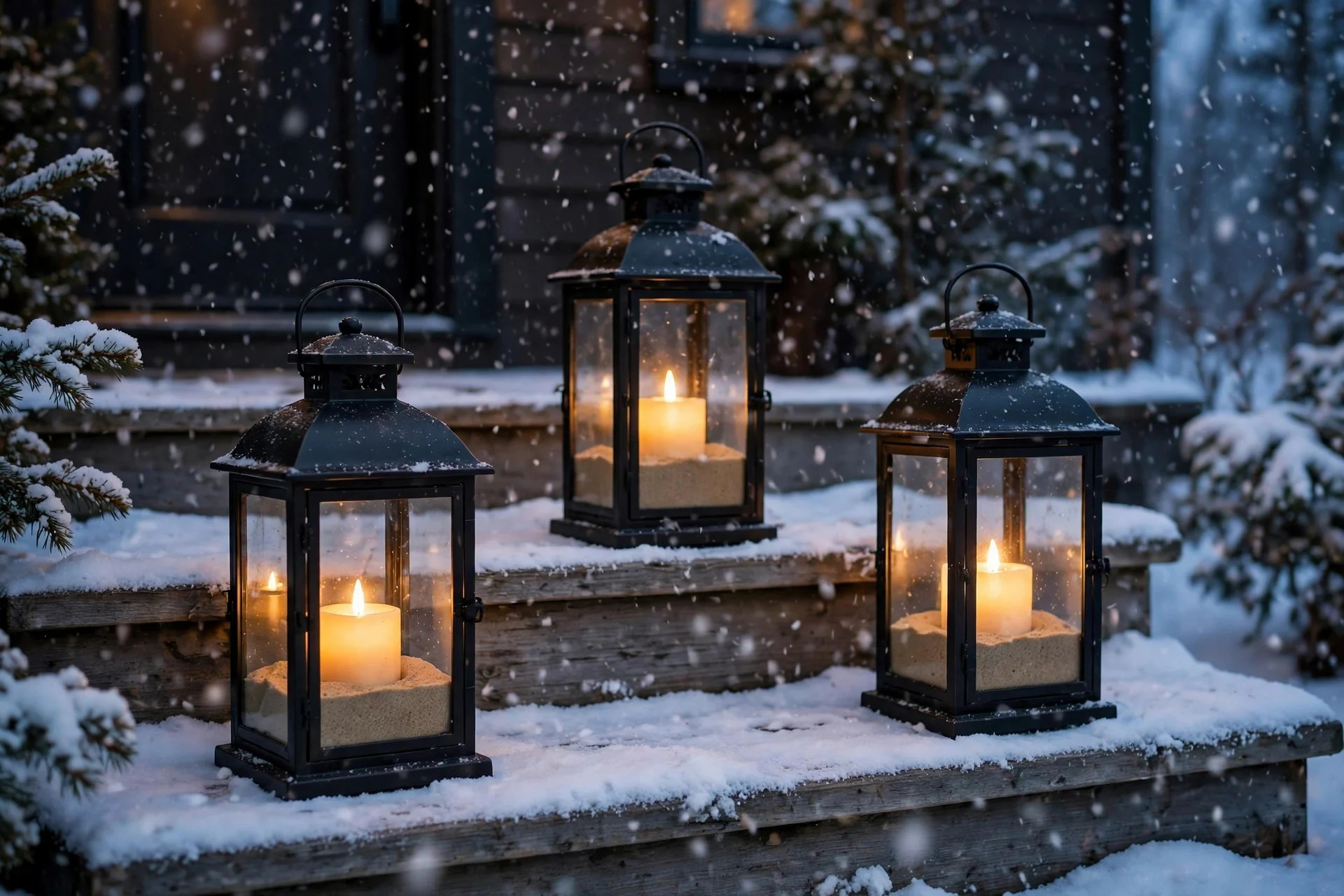
Lanterns are the single prettiest thing you can put on a porch, and the single most likely thing to end up on its side in the middle of the night. A tall lantern catches wind like a sail, and a real candle inside a tipped lantern is a fire risk nobody needs in December. So mine get two upgrades before they go outside: a couple of inches of sand in the bottom, and a battery candle instead of a real flame.
The sand does two jobs at once. It lowers the centre of gravity so the lantern stays upright, and it gives the candle something to sit in so it does not rattle around. Use a flameless candle with a timer, set it to come on at dusk, and you get the glow without ever thinking about it again. I cluster mine in odd numbers, three by the door, one on each step, and I keep them away from the edge of the steps where a boot can catch them. One December I skipped the sand on a new lantern because it looked cleaner empty. It lasted one night.
5. Pick a Doormat That Drains (and Add a Boot Tray)
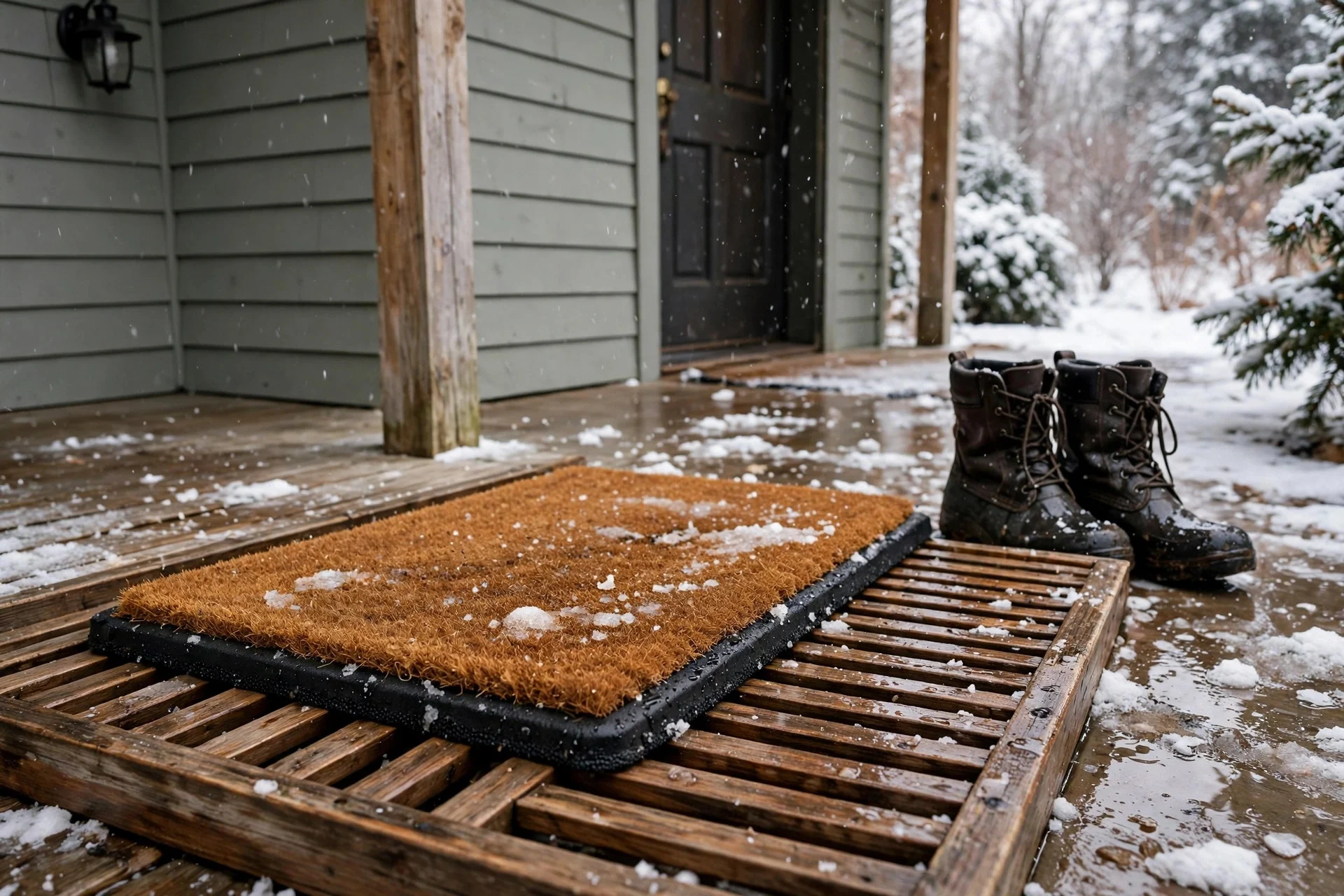
A pretty coir mat with a painted Christmas greeting looks wonderful for about four days, and then it turns into a soggy, frozen slab that tracks slush into the house. The mat itself is not the problem. The problem is water with nowhere to go. Choose a coir mat with a rubber backing and an open weave, the kind you can see daylight through, and place it on a slatted boot tray or a raised rubber mat with drainage channels underneath.
Meltwater runs through the mat and away instead of pooling and freezing into a sheet of ice. Shake the mat out every few days, it takes thirty seconds, and it will last the whole season instead of turning into a sad brown pancake by mid-December. I keep a second, plainer mat underneath the decorative one on the worst weeks, which sounds fussy but saves the good mat. And pick colours that can take salt stains. Deep green, charcoal, and rust hide winter grime far better than cream, which is the same reason I keep my indoor palette tight and dark in December.
6. Hang the Wreath With Wire, Not a Suction Hook
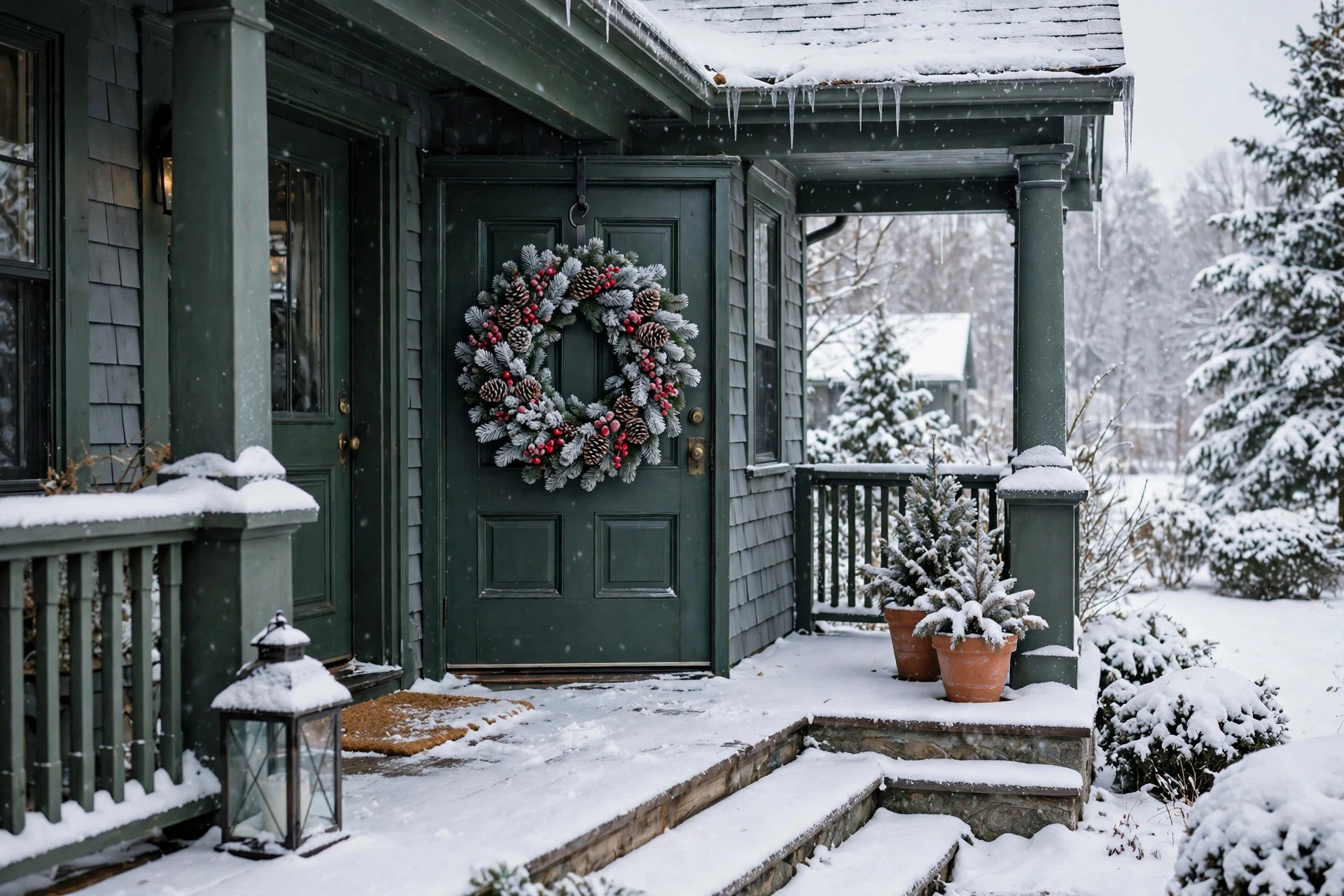
A suction-cup wreath hanger works beautifully right up until the first cold snap, when the temperature drops, the seal fails, and your wreath is on the ground. Command strips have the same weakness in freezing weather. The only hanger I trust now is embarrassingly simple: a length of wire looped over the top of the door, or a sturdy over-door metal hook rated for the wreath's actual weight.
Measure before you buy. A full, frosted wreath with pinecones and ornaments can weigh three times what a plain green one does, and most cheap hooks are rated for a fraction of that. Once the wreath is hung, add a second anchor: a short piece of wire from the back of the wreath to the door knocker or the hook itself, so even if the main hanger slips, the wreath cannot fall. I also face the wreath slightly inward, toward the sheltered side of the porch, which cuts the wind load more than you would think. Three winters now, zero wreaths on the ground.
7. Put Small Evergreens in Heavy Pots

Nothing says Christmas on a porch like a pair of small evergreen trees flanking the door, but the ones sold in thin plastic nursery pots are a windstorm waiting to happen. The tree is tall, the pot is light, and the first gust does the maths for you. Repot them into heavy ceramic, concrete, or stone pots, and add a layer of gravel at the bottom before the soil goes in.
Water them lightly before a freeze so the soil is damp but not soaked, and wrap the pots in burlap if you like the look, which also stops the ceramic cracking in a hard freeze. I keep mine in the same pots year after year, and the trees themselves have lasted three Decembers now, which is more than I can say for any cut garland. If you are torn between a real tree and a faux one for the living room, the same honest cost and hassle maths applies to the porch trees too, and it is worth doing before you spend the money. Choose the spot first, though, because a heavy potted tree is not something you move twice.
8. Clip the Lights Down, Every Single Bulb Run
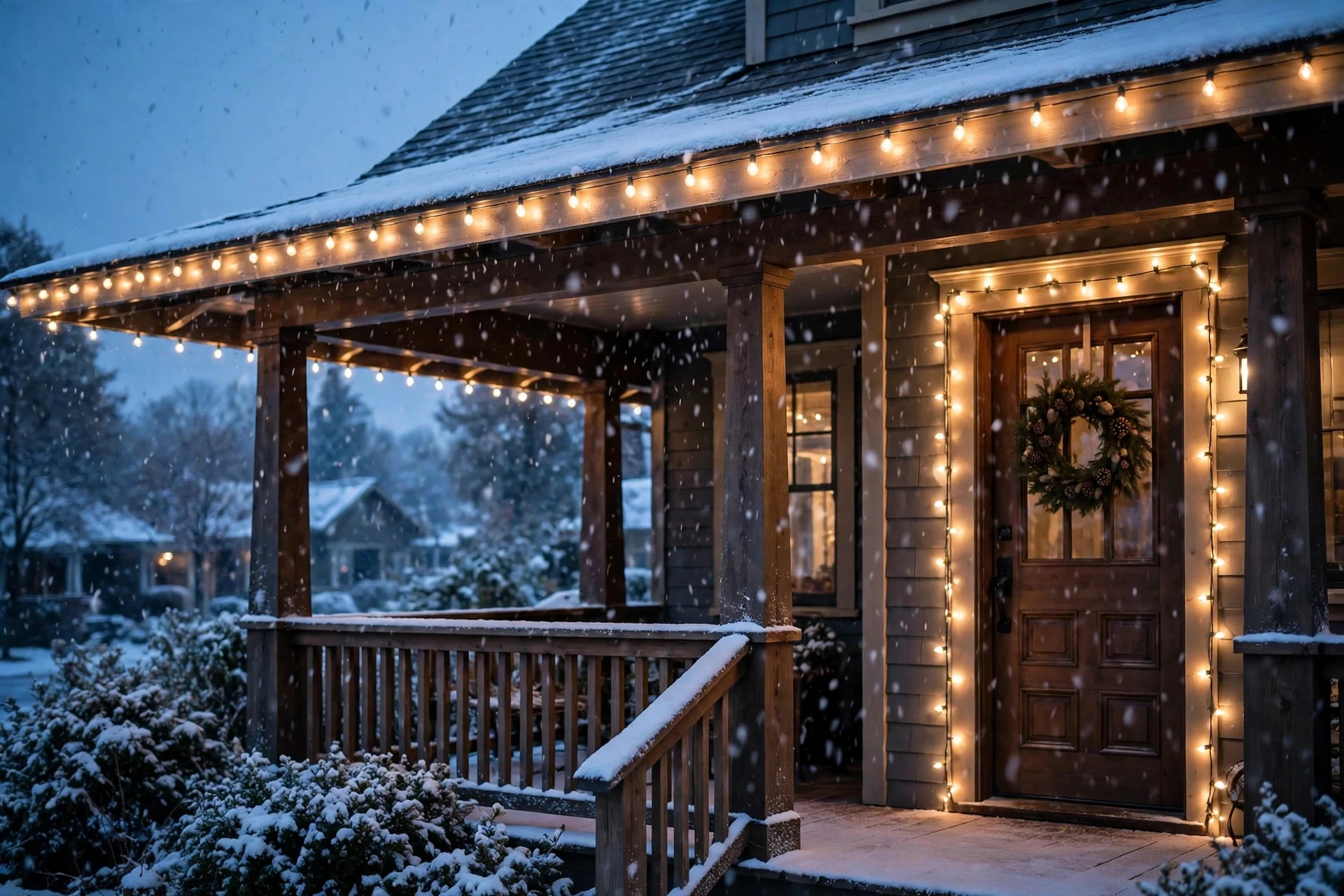
Loose string lights are the first thing to come down in a storm and the last thing anyone wants to re-hang in the cold. The trick is not stronger lights, it is better fastening. Use outdoor-rated lights, the kind with sealed sockets, and fasten the wire to the house with all-weather light clips every foot or so, never with staples or nails, which damage the wire and create a real hazard.
Run the lights along the porch roofline, around the door frame, or through the garland you already wired to the railing, and clip the wire at every change of direction so the wind cannot work a whole run loose from one weak point. Leave a drip loop where the wire comes down to the plug, a little sag in the cord so rainwater drips off instead of running into the socket. I use a timer plug so the lights come on at dusk and off at midnight, which also means I never have to go outside in the dark to unplug them in the snow. One run of lights, properly clipped, has survived four storms on my porch without a single bulb out of place.
9. Build a Bench Display That Can't Blow Away

A porch bench or an old wooden crate makes a wonderful display shelf, a place for a stack of wrapped empty boxes, a plaid blanket, a basket of pinecones. Left loose, though, everything on it becomes a projectile. The fix is to think of the display as one heavy object instead of five light ones. Put the heaviest things at the bottom, a crate of firewood or a stone, and build upward from there.
Keep blankets and fabric inside a lidded basket or a metal tub with a lid, not draped loose over the bench where the wind can lift them like a sail. Tie the basket to the bench with a length of twine, and if your bench is light, weigh it down with a sandbag tucked underneath, out of sight. I learned this after chasing a plaid throw down the street in my slippers, which is not a memory I enjoy. Now the whole display is effectively one unit, and a storm can push against it all it likes. It might sway. It will not scatter.
10. Screw the Wooden Sign In, Don't Lean It
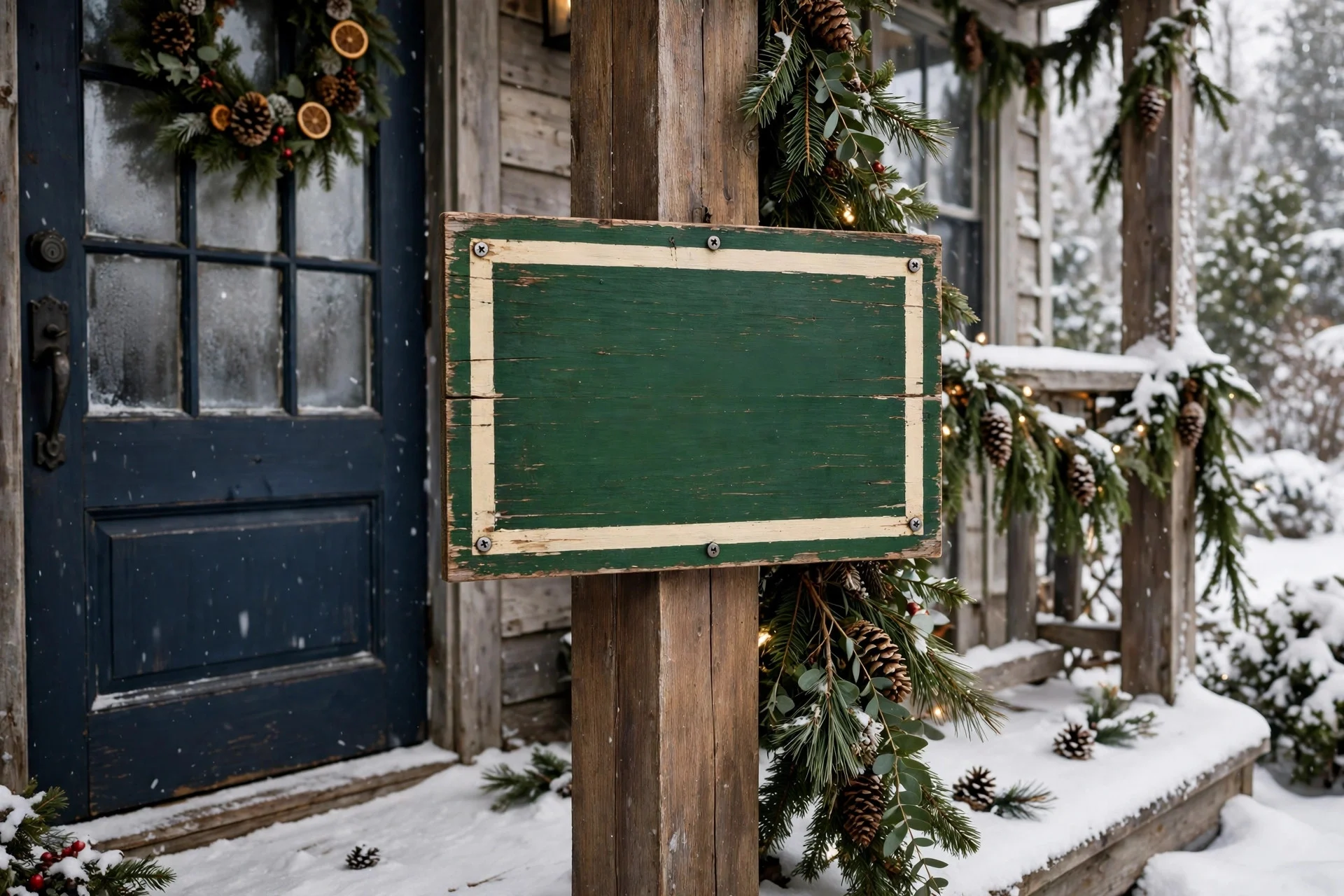
Leaned signs are the first casualty of every December storm. A painted wooden sign propped against the wall looks charming and falls over at the first gust, usually face-first into the slush, where the paint bubbles and the wood warps. If you love a sign, commit to it: screw it to the wall or the porch post with two short screws, or hang it from a sturdy bracket with a short chain.
Two fixings, not one, so it cannot spin in the wind. And choose the sign itself for the weather. Sealed wood, outdoor paint, or metal will survive the season. Raw craft wood with acrylic paint will not, and I say that as someone who ruined a genuinely lovely hand-painted sign in a single wet week. Keep the message simple and the lettering big enough to read from the street, because a sign nobody can read is just a piece of wood getting wet. Mine says "Merry Christmas" in plain cream letters on deep green, screwed to the post by the steps, and it has not moved in two winters.
11. Lean a Sled Against the Wall and Tether It
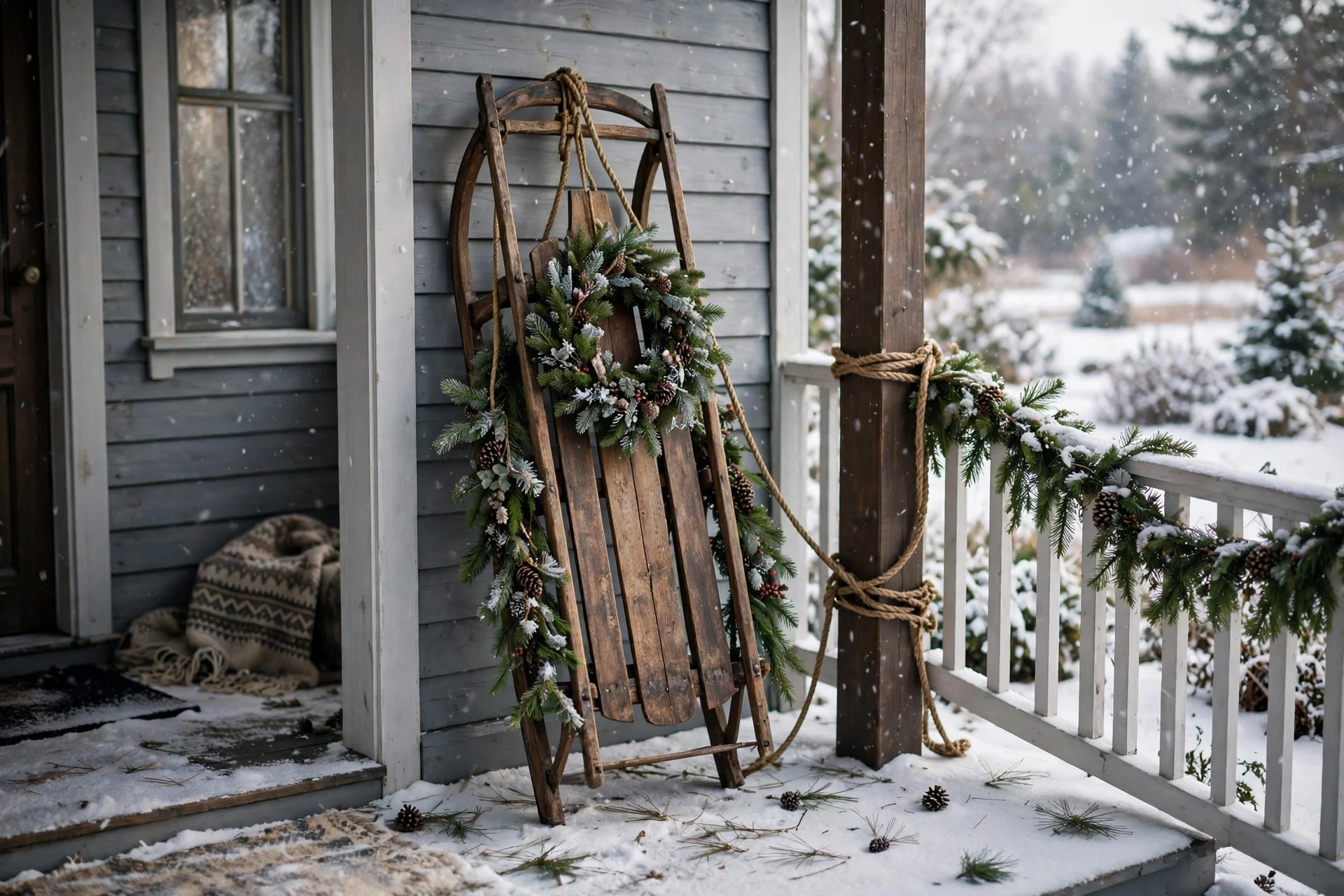
An old wooden sled leaning by the door is one of those decorations that looks like it grew there, which is exactly why it works. The trick is that a sled is flat, light, and full of wind-catching surface, so it needs a tether. A short length of wire or rope from the sled's crossbar to a hook on the wall keeps it exactly where you put it, and lets you hang a small wreath or a swag of greenery from its runners.
Choose a spot out of the main wind path, usually the wall beside the door rather than the open railing, and angle the bottom of the sled slightly away from the wall so it leans rather than balances. If you do not have a sled, old wooden skis do the same job, and a pair of them crossed in an X and wired together makes a striking display. I found my sled at a flea market for almost nothing, and it is the decoration guests comment on most, which still surprises me. It cost less than the garland and outlasted three storms without a wobble.
12. Keep a Storm Kit by the Door
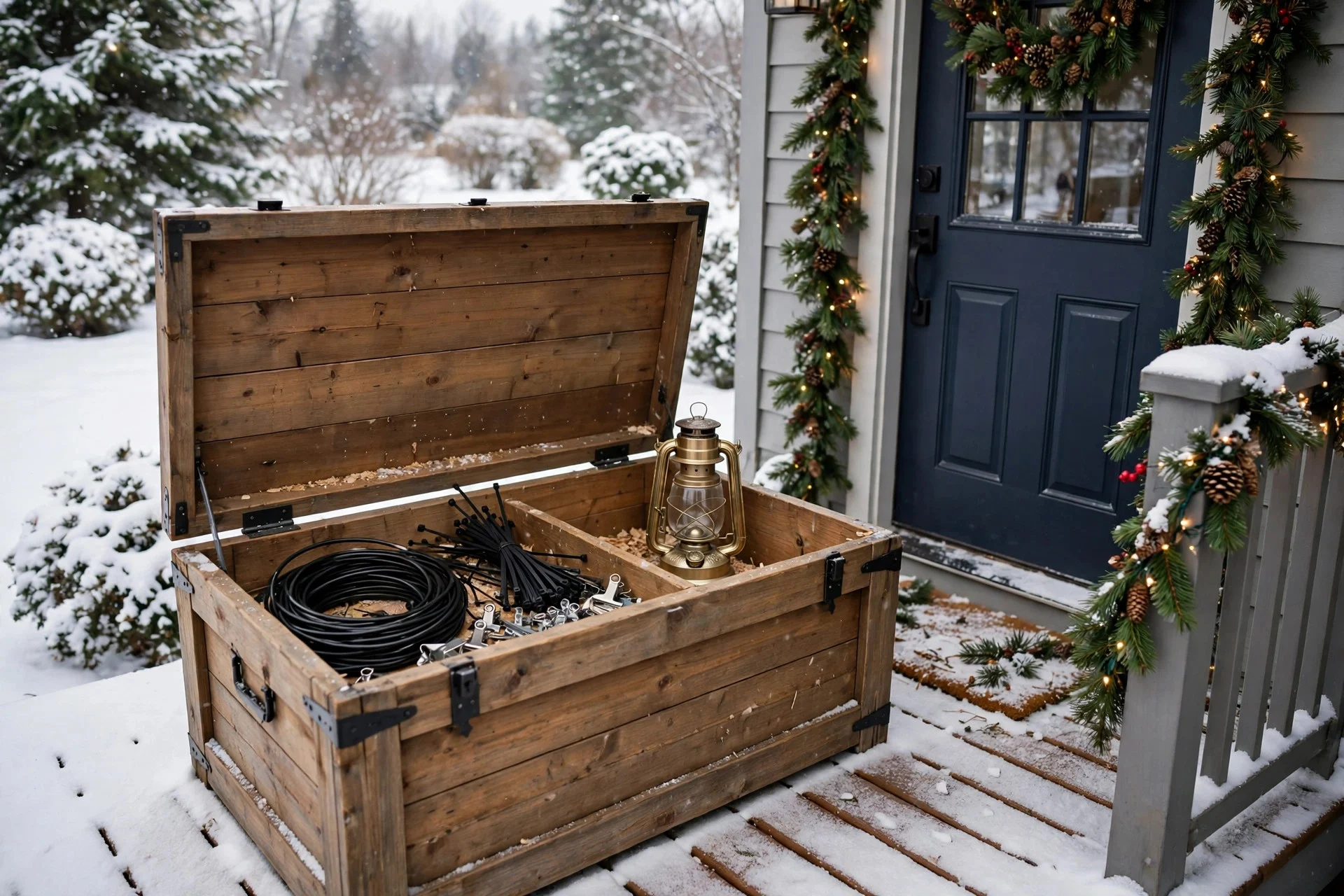
The last idea is not a decoration at all. It is the thing that keeps all the other eleven looking good. A storm kit is a lidded deck box or a sturdy storage bench by the door, holding spare zip ties, a roll of floral wire, a few extra clips, a spare battery candle, and a dry rag. When a storm loosens a swag or a lantern tips, the fix takes two minutes with the kit right there instead of a miserable trip to the garage in the sleet.
I check the porch after every storm, which takes about five minutes, and I fix what moved while it is still a small job. A loose zip tie becomes a fallen garland if you leave it for a week. The kit also holds the things you take in before a really bad storm, the lightest ornaments, the fabric pieces, so they survive to go back out the next morning. It is the least photogenic thing on my porch and the most useful, and it is the reason the porch still looks like the photos in January instead of like the aftermath. Every porch needs one.
Closer
A Christmas porch does not need to be the most elaborate one on the street. It needs to be the one that still looks like Christmas after the weather has had its say, and that comes down to a handful of unglamorous choices: weight over lightness, wire over hope, and materials that can get wet and freeze without complaint. I spent years re-decorating my porch every weekend in December, and I do not miss it.
Start with the planters and the garland, the two things that fail first, and work your way down this list one weekend at a time. By Christmas morning, the porch will look like it did on the day you decorated it, which is the whole point. And if a storm does get the better of something, you will know exactly how to fix it in two minutes, because you built it to be fixed. If you want to carry the same thinking indoors, it is worth reading about the mistakes that trip most people up, because the porch and the living room fail in surprisingly similar ways.