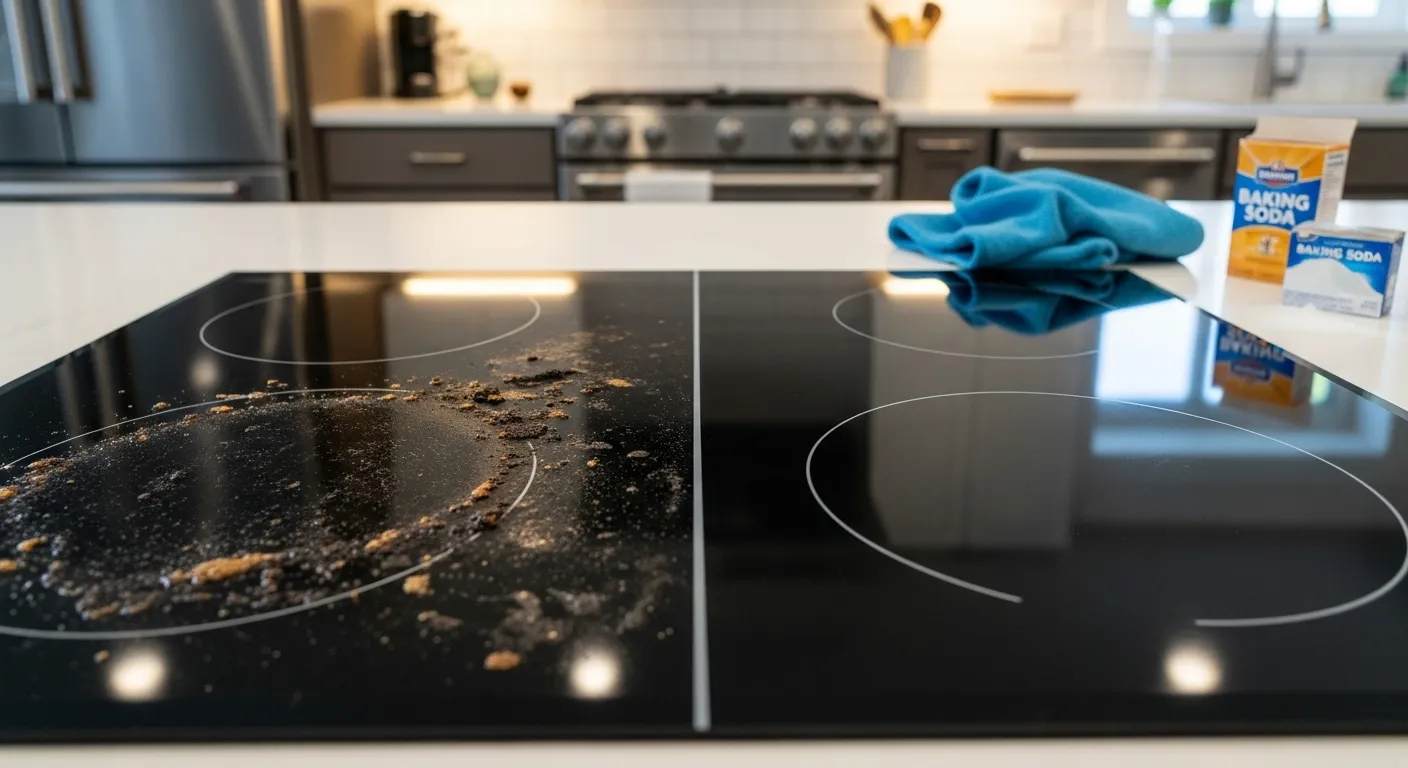
Ever glance at your glass cooktop and think, “Wow, when did this turn into a crime scene?” Yeah, same. Burnt-on stains love to show up uninvited, hang around forever, and judge you silently while you cook. Fun times.
I’ve fought this battle more times than I care to admit, and IMO, cleaning a glass cooktop doesn’t need special powers or a chemistry degree. You just need the right approach, a little patience, and maybe a sense of humor when things get ugly. Let’s fix that cooktop and make it shine again 🙂
Why Glass Cooktops Get So Gross (So Fast)

Glass cooktops look sleek, modern, and fancy… right up until you boil pasta. Then they turn into a sticky, streaky mess with burnt-on stains that laugh at paper towels.
The Real Culprits
Burnt-on stains don’t just appear out of nowhere. They come from a few repeat offenders:
-
Sugar and starch spills that caramelize instantly
-
Oil splatters that bake themselves onto the surface
-
Boil-overs that you swear you’ll clean “later”
Sound familiar? I’ve burned rice water onto mine so many times that my cooktop probably knows my routine better than I do.
Why You Can’t Ignore Them
Here’s the deal: old stains harden, spread, and become harder to remove. They also make your cooktop heat unevenly, which messes with cooking results. Ever wonder why that pan heats weirdly? Yeah, grime plays a role.
What You Should Never Do (Seriously, Don’t)

Before we talk about cleaning a glass cooktop the right way, let’s cover what not to do. I learned these lessons the hard way, FYI.
Avoid These Common Mistakes
-
No steel wool or abrasive pads — they scratch instantly
-
No harsh chemical cleaners — they cloud the glass
-
No scraping with random knives — trust me, regret follows
Glass cooktops demand respect. Treat them gently, and they cooperate. Go Hulk mode, and they fight back.
The Best Tools for Cleaning a Glass Cooktop
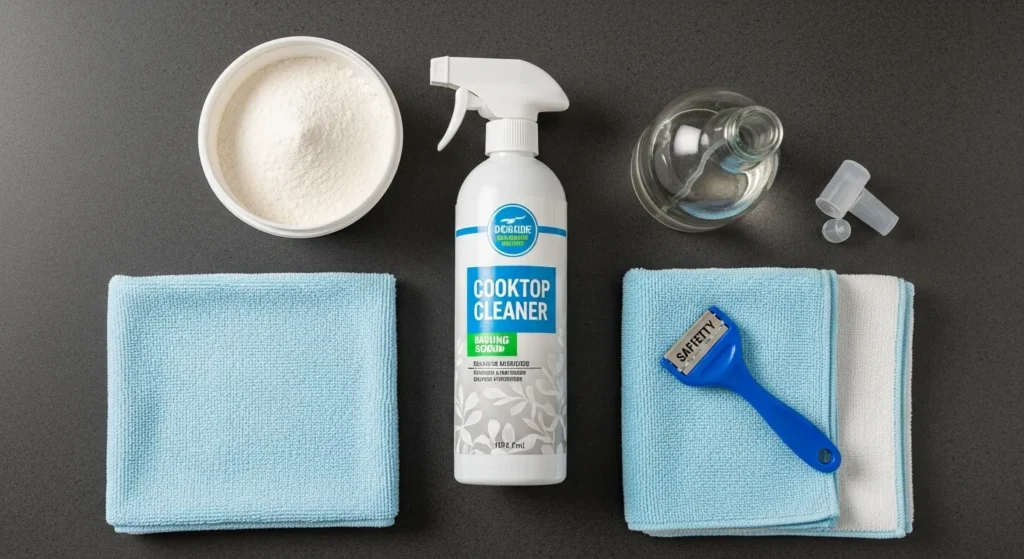
You don’t need a drawer full of gadgets. I keep things simple, and it works every time.
Your Basic Cleaning Kit
Grab these before you start:
-
Microfiber cloths (non-negotiable)
-
White vinegar
-
Baking soda
-
Glass cooktop cleaner
-
Razor scraper designed for cooktops
That’s it. No magic potions. No weird gadgets from late-night ads.
Daily Cleaning: The Easy Win Everyone Skips
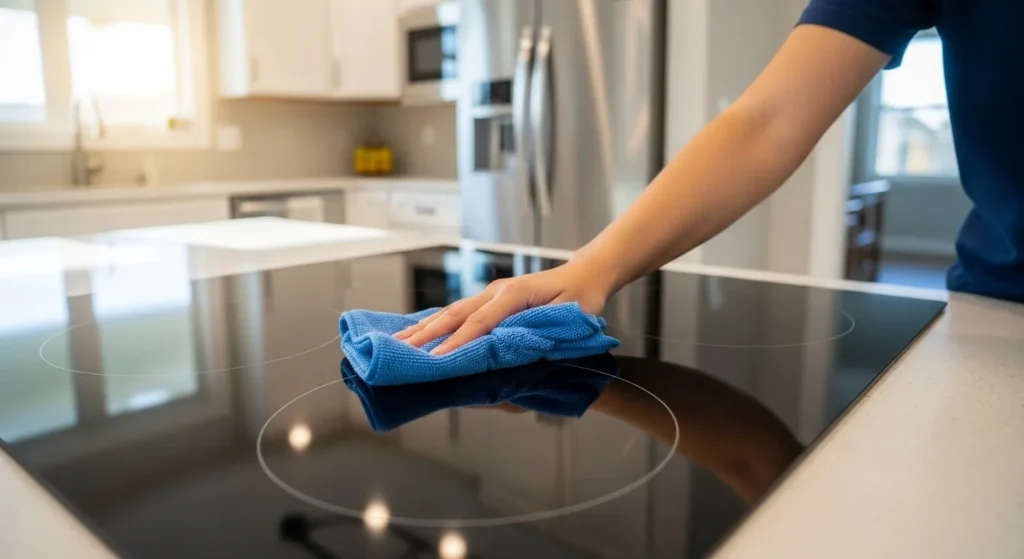
If you clean your glass cooktop daily, burnt-on stains struggle to form. I know, I know — nobody wants extra chores. But this step saves you serious effort later.
Quick Daily Routine
After cooking and once the surface cools:
-
Wipe with a damp microfiber cloth
-
Spray a little vinegar
-
Buff dry
This takes under two minutes. Ever wonder why some cooktops always look spotless? This habit explains it.
How to Clean Light Stains Without Losing Your Mind
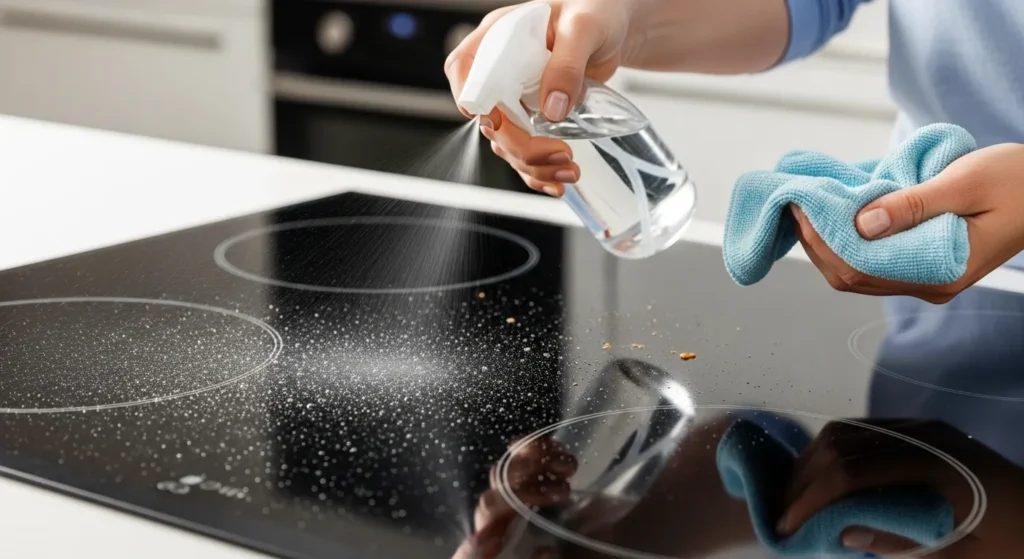
Not every mess needs a deep scrub. Light stains respond well to gentle treatment.
Vinegar + Microfiber Method
This combo handles most everyday grime:
-
Spray vinegar directly on the stain
-
Let it sit for 1–2 minutes
-
Wipe in small circles
Vinegar cuts grease fast and leaves zero residue. Plus, it smells way better than most chemical cleaners… unless you hate vinegar, in which case, sorry :/
How to Remove Burnt-On Stains from a Glass Cooktop
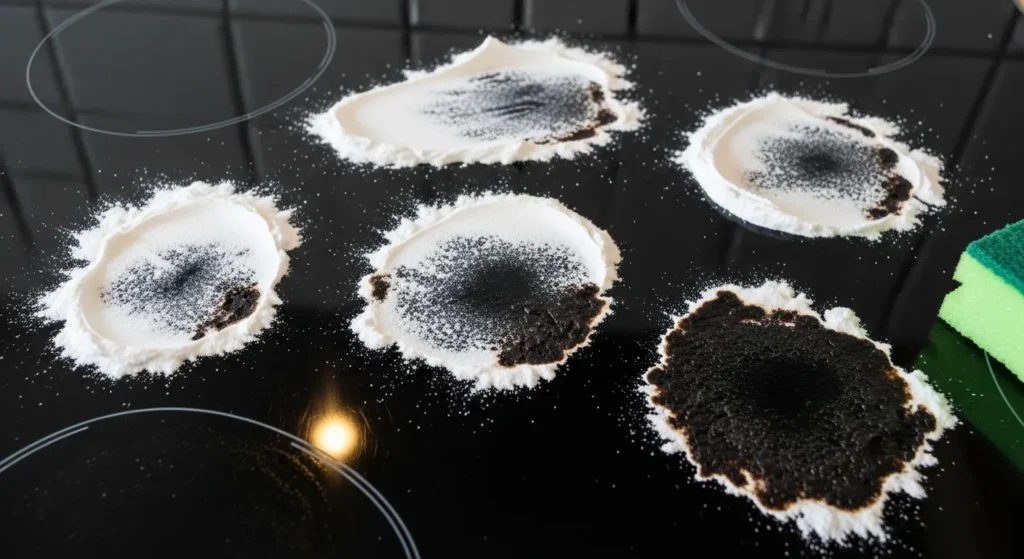
Alright, let’s get serious. Burnt-on stains require strategy, not rage.
The Baking Soda Paste Trick
This method works shockingly well:
-
Sprinkle baking soda over the stain
-
Add water to form a thick paste
-
Let it sit for 10–15 minutes
-
Wipe gently with a microfiber cloth
Baking soda lifts residue without scratching, which makes it a hero ingredient in my kitchen.
Why This Works So Well
The paste softens hardened residue and loosens its grip on the glass. Ever notice how stains wipe off easier after soaking? Same principle, zero damage.
Using a Razor Scraper (Don’t Panic)
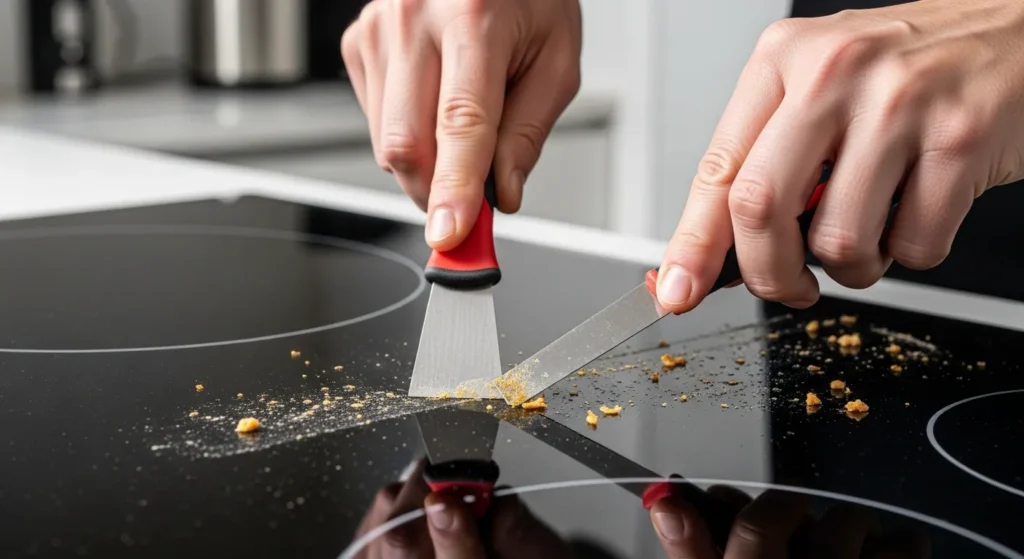
Yes, I said razor. No, you won’t ruin your cooktop if you do this correctly.
How to Scrape Safely
Follow these rules:
-
Use a razor scraper made for glass cooktops
-
Hold it at a 45-degree angle
-
Apply gentle, controlled pressure
-
Scrape away from yourself
I felt nervous the first time too. Then I watched burnt sugar peel off like magic, and I never looked back.
When to Use a Scraper
Scrapers work best on:
-
Melted sugar
-
Burnt plastic residue
-
Thick, stubborn stains
Never scrape a dry surface. Always soften the stain first with cleaner or baking soda.
Commercial Glass Cooktop Cleaners: Worth It or Nah?
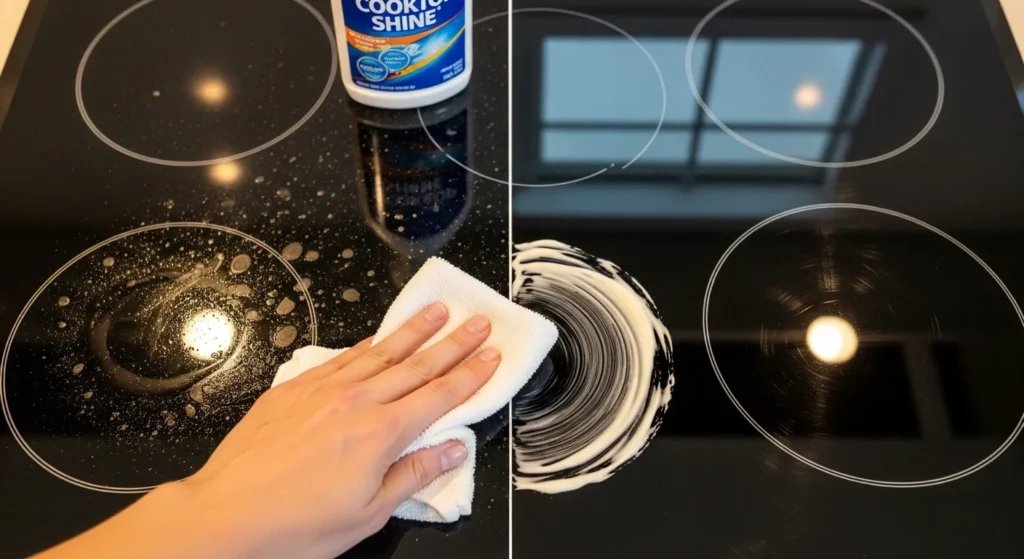
Short answer? Yes, when used correctly.
Why I Like Them
Good cooktop cleaners:
-
Polish while cleaning
-
Leave a protective barrier
-
Reduce future staining
I use them after deep cleaning to restore shine. Think of them as the finishing touch, not the main event.
How to Apply Properly
-
Use a small amount
-
Buff with a clean microfiber cloth
-
Don’t overdo it
Too much cleaner causes streaks. And nobody likes streaks.
Dealing with Sugar Spills Immediately (Drop Everything)

If sugar spills on a hot glass cooktop, act fast. This matters more than almost anything else.
What to Do Right Away
-
Turn off the burner
-
Carefully scrape the sugar while warm
-
Wipe once cooled
Sugar bonds to glass like concrete. Ever wondered why sugar stains look worse than oil? Now you know.
Preventing Burnt-On Stains (The Lazy Genius Strategy)
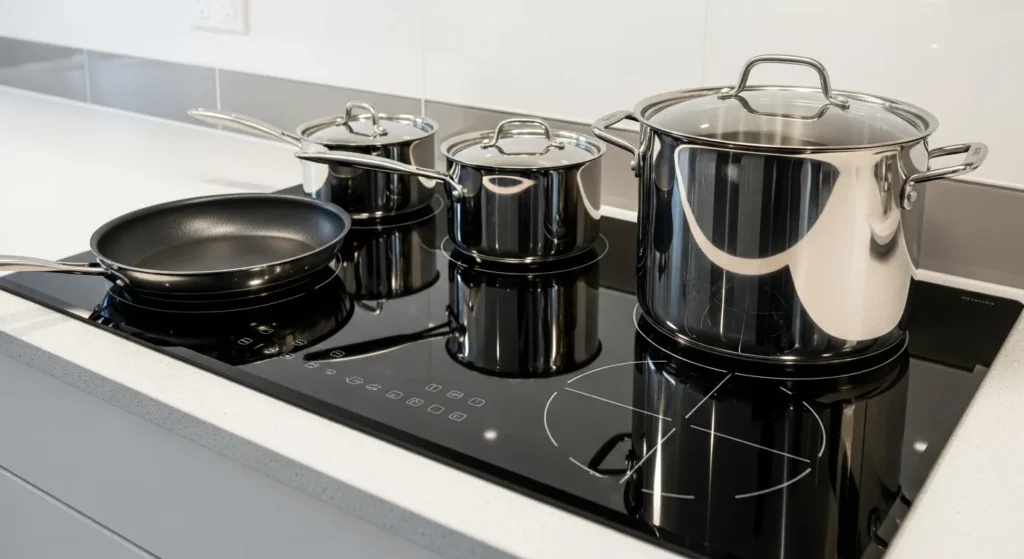
Prevention beats scrubbing every time.
Simple Habits That Save You Work
-
Wipe spills immediately
-
Use cookware with flat bottoms
-
Avoid sliding pans across the surface
-
Clean after every use
These habits sound boring, but they keep your glass cooktop looking new. And new always feels good.
How Often Should You Deep Clean a Glass Cooktop?
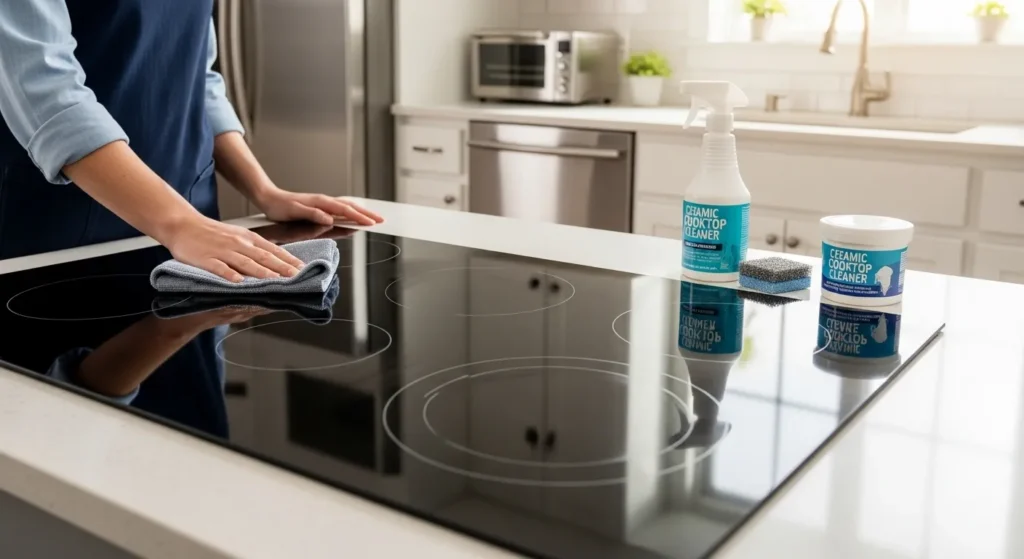
I deep clean mine once a week. That schedule works perfectly for regular cooking.
Recommended Cleaning Frequency
-
Daily: Quick wipe-down
-
Weekly: Baking soda or cleaner
-
Monthly: Full polish and inspection
Consistency matters more than intensity. Ever try to deep clean after months of neglect? Yeah… don’t.
Common Myths About Cleaning Glass Cooktops

Let’s clear up a few myths that refuse to die.
Myth #1: More Pressure = Better Cleaning
Nope. Pressure scratches glass and locks stains in place.
Myth #2: Any Glass Cleaner Works
Wrong again. Window cleaner leaves residue and streaks.
Myth #3: Scratches Are Inevitable
False. Proper tools prevent damage, period.
My Personal Cleaning Routine (Steal This)
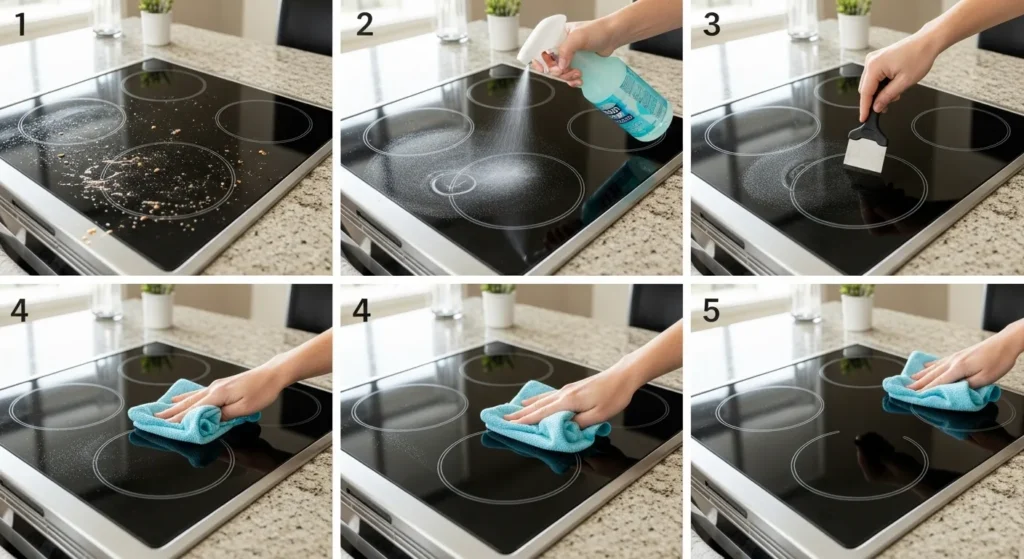
Here’s what I actually do:
-
Daily vinegar wipe
-
Weekly baking soda scrub
-
Monthly polish
That routine keeps my cooktop shiny without stress. And yes, I still spill things. I just clean smarter now.
Final Thoughts: A Clean Cooktop Feels Ridiculously Good
Cleaning a glass cooktop doesn’t need drama, frustration, or elbow grease that ruins your mood. You just need the right tools, gentle methods, and a little consistency. Burnt-on stains don’t stand a chance when you stay proactive.
So next time your cooktop looks like it survived a food fight, don’t panic. Grab baking soda, take a breath, and handle it like a pro. Your future self will thank you — probably while admiring that shiny reflection staring back 😉