

Let’s be honest—small living rooms test your patience. You want style, comfort, storage, and room to breathe… all in one tiny space. I’ve lived with a living room that barely fit a sofa, so yeah, I feel this struggle personally. The good news? You don’t need more square footage—you need smarter ideas.
Let’s talk through 20+ small living room ideas to maximize every inch like friends swapping tips, not like a furniture catalog yelling at you.
Think Layout First (Before Buying Anything)

Most small living room problems start with the layout, not the decor. I learned this the hard way after buying a sofa that basically ate the room.
Float Your Furniture
Pushing everything against the wall doesn’t always help. Floating a sofa a few inches forward can:
-
Improve flow
-
Create visual balance
-
Make the room feel intentional
Ever notice how designer rooms never look “smashed” against the walls?
Choose the Right Sofa (This Is Non-Negotiable)

Your sofa controls the entire vibe.
Go Compact, Not Bulky
Skip chunky arms and oversized cushions. Slim-profile sofas give you seating without visual weight.
Look for:
-
Low backs
-
Exposed legs
-
Neutral upholstery
IMO, a smaller sofa beats a cramped sectional every time.
Use Multi-Functional Furniture Like a Pro

If furniture does only one thing, it wastes space. Period.
Smart Pieces That Work Overtime
-
Storage ottomans
-
Lift-top coffee tables
-
Benches with hidden storage
I once stored blankets, books, and random cords in one ottoman. Life-changing.
Wall-Mounted Shelves Save the Floor
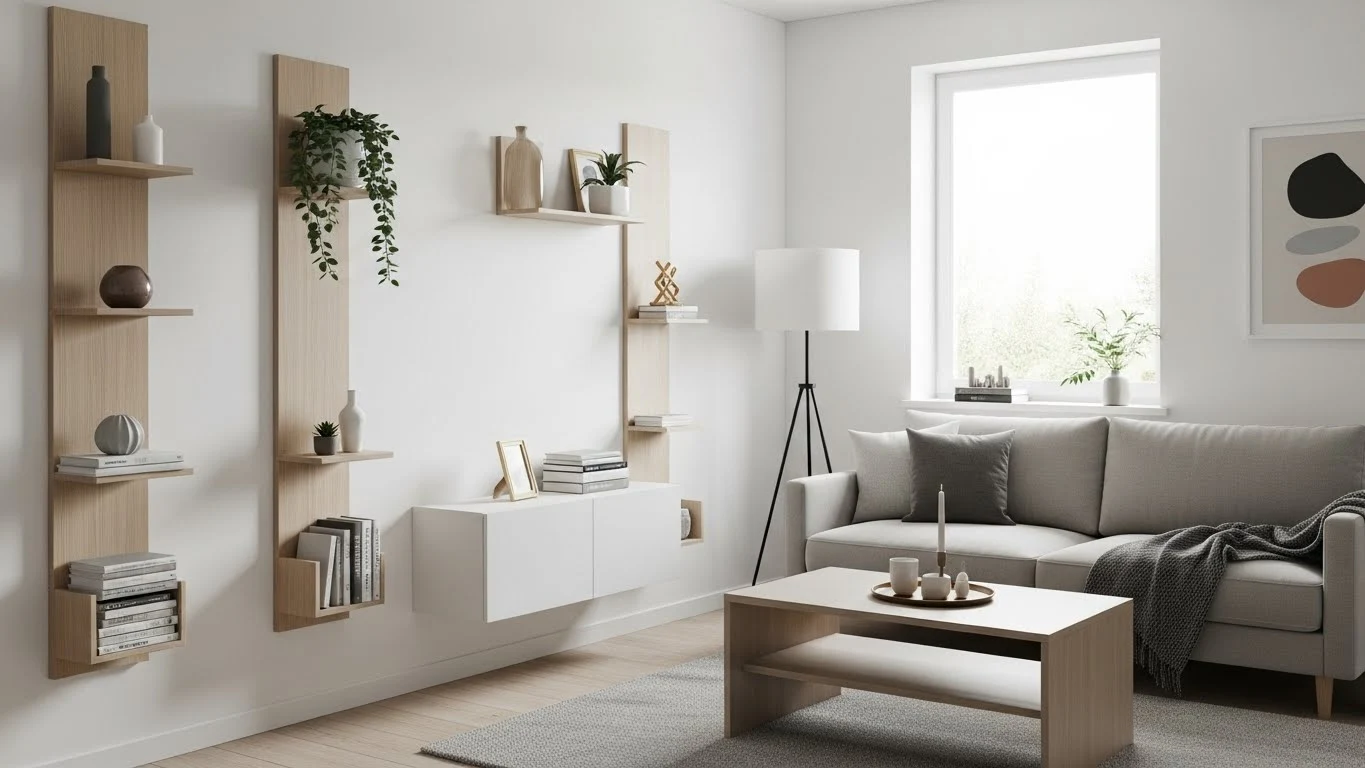
Floor space matters more than you think.
Why Wall Storage Wins
-
Keeps the room open
-
Draws the eye upward
-
Adds storage without clutter
Just don’t overload shelves. Visual chaos defeats the purpose.
Light Colors Make Rooms Feel Bigger

Dark rooms feel cozy—but small dark rooms feel cramped.
Best Color Choices
-
Warm whites
-
Soft greige
-
Pale beige
FYI, light walls don’t mean boring walls. Texture does the heavy lifting here 🙂
Mirrors = Instant Space Hack

Mirrors feel almost unfair with how well they work.
Where to Place Them
-
Across from windows
-
Behind the sofa
-
Near entry points
Ever walked into a room and thought, “Wait, this feels bigger”? That’s mirror magic.
Choose One Focal Point (Not Five)
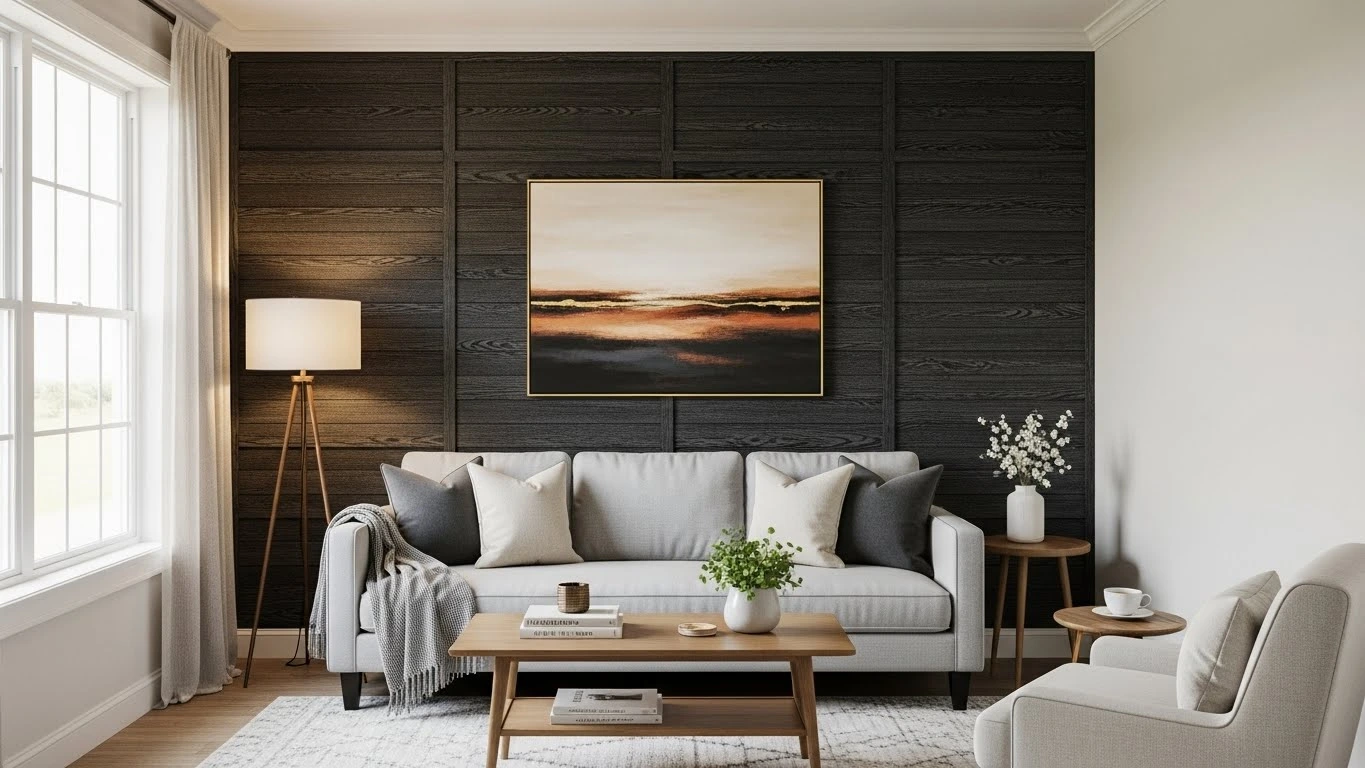
Too many “statement pieces” overwhelm small rooms fast.
Good Focal Point Ideas
-
TV wall
-
Accent wall
-
Gallery art
Let one thing shine. Everything else supports it.
Scale Matters More Than Style
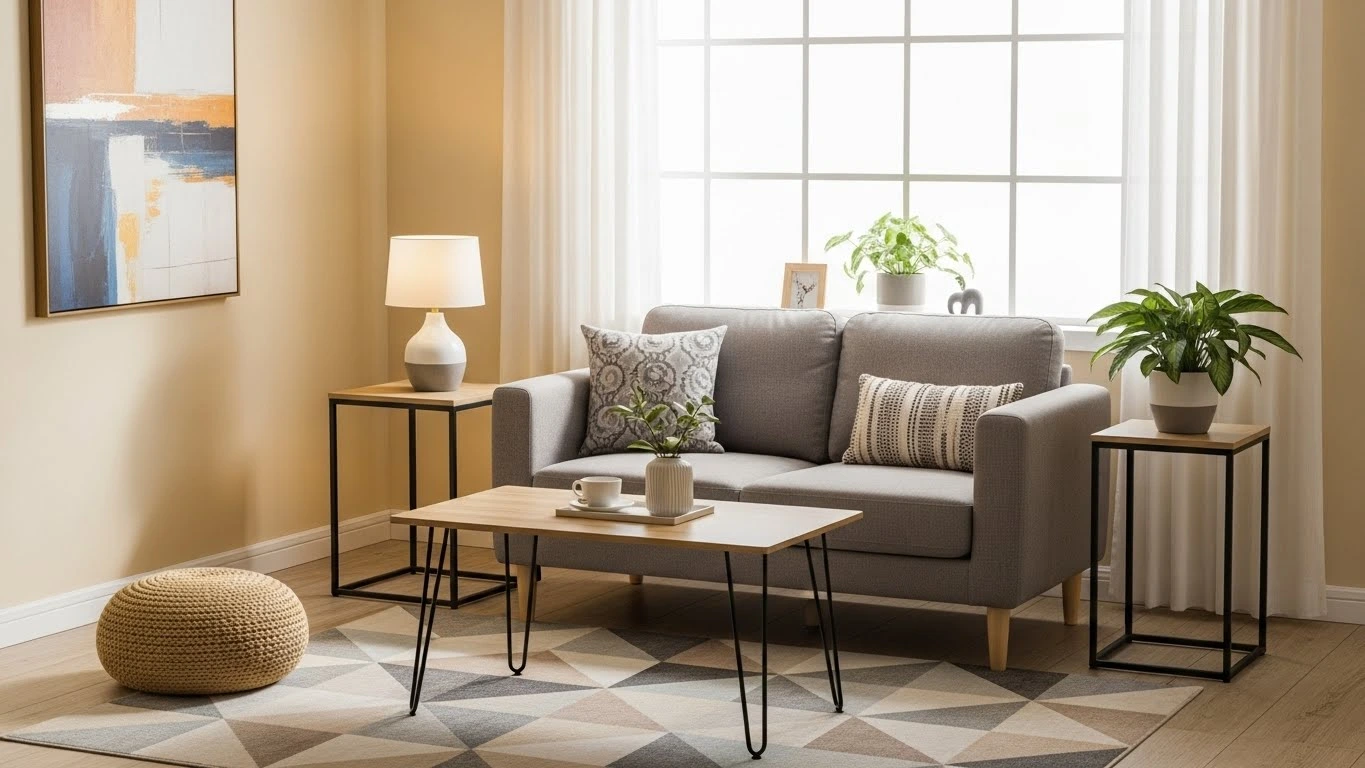
A giant rug or oversized lamp can ruin proportions.
Right-Size Everything
-
Small coffee tables
-
Narrow side tables
-
Slim lamps
Big furniture in a small room always feels like bad math.
Use Vertical Space (Ceilings Count Too)
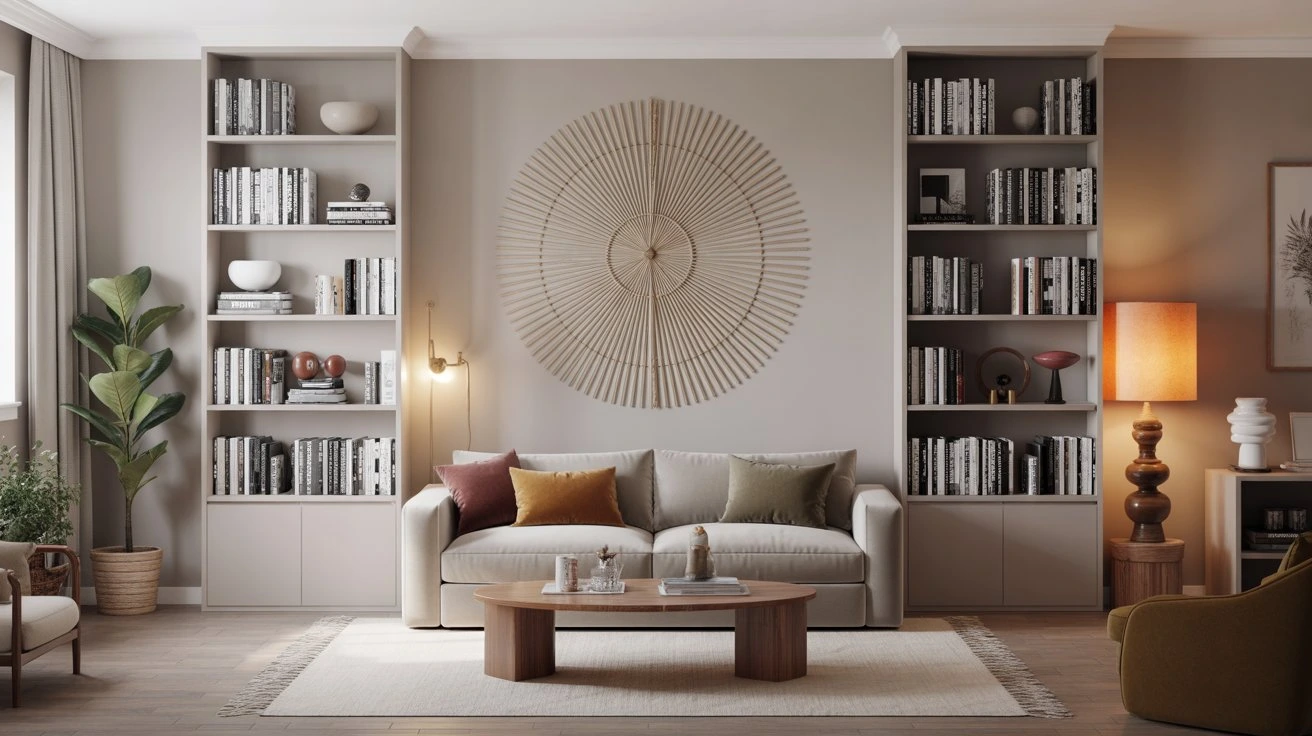
Walls don’t stop at eye level.
Vertical Tricks
-
Tall bookcases
-
Floor-to-ceiling curtains
-
Vertical artwork
This pulls the eye upward and makes the room feel taller instantly.
Curtains Can Fake Height
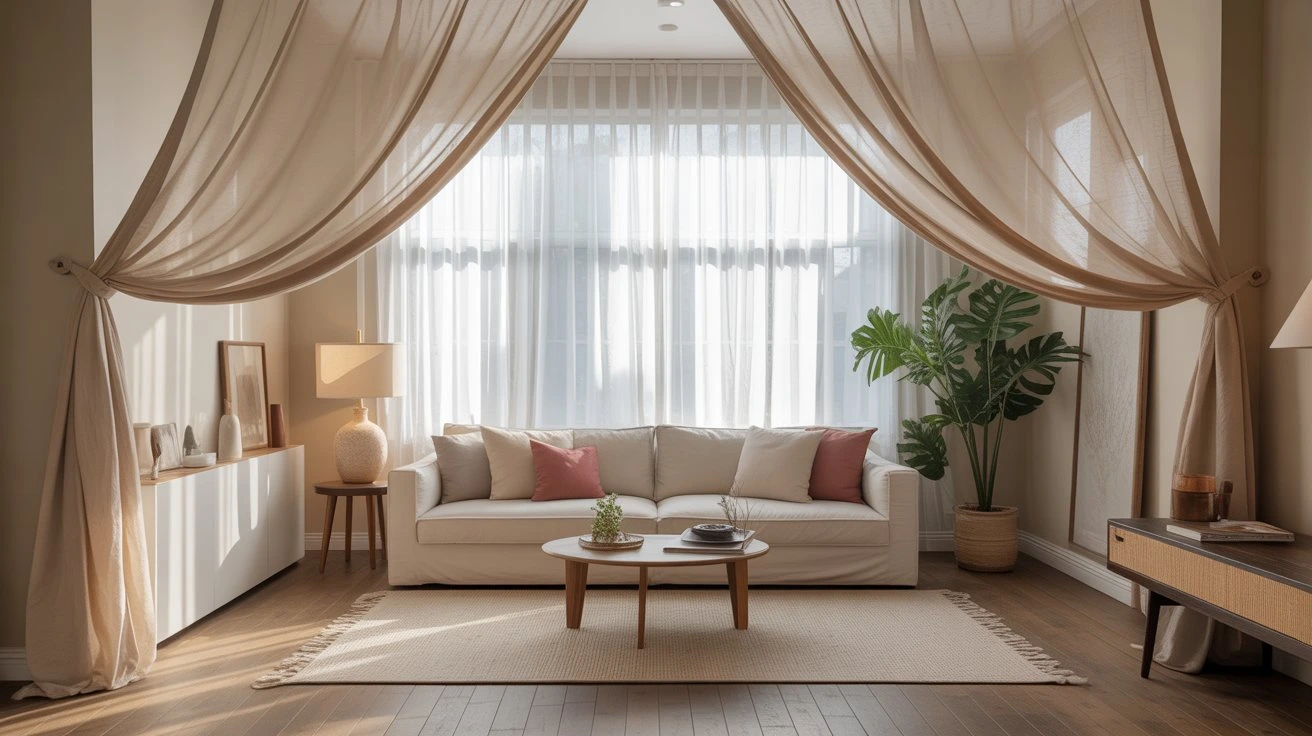
Curtain placement changes everything.
Do This Instead
-
Mount rods near the ceiling
-
Use light fabrics
-
Let curtains kiss the floor
Short curtains shrink rooms. Don’t do that to yourself.
Open-Leg Furniture Feels Lighter
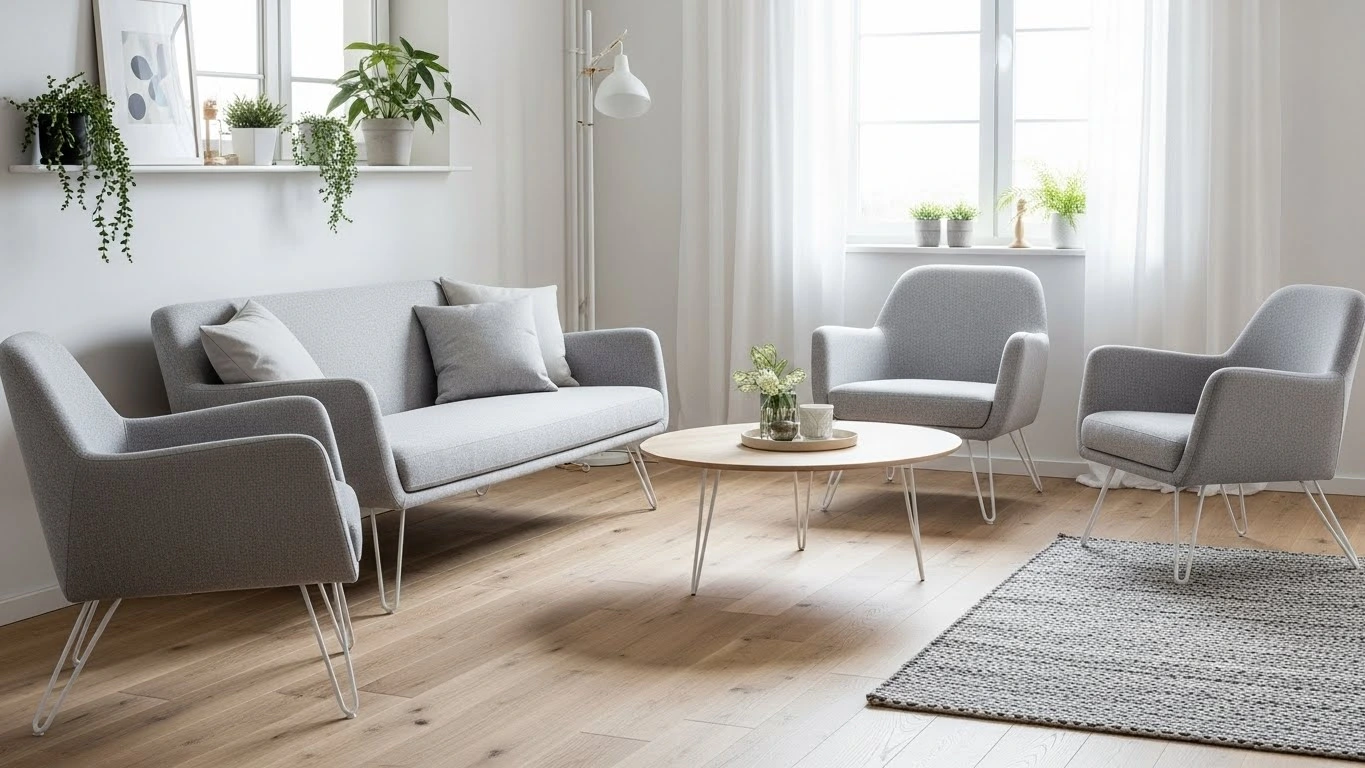
Furniture that floats visually keeps rooms breathable.
Best Choices
-
Sofas with legs
-
Chairs with open bases
-
Glass or acrylic tables
You see more floor = the room feels bigger. Simple math.
Rugs Define Space Without Walls
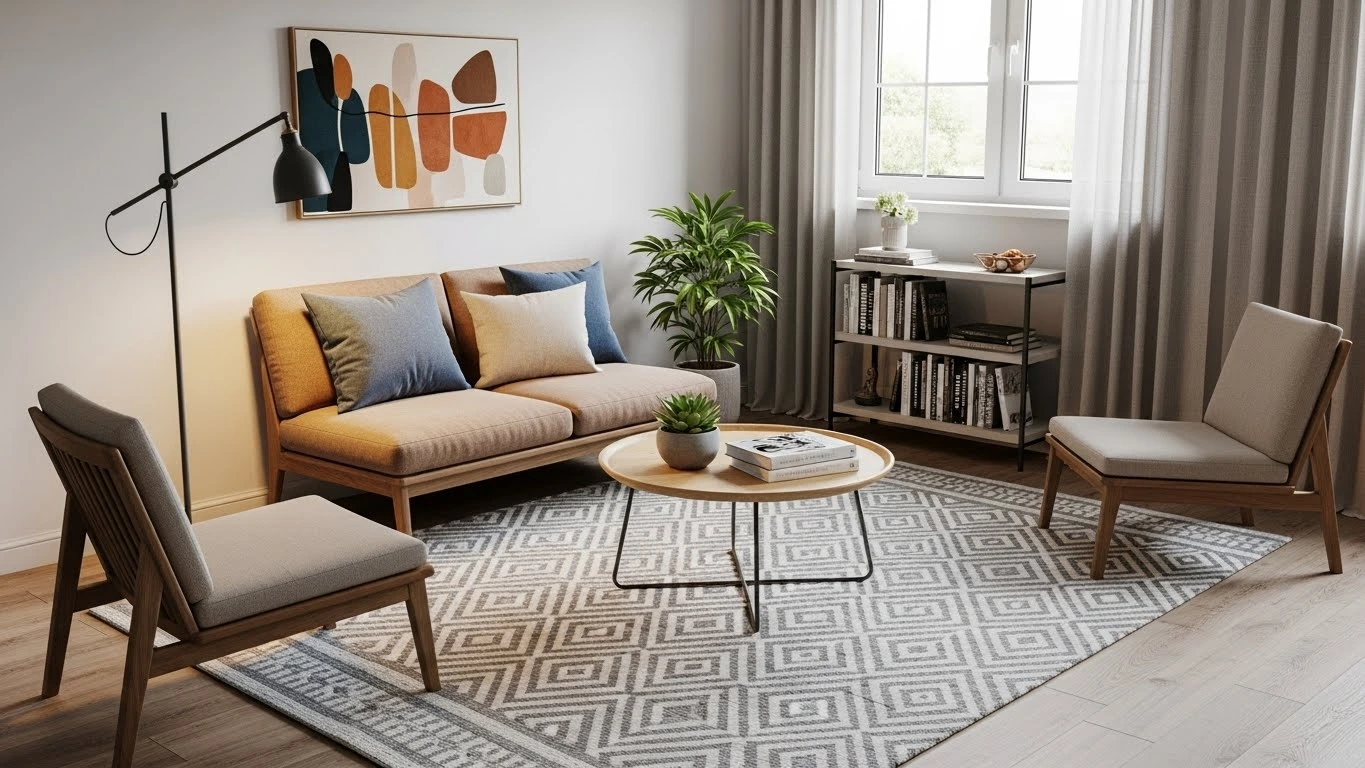
Small rooms still need zones.
Rug Tips
-
Go bigger than you think
-
Tuck front legs under furniture
-
Stick to simple patterns
Tiny rugs make rooms feel chopped up. Avoid that mistake.
Wall-Mounted Lighting Frees Space

Table lamps steal surface space fast.
Better Options
-
Wall sconces
-
Swing-arm lights
-
Plug-in sconces
I switched once and never went back. My side tables finally breathed.
Hidden Storage Beats Open Storage

Open shelves look cute… until they don’t.
Use Closed Storage For
-
Games
-
Cables
-
Random life stuff
Clutter shows faster in small rooms, no mercy given.
Use One Color Palette
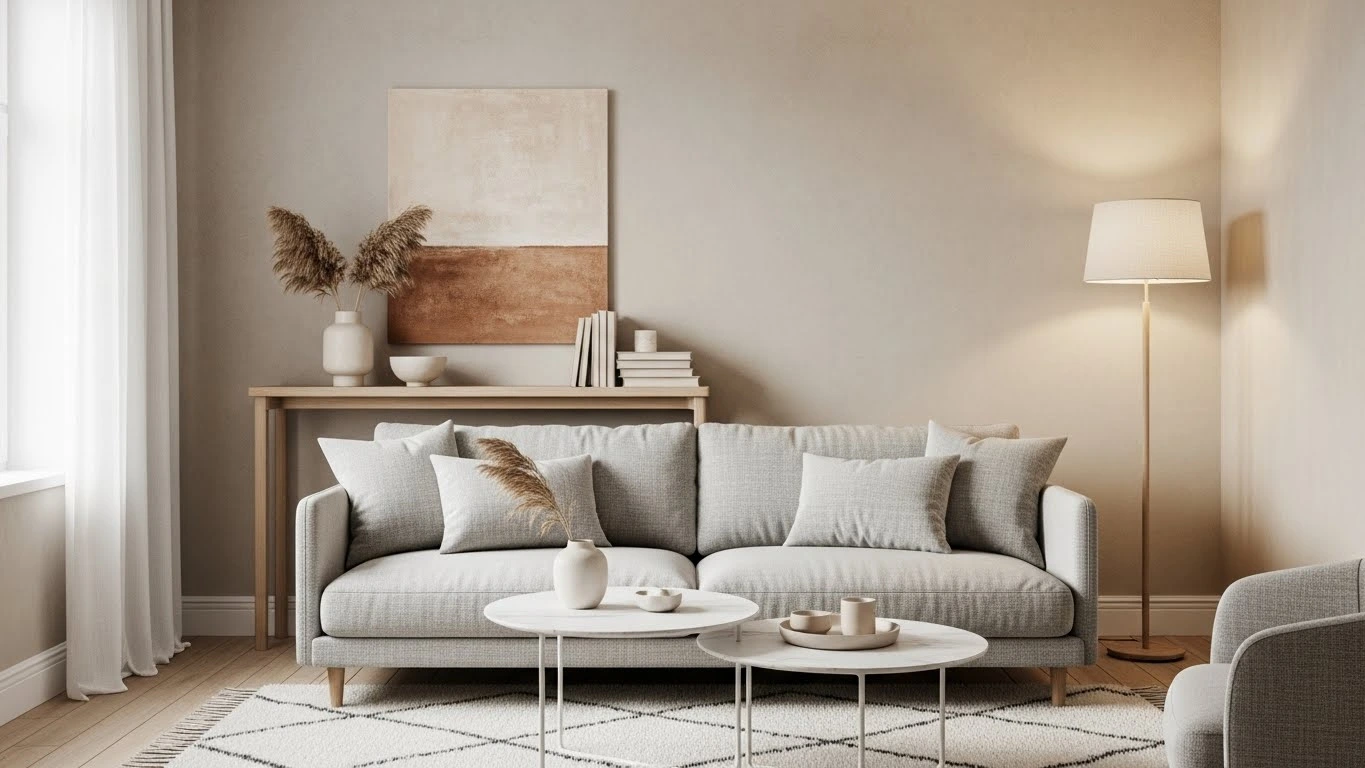
Too many colors visually shrink spaces.
Stick To
-
2–3 main colors
-
Similar tones
-
Subtle contrast
This keeps everything cohesive and calm.
Glass Furniture = Visual Breathing Room
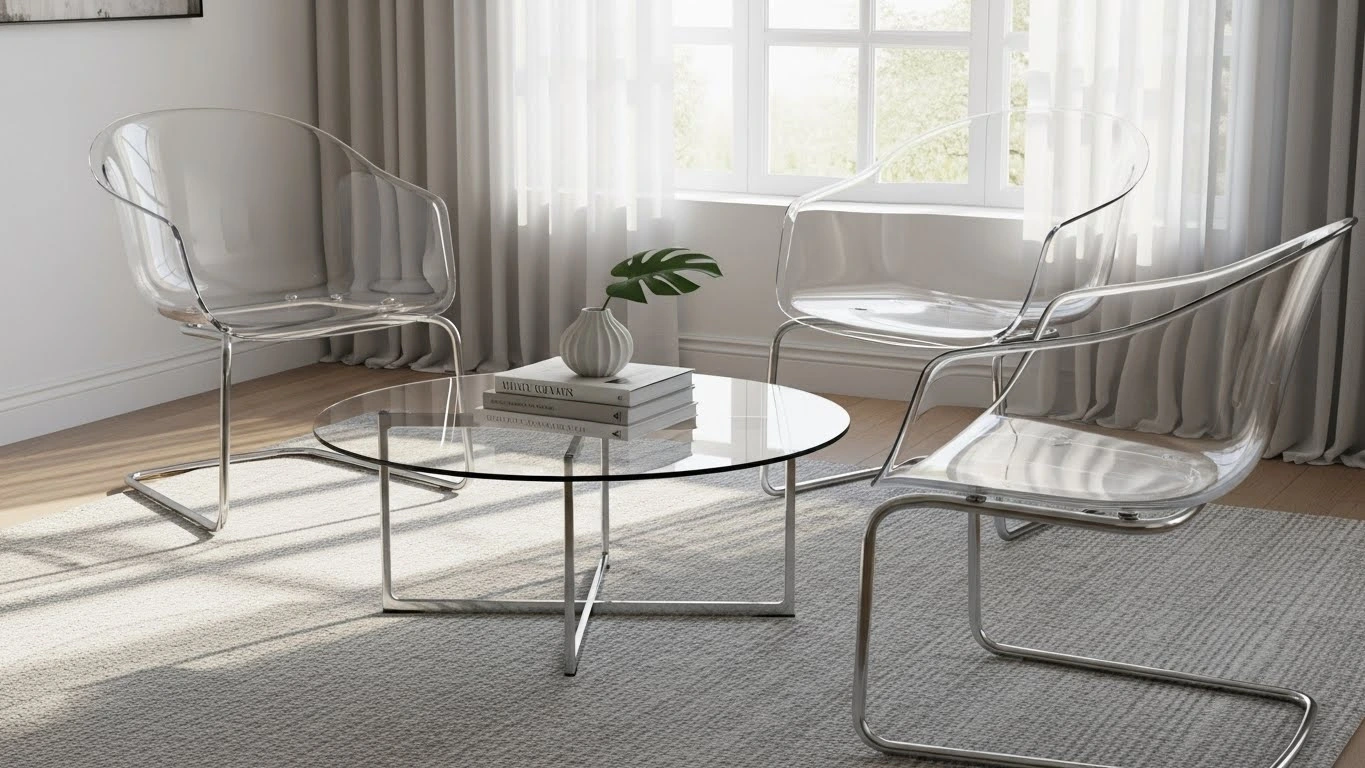
Glass doesn’t block sightlines.
Where It Works Best
-
Coffee tables
-
Side tables
-
TV stands
It’s not cold—it’s clever.
Corners Are Untapped Gold

Corners often sit empty for no reason.
Corner Wins
-
Corner shelves
-
Small reading chairs
-
Compact desks
Why waste usable inches?
Use Storage Behind Seating
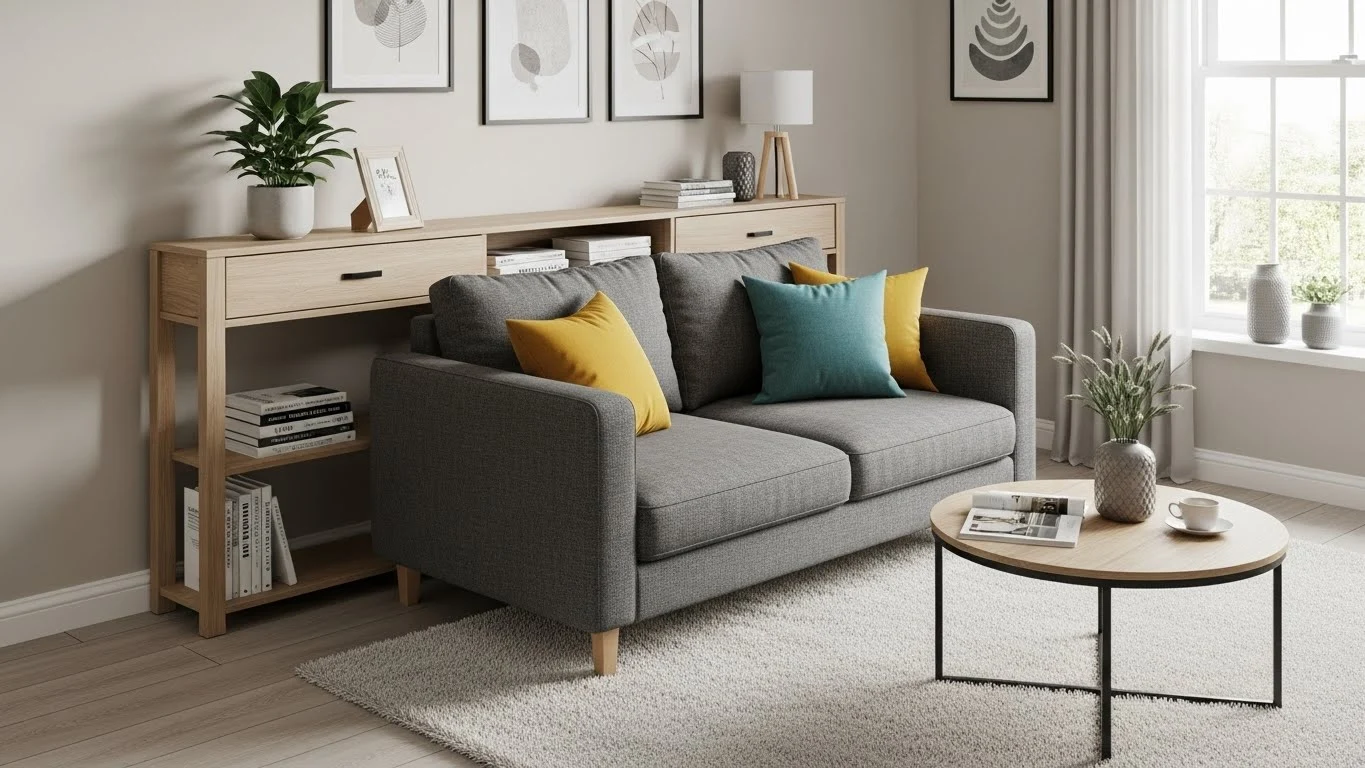
The wall behind the sofa matters.
Smart Ideas
-
Console tables
-
Narrow shelves
-
Floating cabinets
This adds function without crowding.
Keep Decor Intentional (Not Random)
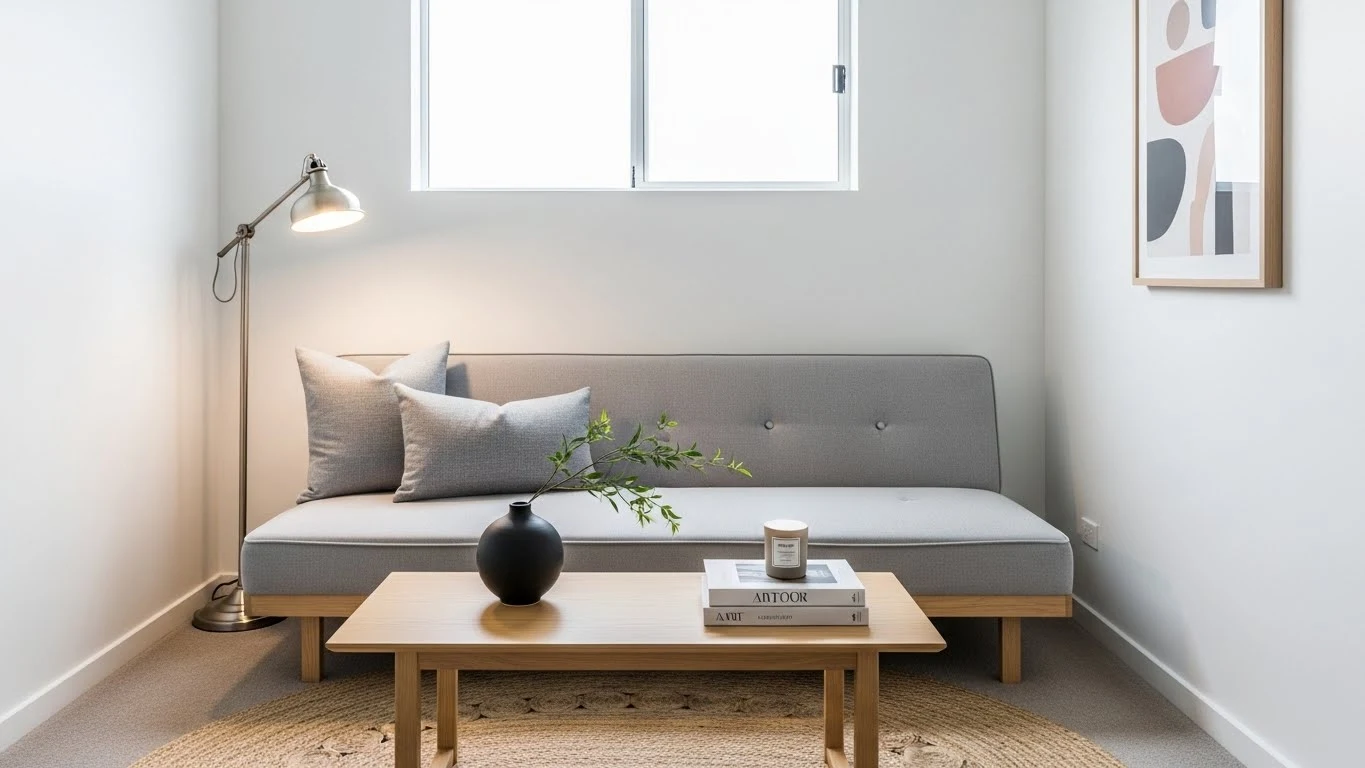
Every item needs a job.
Ask Yourself
-
Does it add function?
-
Does it add warmth?
-
Does it support the style?
If the answer is “meh,” skip it.
Go Modular When Possible
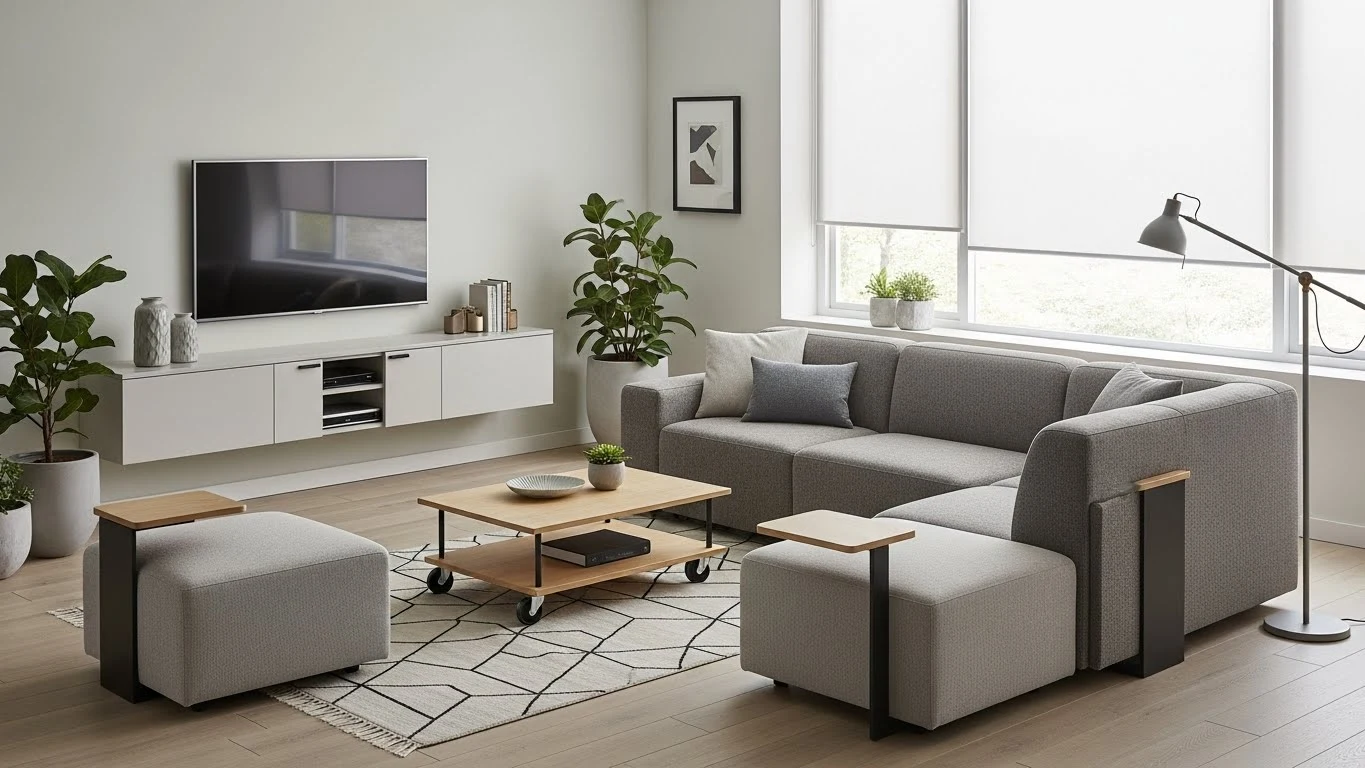
Modular furniture adapts.
Why It Helps
-
Rearranges easily
-
Fits awkward layouts
-
Grows with your space
Great for renters or frequent movers.
Layer Lighting for Depth

One ceiling light never feels enough.
Layer Like This
-
Ambient lighting
-
Task lighting
-
Accent lighting
This adds depth without adding clutter.
Edit Ruthlessly (Yes, Really)
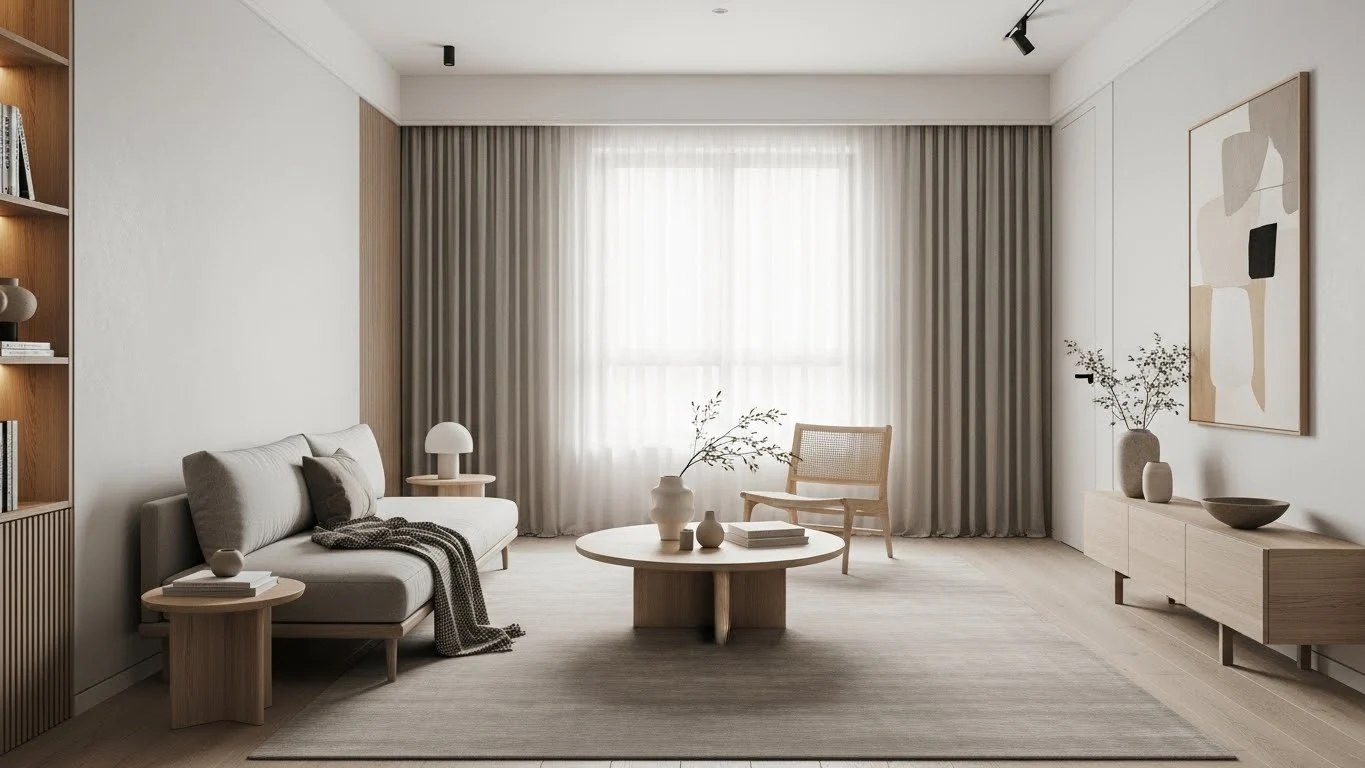
Less stuff = more space.
My Rule
If I haven’t touched it in six months, it leaves. Harsh? Maybe. Effective? Absolutely.
Final Thoughts: Small Rooms Can Feel Big
Small living rooms don’t need magic tricks—they need smart choices. When you focus on layout, scale, and function, every inch works harder for you. And honestly, once you nail it, small spaces feel way cozier than oversized rooms ever do.
So tell me—what’s the one thing in your living room that needs to go first? 😉